05:05AM - 03.06.'14
|
News Source: autoblog.com
|
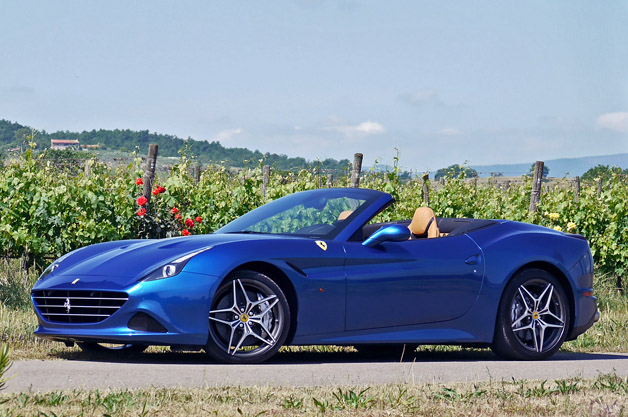
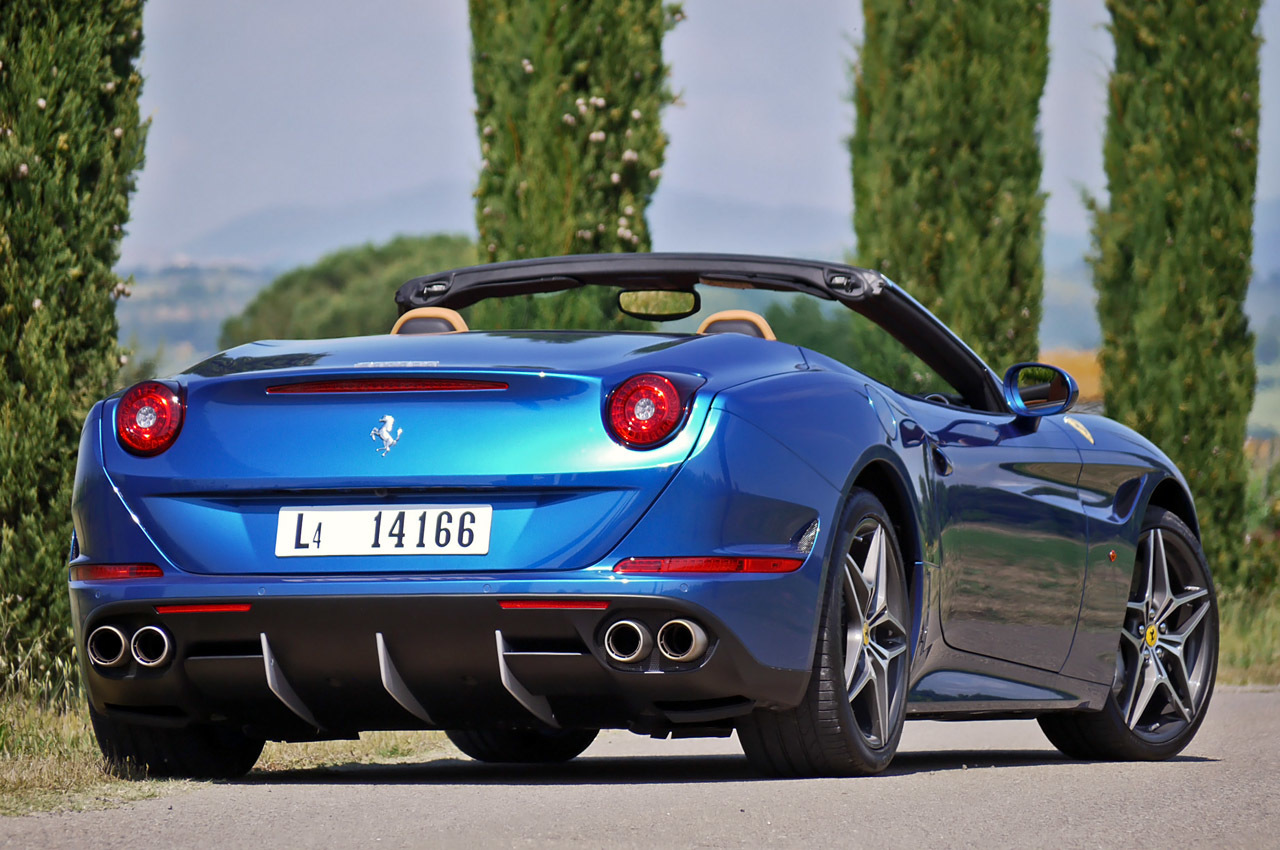
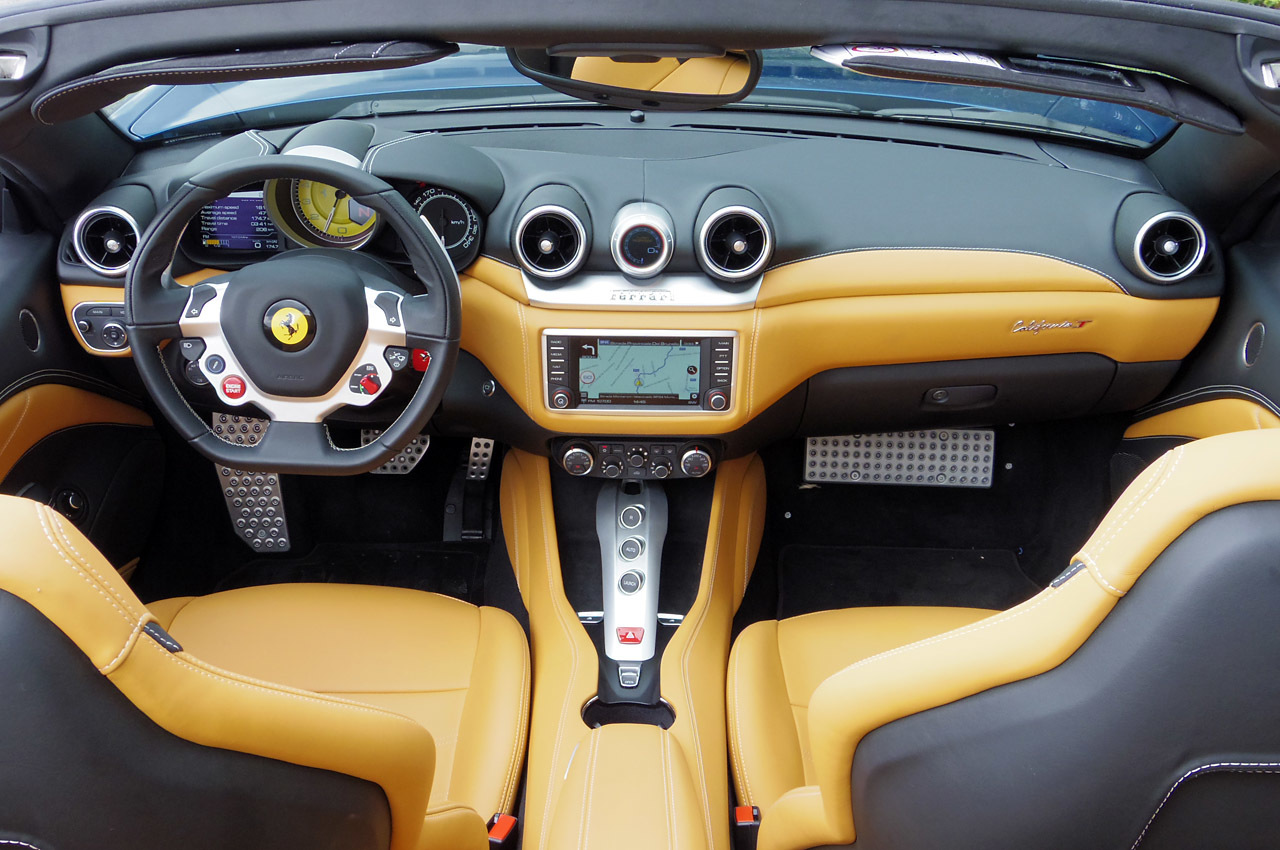
I'll never forget the day I bought my very first Ferrari. It was a bright-red F40, I'd saved up for it for what felt like an eternity and I couldn't wait to get home so I could park it next to my other four-wheeled piece of pride and joy, a stealth-black Lamborghini Countach, so I could compare their blunt-edge, wedge-like shapes and massive spoilers in microscopic detail. The year was 1987, and the event felt like the pinnacle of my life's achievement. Though both of my Italians had been die-cast in 1/18th scale, I coveted the two supercars with the verve of a true collector, taking in the intricacies of their engine bays, opening their doors and turning their working steering wheels. In reality, the two could have hardly been more different, and yet they both looked like finely crafted perfection to my seven-year-old eyes, their questionable day-to-day practicality completely overshadowed by their unquestionably exotic shapes. More than two decades later, I'm belting myself into the driver's seat of the 2015 Ferrari California T, the first turbocharged Ferrari since the F40 went out of production in 1992. The Tuscan countryside spreads out ahead, a twisting barrage of two-lane roads on the agenda, and I can't help but reminisce of my much younger self as I twist the red key and thumb the equally red ignition button on the steering wheel. For a brief moment as I relieved the glory days of my misspent youth, I almost felt envious of my future self. And in a fleeting moment of clarity, I considered the split-personality of me at seven, wanting nothing more than visceral thrills and to be seen by all my friends, and the current me – appreciating the comfort afforded by modern luxuries while still relishing the unbridled performance of an Italian thoroughbred – as an interesting lens with which to experience the California T. Would either side of me be let down by the experience of reality in a Ferrari? I pulled a paddle to the right of the California's steering wheel, clicking it into first gear, intent on finding out. Opinions in the Autoblog offices are split on the second-gen California's appearance. While only some would describe it as unattractive, there's seems to be the prevailing opinion that it is the least beautiful Ferrari currently available. I don't agree – the California T doesn't have the drop-dead looks of such undeniably beautiful front-engine coupes as the early '60s 250 or the iconic Daytona, but it has presence, especially in person, with a very pretty silhouette serving as its defining characteristic. I polled several Italian passers-by, and the typically style-conscious citizens of Tuscany anecdotally seemed impressed. My Italian isn't great, but the number of pictures I was asked to take of bystanders with the car tells me it has a certain appeal. Current and future California owners will like its styling just fine, and it's safe to assume that the model will remain the brand's most popular product, as it has been since its introduction in 2009 with over 10,000 units sold. Dimensionally, the 2015 California is almost exactly the same as last year's car, but nearly every body panel of the new T has been altered from the original, with the exception of the folding hardtop, which remains untouched. A good bit of massaging has taken place at the rear of the car, where designers have sought to visually lower the car's wide rear haunches through a more pronounced spoiler and a wider, horizontal theme to stretch the otherwise flat expanses. The lines are, overall, a bit sharper than before, especially up front, where new light clusters extend further into the fenders than before and where angular vents at the lower left and right of the fascia feed air into the engine's twin intercoolers. As a bit of styling flourish, the fenders call to mind the pontoon wings of the original 250 Testa Rossa of the late 1950s. It's under the shapely bodywork that we should be most keen to discuss, as this new T, as mentioned before, boasts the first turbocharger in the Ferrari lineup in quite some time. I can tell you that Ferrari has gone to great lengths – some might argue a few lengths too far – to ensure that the dual twin-scroll turbo units don't impact the California's driving experience any more than necessary. There are intricately cast three-piece exhaust manifolds on either side of the 3.9-liter flat-plane V8 engine that serve equal lengths of tubing from each exhaust port into the turbochargers, and they are really works of art in their own right. It's a pity most owners will never even see them. Still, their effect will be felt – when combined with the unique phasing of that flat crankshaft, the manifolds allow for much quicker spooling of the turbochargers, which in turn reduces lag to the point where it's practically nonexistent. And they'll be heard, too, as these pipes have been tuned to emit a high-pitched wail instead of the more subdued sound of most turbo engines. In practice, there's certainly a difference to be felt at low revs when the turbos have yet to spool, but it doesn't feel like lag so much as an aggressively theatric state of tune. This, too, is completely by design. So concerned was Ferrari that a turbocharger would ruin its hard-fought reputation of high-rpm screamers that it artificially lowers the engine's torque in all but seventh gear using technology it calls Variable Boost Management. First through third offer the lowest torque figures, though it's still over 400 pound-feet with an impressively flat plateau, and things get progressively more powerful in fourth, fifth and sixth gears until the full 557 lb-ft is achieved in seventh. The peak of 553 horsepower is achieved at its 7,500 RPM redline. I'd wail and gnash teeth at the apparent torque snub if not for the fact that the California T accelerates to Usain-levels of speed with alarming quickness. With launch control enabled, the 3,813-pound California T hits 62 miles per hour in a claimed 3.6 seconds, and I've no reason to doubt that assertion. Top speed is listed at 196 miles per hour. The other upside of the variable boost system is a decrease in fuel consumption, and therefore improved emissions. No matter what enthusiasts or perspective owners may think, the world's governments won't be giving Ferrari a pass on efficiency requirements, and this downsized turbocharged engine, which also features variable valve timing and direct injection, has been designed to help meet those requirements. Official estimates stand at 22.4 miles per gallon on the European cycle, and will likely come in a bit below that in the States. Expect hybrid technology to be the next advancement to filter its way down the automaker's lineup. Such need for efficiency is understandable, and we all appreciate Ferrari's enthusiasm for high-strung engines that progressively make more power as they reach for their redline, but I wish those laudable goals were possible without such drastic torque-limiting measures. In any case, firing through the seven ratios offered by the F1 dual-clutch transmission, which swaps cogs quicker than ever before, never failed to put a Joker's grin on my face. |