04:30AM - 11.06.'14
|
News Source: autoblog.com
|
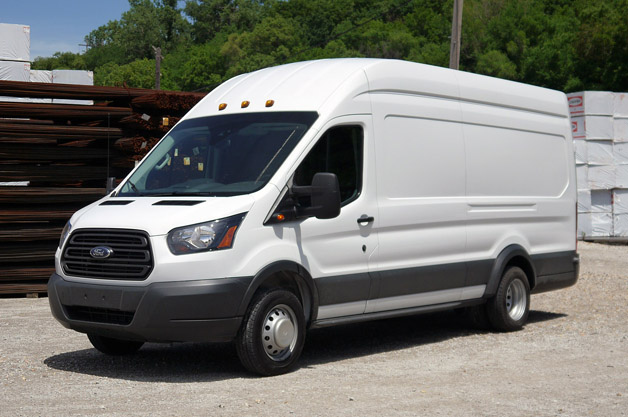
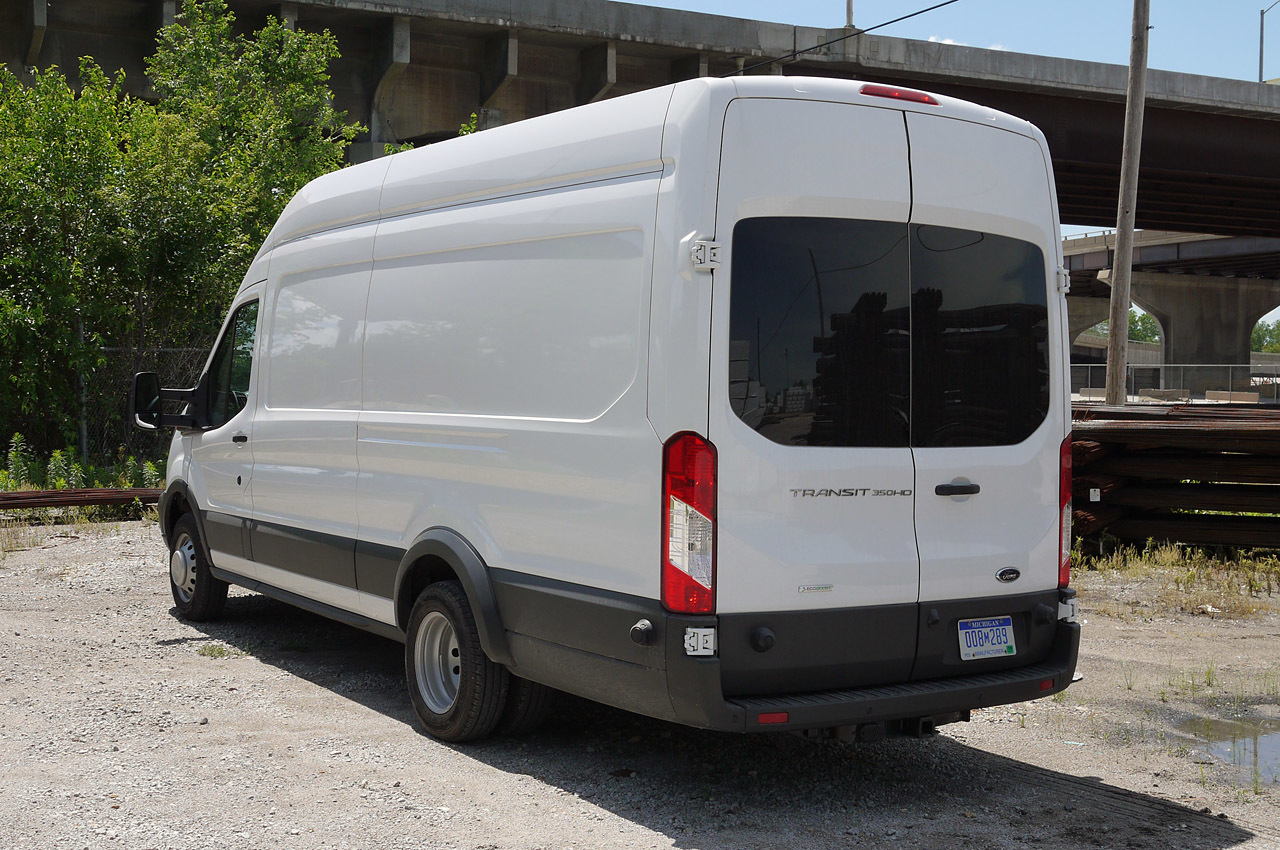
As a segment, fullsize vans are stealth-fighter invisible on most consumers' radar. Visit a dealership for any of the four brands that offer them and you'll be lucky to find even one on display. These are commercial vehicles primarily, even more so than pickup trucks. Vans are the shuttles for plumbers, caterers, carpenters, concrete layers, masons, electricians, florists and flooring, and a huge part of this country's productivity is accomplished using them. At the moment, Ford is the 800-pound gorilla in that room – fully 41 percent of commercial vehicles wear a Blue Oval. So when Ford announced three years ago it would be ditching its commercial bread-and-butter E-Series, it meant the Transit that would be replacing the Econoline had huge, 53-year-old shoes to fill. We were still a bit nostalgic about Econoline vans going away until going directly from the Transit first drive in Kansas City to an E-350 airport shuttle. Climb up through the Econoline's tiny double doors and bang your head on the opening, crouch all the way to your seat then enjoy a loud, rattle-prone, creaky, harsh ride on beam-hard seats while struggling to see out the low windows. This is an experience nearly every traveler has had. By comparison, the Transits we'd just spent two days with were every bit of the four decades better they needed to be. It cannot be understated just how much better the Transit is in every single way. The load floor is barely more than knee high. There's a huge side door, and hitting your head on a door opening is nearly impossible. Stand up all the way if you're under six-foot, six-inches – no more half-hunching down the aisle. There are windows actually designed to be looked out of. The ride is buttery smooth, no booming vibration from un-restrained metal panels and no squeaks. Conversations can be held at normal levels rather than yelling over the roar of an ancient V8. The seats are comfortable. The AC is cold. There are cupholders. Enough anecdote-laying, what's in a Transit? We're talking about a very fullsized unibody van that's enjoyed a 49-year history in Ye Olde Europe. This latest iteration is part of the "One Ford" initiative, so it was designed as a global offering from the get-go, eschewing the body-on-frame construction the E-Series has used since 1975. Instead, the Transit integrates a rigid ladder frame into an overall frame construction made of high-strength cold-rolled and boron steel. The suspension is a simple but well-tuned Macpherson strut array up front with a rear solid axle and leaf springs. As with the F-Series built in the same sprawling Kansas City Assembly Plant, the Transit offers a staggering number of variations. Transit Assistant Program Manager Milton Wong confirms there are over a million combinations – Ford hasn't yet tallied it up formally. Suffice to say if you want a Transit (or a thousand of them) you can option it/them to precisely the specification best suited for your needs. Mix and match between 129.9-inch and 147.6-inch wheelbase lengths, three overall lengths, three roof heights (83.6, 100.8 and 110.1 inches), cargo or passenger or chassis cab configuration, technology packages (MyFord Touch, Crew Chief fleet management services, etc.), emergency services prep pack, RV prep pack, light duty, medium duty, heavy duty and dual rear-wheel axle, different colors and several other variables. Then add in three gas engine choices: The base engine is the same 3.7-liter V6 now offered in the F-150, and it boasts a respectable 275 horsepower and 260 pound-feet of torque. It's also the engine that offers optional hardened valve seats, sensors and programming needed for aftermarket CNG conversions. The hot rod option is the 3.5-liter twin-turbo V6 EcoBoost with 310 hp and 400 lb-ft. The final engine option is a new-for-North-America 3.2-liter inline-five turbo-diesel borrowed from the global Ranger pickup (which is frustratingly un-global for North America) making 185 hp and 350 lb-ft of torque. It'll run on B20 and boasts a variable-geometry turbo and glow plugs that allow quick start down to -10 degrees Fahrenheit. They work below that, of course, just not in a "quick" manner. It's kind of a brute too, offering 90-percent of peak torque starting at 1,500 rpm. While not the drag racer the EcoBoost is, it'll certainly drag some stuff. The 3.2 is expected to be the prime fuel economy and long-term durability option, and it'd better be considering it's the most expensive. All three engines get paired to a six-speed automatic SelectShift transmission that can be manually shifted, but who are we kidding here? The term "fullsize" doesn't really do the Transit justice. For the most basic configuration, the short wheelbase, low roof model, it's really only a little bit larger than the outgoing Econoline. However, the maximum wheelbase, maximum roof height, maximum overall length version with dually rear axle we chose to review – "Jumbo" as it's called – is the size of a small warehouse. Full-service motorcycle shops have less floor space. It boasts shades of the Grumman box van in this configuration. For comparison's sake, versus the biggest factory-available E-Series, this maxi-Transit boasts a staggering 75-percent more interior volume, for a total of 486 cubic feet. Roll that figure around in your head. That's a cube nearly eight feet to a side. If you're a business owner running two Econolines, they might be replaced by one Transit. Getting to that generous volume is exceedingly easy – the dual swinging barn doors at the back open wide, up to 270 degrees with magnetic stays, and the sliding side door at the side is 50-percent larger than the largest E-Series opening. Both doors will accept a fully laden pallet. Total payload for our Jumbo 350 dually tops out at 4,650 pounds. Only the mega-Sprinter boasts better payload at 5,485 pounds. Towing isn't bad, either, in the event you needed to tote even more stuff. Max tow rating isn't into the silly stratosphere that light-duty trucks occupy, but it matches Sprinter's rating of 7,500 pounds – about the weight of a trailer, a racecar and spares to go with your mobile speed shop. |