05:25AM - 01.07.'14
|
News Source: autoblog.com
|
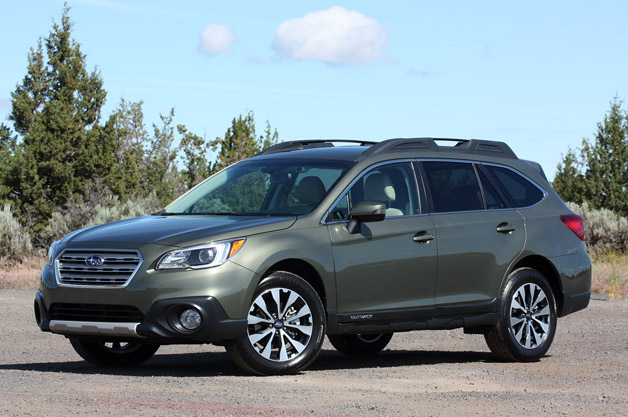
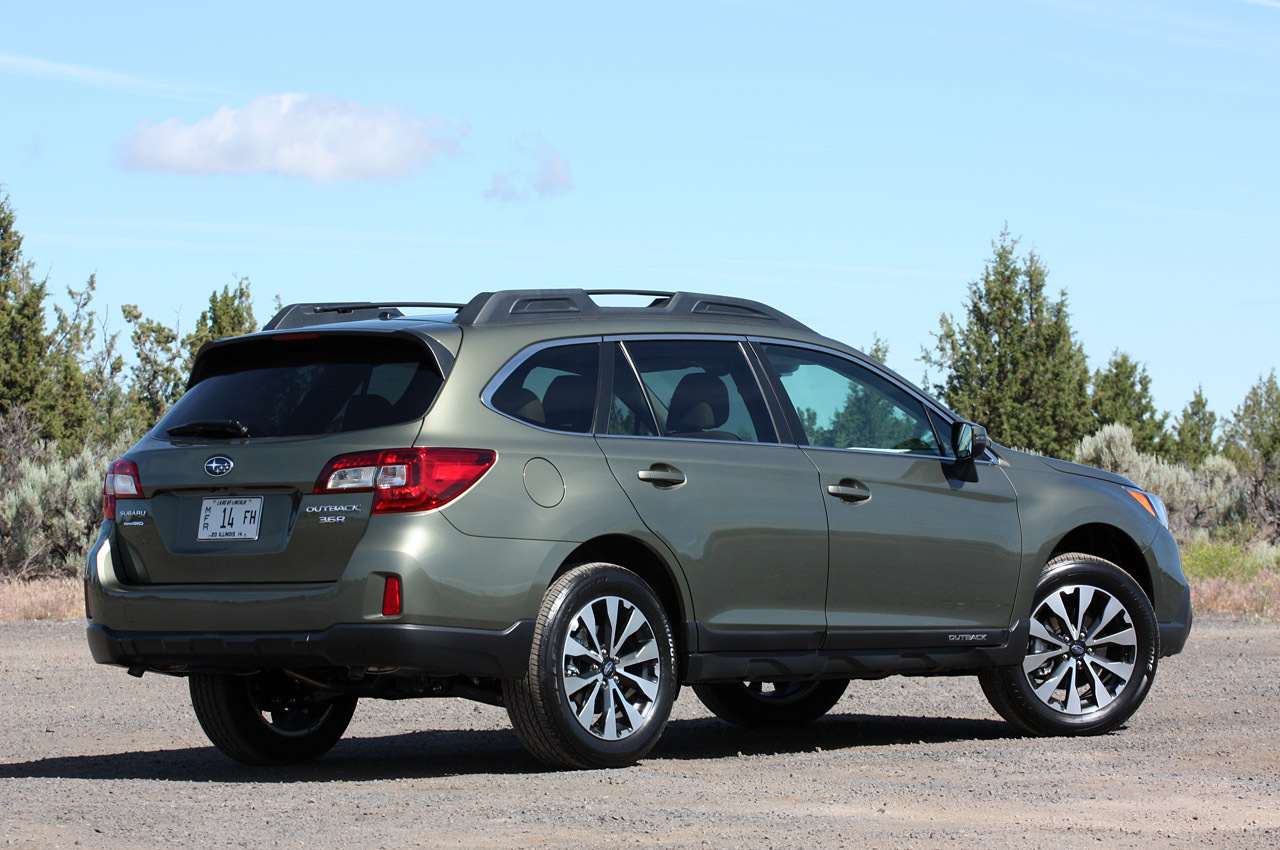
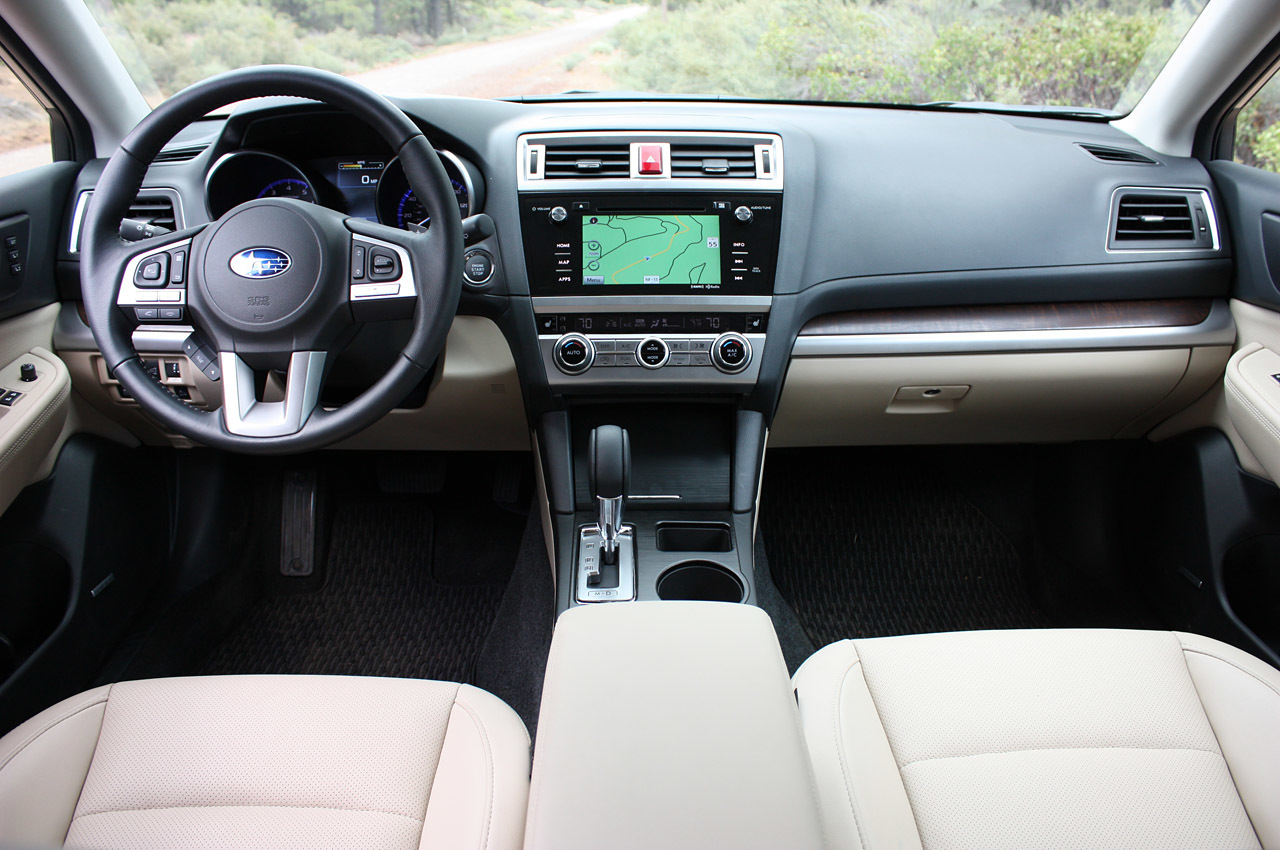
"We like producing cars that are different." That's the company line trumpeted by several Subaru executives during the launch of the 2015 Outback – one of Fuji Heavy's most successful vehicles to date. Managing Editor Jeremy Korzeniewski accurately noted that while Subaru has never really found salvation with its mainstream sedans, it's the higher-riding, butcher offerings like the Outback and the Impreza-based XV Crosstrek that have been sales stars for the Japanese company. In 2013, for example, Subaru sold nearly three Outbacks for every Legacy it moved. And in 2014, the XV is on pace to outsell the Impreza upon which its based. But Subarus have always been different, catering to unique customers that desire something a bit more special than your run-of-the-mill sedan or crossover. It's clearly worked, with Subaru having posted 30 months of year-over-year sales increases as of this writing. And even as the automaker's portfolio goes more mainstream, smoothing out its serially awkward styling and gunning for a larger market share here in the United States, that intrinsic Subaru differentiation is still baked in to each and every product. It's that new Outback we're here to talk about today, a vehicle that's been comprehensively redesigned for the 2015 model year while not shaking up the formula that's made it successful since its inception in the mid-1990s, back when it (arguably) launched what we now know as the crossover utility vehicle segment. It's still plenty different – and plenty good, too. So while there's nothing truly radical about the 2015 Outback formula, it's still all-new, with a more refined design that's less awkward than before. The shapes have been smoothed out and the revamped proportions of things like the headlamps, grille, and taillamps all work well to create a rugged, handsome package. It's still wholly evident that there's a Legacy underneath that chunky gray cladding, more prominent foglamps and roof rack, but we're guessing most of the brand's customers don't know or don't care. Besides, Subaru has always done a nice job of making the Outback look complete on its own. Nevermind its family sedan roots; nothing about this car's design gives the impression that it's simply a Legacy add-on. It's absolutely evident that the Outback and Legacy were designed side by side to make two fully cohesive vehicles. The thing about the Outback's lifted, tougher design is that it's all for the sake of function. There's 8.7 inches of ground clearance on hand – more than any of its competitors, and as we found out during some pretty robust off-roading, that added height really comes in handy. (More on that in a minute.) Compared to its predecessor, the new Outback isn't much larger – Subaru says that it really figured out the model's "right size" in the last generation. Overall length is up by 0.6 inches and width has increased by 1.3 inches. The new Outback is a fair bit taller, though, at 66.1 inches compared to the outgoing model's 63.9. Ground clearance hasn't changed, and the Outback still rides on either 17- or 18-inch alloy wheels, so it's the added width and height that's largely responsible for the increase in interior volume – 108.1 cubic feet of passenger space compared to the 2014 model's 105.4. The cabin is where differences between the Legacy and Outback really end – it is, for better or worse, the exact same interior. The layout, colors, controls, materials – they've all been carried over. Korzeniewski said of the Legacy, "Materials are of high quality, with nary a squeak or rattle to be heard" (one Subaru official saying the Outback has "the nicest fake wood you'll ever see"), "all controls are logically placed," and, "all pieces the driver interacts with feel good." We won't offer a single disagreement in regards to the Outback, and add that here, too, the interior feels absolutely huge, with no shortage of head-, leg-, shoulder- or hip-room for both front and rear occupants. It's roomy, logical and of appreciably high quality, but exactly nobody will call the new dashboard stylish or even particularly modern-looking in design. Even so, we must commend the Outback (and Legacy) on the revamped infotainment interface, with a seven-inch touchscreen standard on all models but the base 2.5i. Finally, Subaru has designed a system that works well, is very intuitive, and looks fresh and modern. This was always a sour point with the outgoing car, but it's not a problem, here. Other bits of praise go to the optional Harman/Kardon audio system, which sounds lovely, and Subaru's third-generation EyeSight collision mitigation system. We even had the chance to sample the latter (in a controlled environment, natch), and it had no problem bringing our car to a halt from 30 miles per hour with absolutely no driver interaction. Where the Outback offers added functionality is, of course, at the rear, where the wagon configuration is good for a whopping 73.3 cubic feet of storage space with the rear seats folded flat – two more cubes than its predecessor. There's a power liftgate available on higher trims with programmable height memory (helpful for shorter drivers or low garages), and all Outback models come standard with the roof rails that feature collapsible crossbars and integrated tie-down points. |