04:56AM - 03.07.'14
|
News Source: autoblog.com
|
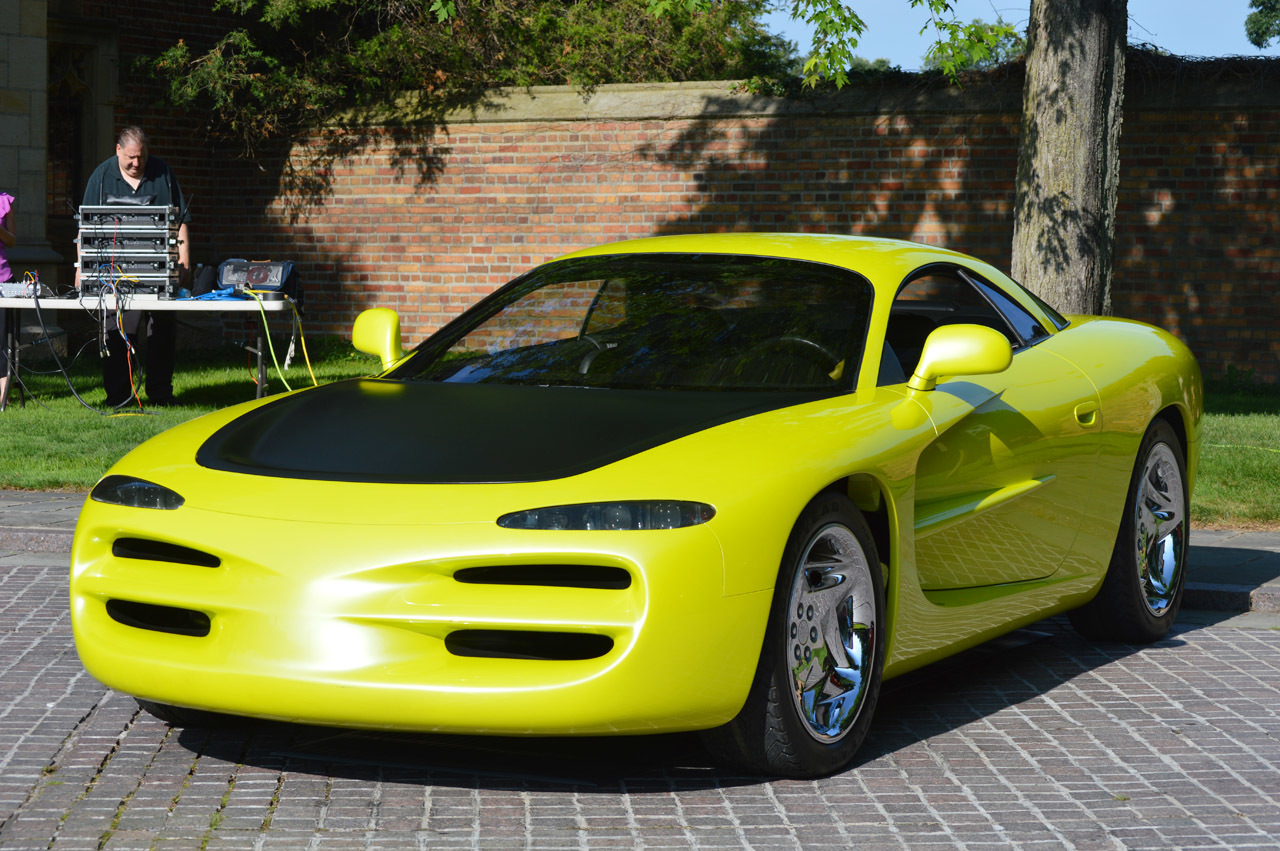
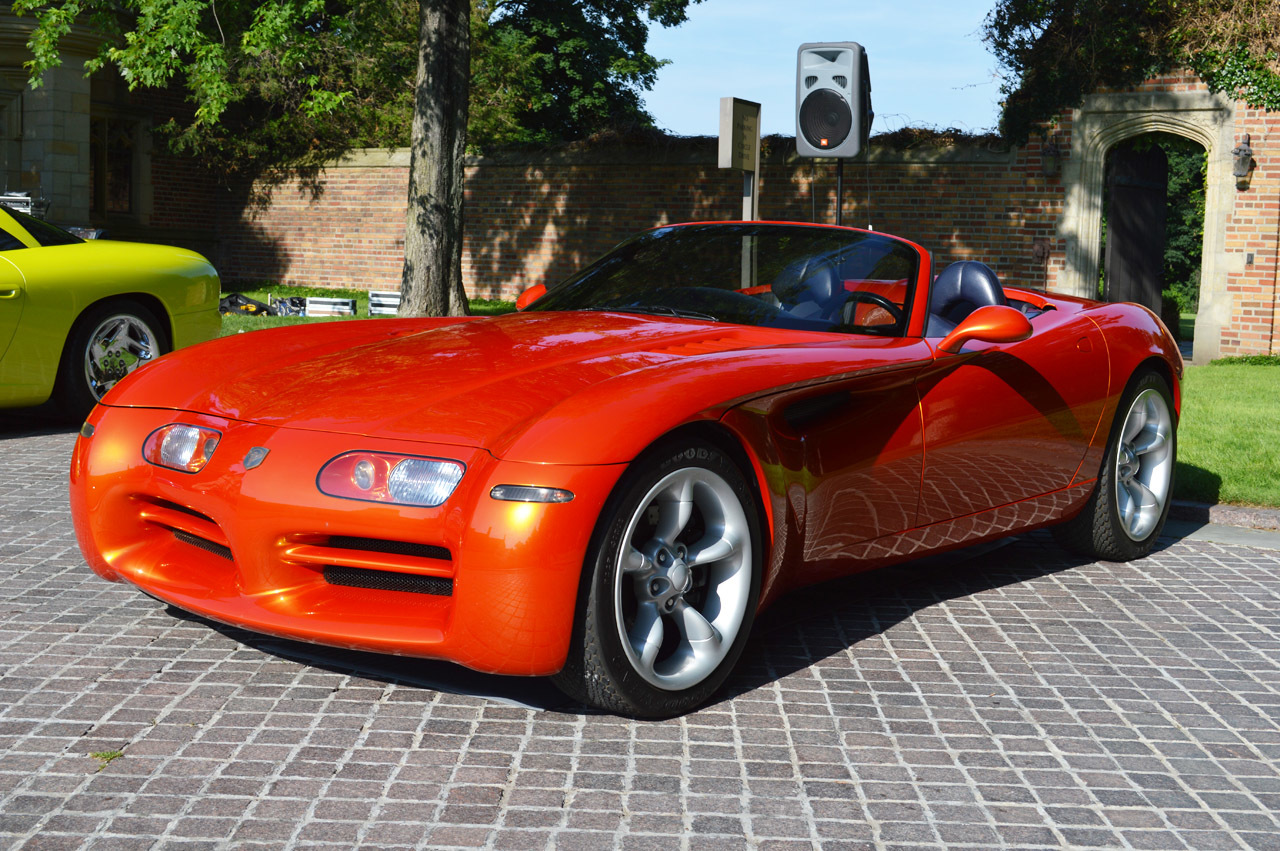
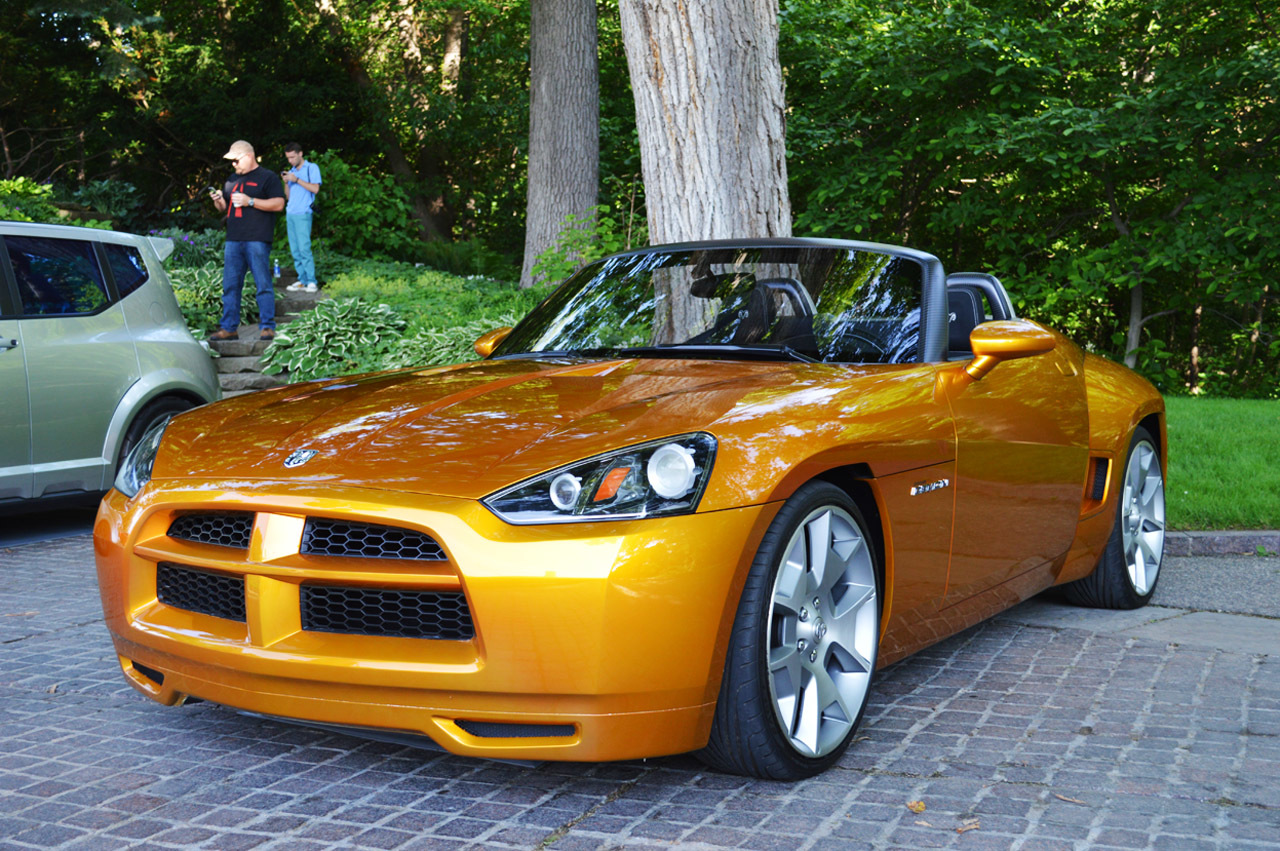
Dodge is 100 years old this year. So, as happened on Ford's recent centennial, the 50-year birthday of the Porsche 911, and others, the company has an excuse to trot out the highlights of its history next to its upcoming model lineup, and declare that "these are the fruits of the Dodge Boys' tree whose roots have grown strong." Or something like that. Never so hampered by marketing skepticism that I'll pass up the opportunity to burn someone else's rubber, I was happy to drive out to Meadow Brook Hall in Rochester Hills, MI – former grand estate of the Dodge family – to hear the spiel. Chrysler Group Historian Brandt Rosenbusch, the lucky so-and-so that manages the corporate museum, brought out an insanely great selection of motoring history for myself and my colleagues to take in, photograph, and drive. Greeting us in the swanky circle drive in front of the Dodge manse was a smattering of Dodge concept cars from the last twenty years or so, Viper, Sidewinder and Demon concepts included. Continuing out the gates, however, were a raft of important production models from the last hundred years, all available for me to either drive or (in some delicate instances) ride in. My mission, beyond keeping the stupid grin off my face long enough to look like a serious journalist, was to suss out any link between the past and the future of Dodge. Sergio Marchione and team laid out for us, in no uncertain terms, last May, that Dodge will wear the performance car mantle for the Fiat Chrysler Automobiles mothership. Dodge President and CEO Tim Kuniskis backed that up for us, calling Dodge the company's "mainstream performance brand" with the newly welcomed back SRT serving as the "ultimate performance halo brand." Rosenbusch clearly received that memo when helping to assemble our test cars for the day, as the patch-laying members of the family tree were heavily represented. While the list included blue-collar stuff at the bookends of the timeframe – Dodge brought along a 1915 touring car and a 1917 sedan, as well as a 1984 Caravan and a 1995 Neon – in the main this was a group of performance cars from the 1920s up through the 2008 Challenger SRT8. Outside of the outstanding class of muscle cars on offer (I'll get to those in a moment), there could still be found some antecedents to what Dodge is trying to achieve with its newly announced five-year makeover. Dart is clearly a modern-day iteration of what Dodge/Plymouth had hoped to realize with the Neon – a compact whose styling and sprightly demeanor differentiated it from the Honda Civic paradigm. That's work that'll need some strong followup when the next Dart arrives in 2016, at least if the model hopes to replicate the Neon's modest market penetration, to say nothing of building the company's reputation for building compact cars that are less than shoddy. Perhaps more interesting still is the line that can be followed from cars like the 1986 Shelby GLHS, 1985 Shelby Charger and 1984 Dodge Daytona, to the expected 2016 Dart SRT. For all of their (many) rough edges, the company's offerings in the compact performance space have typically been exceptional on the bang-for-buck scale; here's me crossing my fingers that the Dart SRT plays on that heritage. Well, except I'd still pay a slightly higher relative MSRP for slightly more build quality and finish. I suppose I could attempt to draw a connection between Durango and the 1941 Command Car, but, nah... Both are four-wheel-drive (mostly), but one is unquestionably epic while the other is pretty cool for its model class. I'll let you sort it out. Of course, where the company lineage can truly be seen from old to upcoming is in the Dodge-badged, V8-engined sedans and coupes. There's a pretty straightforward reason for this. Around the mid-2000s Chrysler and Dodge realized they could capture lightning in a bottle by building rear-wheel-drive cars that recapitulated some of their best moments of the sixties and seventies, and selling them to the nostalgia-driven Baby Boomers. The right-wheel-drive platform was available from then-parent Daimler, and the cupboard was full of Muscle Car icons – and the iconic Hemi engine name – with which to reimagine. |