|
News Source: topspeed.com
|
Although the Lancer nameplate goes all the way back to 1973, the sedan didn’t become the high-performance vehicle we all know today until the early 1990s. It was 1992 when Mitsubishi launched the Lancer Evolution , a beefed-up version of the standard Lancer originally intended for the Japanese market. Its immediate success prompted Mitsubishi to sell it globally, and the Lancer Evo legend was born. No less than ten generations have been developed since then, with the first nine built through 2006. The most recent iteration, the Evolution X, has been in production since October 2007 as a 2008 model year but took a one-year break in 2009 only to return the following year. The 2015 model year will be the last for the Lancer Evo, with the iconic moniker to be retired all over the world.
Having been discontinued in many markets as of September 2014, the Lancer Evo X lives on for the 2015 model year in the United States with a host of updates and new features. Read on to find out more about the final version of the Evo X and the updates it received since its 2010 facelift.
Two trims are available in the United States, with the main exterior differences lying in the body.
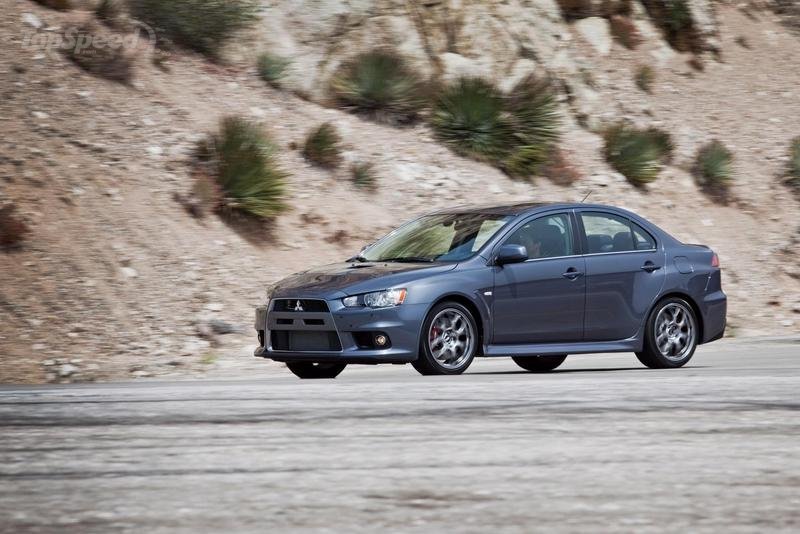
The tenth-gen Lancer Evo is arguably the most aggressive-looking version of its kind. Sure, earlier models based on the sedan’s rally version had their appeal, but the 2007 redesign brought a whole styling approach that included more muscular lines and a menacing front fascia.
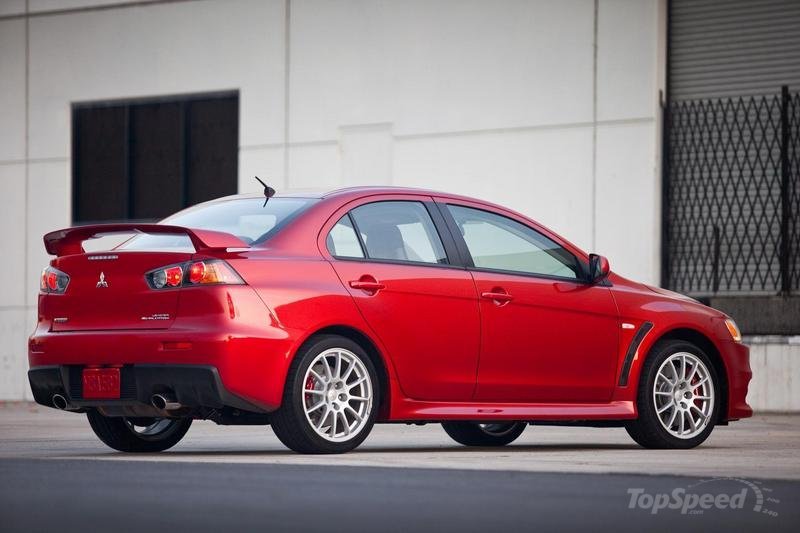
Two trims are available in the United States, with the main exterior differences lying in the body. The premium MR model sports a mild body kit and lacks a rear wing. The GSR, on the other hand, is a much more aggressive appearance, with beefier bumpers, reshaped side skirts, a large wing atop its trunk lid and lightweight wheels.
New For 2010
- Premium-themed MR trim level debuts.
- New side skirts for GSR
New For 2015
- Standard heated side view mirrors with turn indicators
- Color-keyed heat extractor vents, bright radiator front grille and beltline molding on MR trim
-
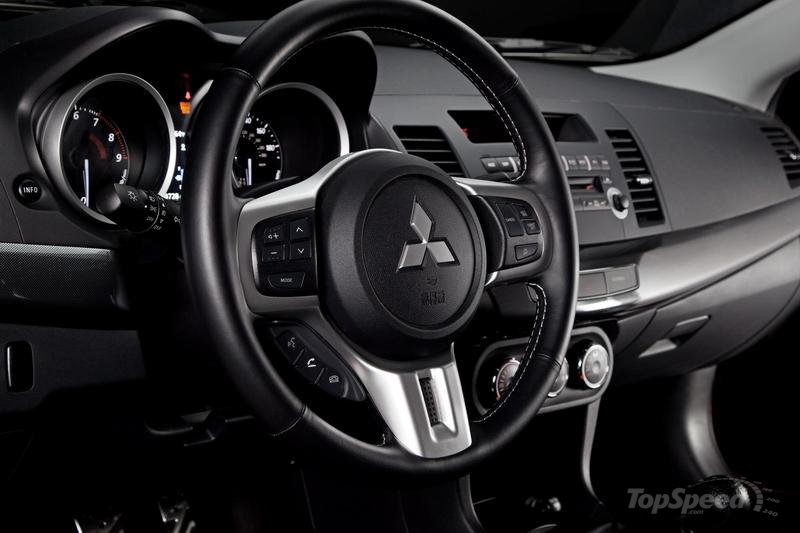
Although Mitsubishi has updated the Evo’s interior many times, the sedan is far from being a luxurious ride. Sure, some amenities make the Lancer Evolution a premium proposition, but the layout is simple, and plastic still covers most of the surfaces. Naturally, that didn’t stop the Evo from being a popular choice among sports-sedan enthusiasts interested in the performance and not the luxury features coming with a BMW 3 Series or an Audi A4. One quick look at those Recaro seats and you know the Lancer Evo is more than just a sedan aiming to take you from point A to B.
New For 2010
- A color multifunction display and a leather-wrapped parking break handle added
New For 2011
- All Evos received Fuse voice activation and real-time traffic updates
New For 2012
- Soft-touch door panels and an optional auto-dimming rearview mirror added
New For 2014
- New touchscreen interface and satellite radio standard
- Updated navigation system introduced as an option.
New For 2015
- A new Premium Package for the GSR model includes Sight and Sound Package plus leather seating, power glass sunroof, heated front seats, sound dampening enhancement and piano-black front console box with lids.
- 9-speaker 710-watt Rockford Fosgate sound system, fast-key entry system, auto on/off headlamps, enhanced sound dampening, and a piano-black front console bix with lids for MR trim
-
The unit generates 291 horsepower at 6,500 rpm and 300 pound-feet at 4,000 rpm in both trim levels, but it mates to two different gearboxes.
Motivating the Lancer Evolution X is the same turbocharged, 2.0-liter, four-cylinder engine Mitsubishi developed aeons ago. The unit generates 291 horsepower at 6,500 rpm and 300 pound-feet at 4,000 rpm in both trim levels, but it mates to two different gearboxes. The MR comes with a six-speed twin-clutch transmission, while the GSR includes a short-throw, five-speed manual gearbox.
The latter is slightly more fuel efficient than the MR’s twin-clutch, returning 23 mpg on the highway and 17 mpg in the city. The MR, on the other hand, is good for 22 mpg highway and 17 mpg city. On the flipside, the MR is quicker from 0 to 60 mph, needing 4.5 seconds to achieve the benchmark. The GSR takes 4.9 seconds. Top speed is rated at 146 mph for both models.
All models are equipped with the company’s Super All-Wheel Control (S-AWC), an all-wheel-drive system developed to deliver enhanced traction and handling. This system is a combination of AWD and Active Yaw Control that directs engine torque to the outside or inside rear wheels depending on available traction. Translated, this means the wheels with the most grip on the road receive the most power, keeping the sedan on its best behavior. The Evo also includes an Active Center Differential, which comes with three driver-selectable modes: tarmac, gravel, and snow. Talk about having a rally car for the street. For 2015, the Lancer Evo’s pricing remains the same as the 2014 model year.
|


