04:52AM - 24.09.'14
|
News Source: autoblog.com
|
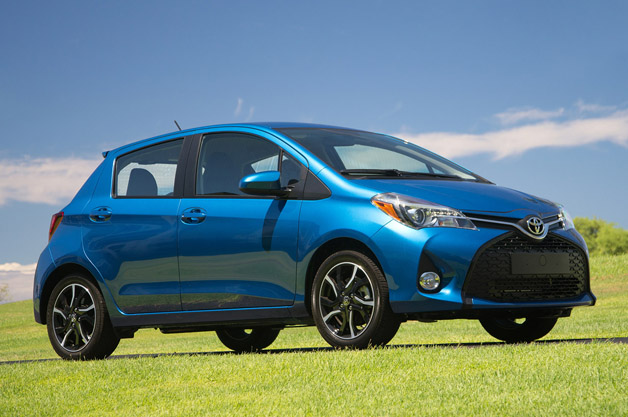
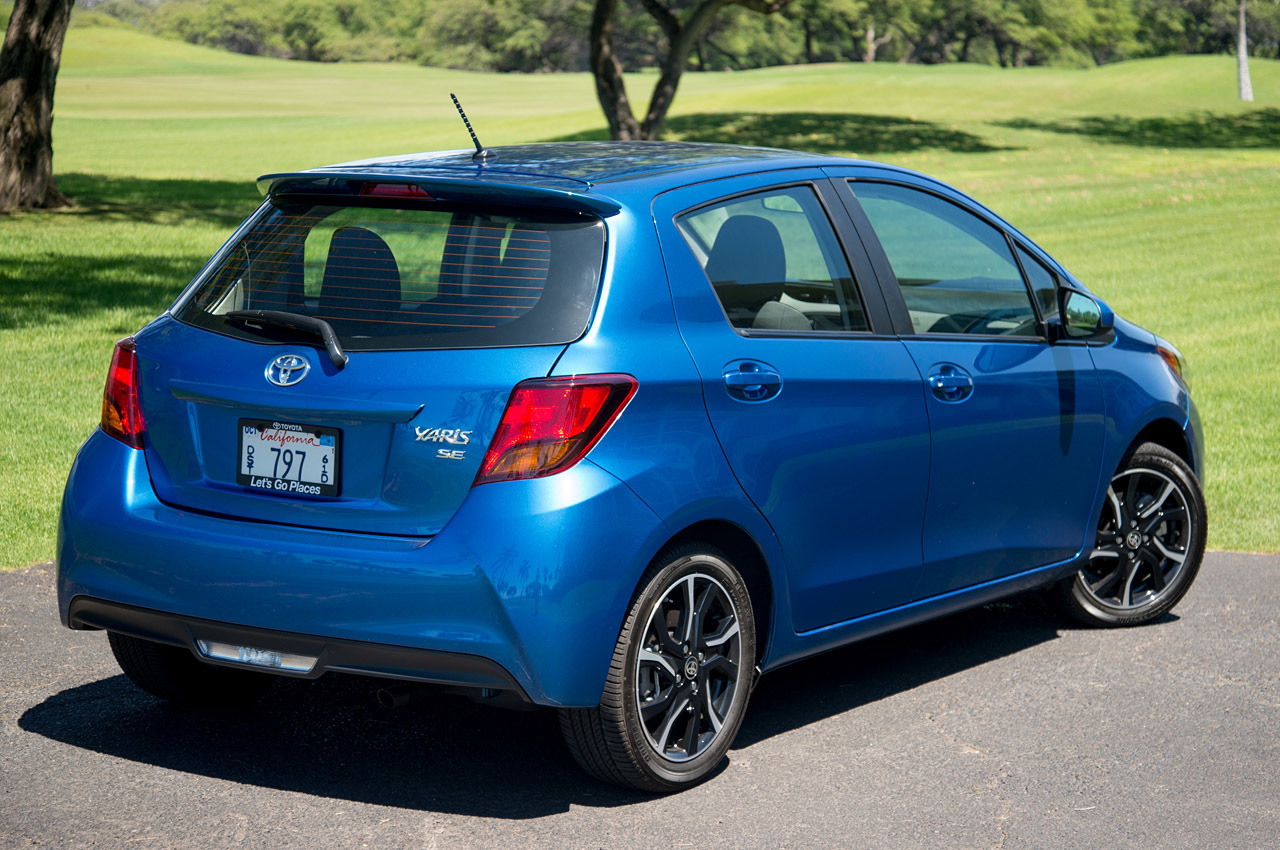
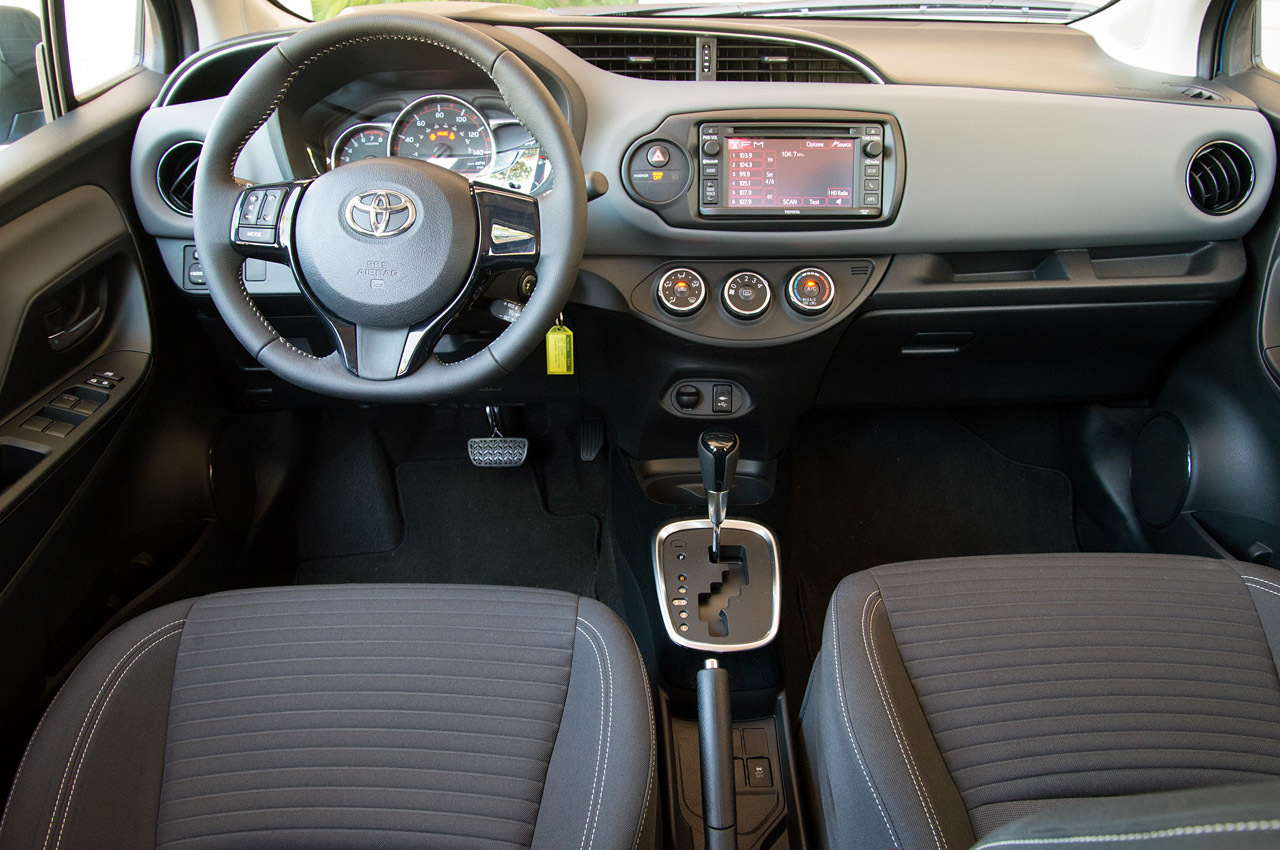
Advertising firms have done an admirable job convincing consumers that the easiest way to find a best-in-segment car or truck is by looking at a few key metrics. In the most elementary terms, the vehicle with the highest horsepower, most gears in its transmission housing, lowest acceleration times and best fuel economy most certainly must be the class benchmark. Yet as the commercials and billboards continue to drive that deceitful message, Toyota is betting shoppers in the subcompact segment are a bit more discerning. The Japanese automaker has just launched its updated 2015 Yaris, a three- and five-door offering that bucks the innovation and performance trends by offering what Toyota feels that entry-level buyers actually desire – reliability, practicality and a low sticker price. It's sweltering in the tropical Hawaiian sun as I check out the deeply refreshed 2015 Yaris SE. This five-door hatchback, a range-topping version of the company's subcompact "sporty hatch" (Toyota's words, not mine), builds on the new-in-2012 generation by wearing new front and rear fascias, redesigned headlights and some attractive new wheels for the upcoming model year. Overall, I like what I see. The front clip, with new LED daytime running lights, projector-beam headlight lenses and an oversized piano-black grille adds some character and aggression to a formerly nondescript vehicle. The wheel designs are big improvement, too, as their twisted spokes suggest motion even when standing still. The rear treatment, basically a new urethane bumper cap and redesigned taillamps, isn't as exciting as the front, almost appearing less sporty overall with the deletion of the chrome exhaust outlet, but it ties the package together. (It's interesting to note that the reverse lights have been moved from the taillamp cluster to a single unit at the bottom center of the bumper – one would think its much lower height would be less effective in terms of overall illumination.) Subjective exterior review complete, I open the door and drop into the air-conditioned cabin where I am blasted with volumes of frigid air – thankfully, the A/C system rocks. In addition to the exterior styling tweaks, Toyota has also enhanced the Yaris' interior. Most notable are the subtle new metallic and chrome accents along the dash and around several of the controls, which visually break up the expansive areas of plastic. The dash has been slightly resculpted, with a new lower storage tray, and it is now formed from soft-touch material. The gauges on my SE model are also new, with crisp white characters on a black background and orange needles to replace last year's all-orange over black theme. A new standard Pioneer 6.1-inch full-color touchscreen adds some sophistication to the dashboard, and it can be paired with an optional navigation plug-in. This year, Toyota will offer its Yaris in three different trims: L, LE and SE. The L models are easy to spot thanks to their 15-inch steel wheels and plastic hubcaps. Upgraded LE models arrive with 15-inch alloys, while the SE models have 16-inch painted and machine-finished alloy wheels. Power windows, locks and the aforementioned infotainment system (with the automaker's Entune interface), is standard across the board. Cruise control, a multifunction steering wheel with tilt adjustment, remote entry and more is added on the LE model, while the range-topping SE adds sport-trimmed upholstery, leather-wrapped steering wheel, enhanced instrumentation and some other goodies. A glance at the pricing sheet reveals that an entry-level Yaris L with a manual gearbox starts at $14,845 (plus $825 destination), but my range-topping SE, a five-door hatchback in Blue Streak Metallic with an automatic transmission, commands $18,455 – about a 20-percent premium. I'd argue the upgrades are worth the cost. The six-way adjustable driver's seat is supportive, and it effortlessly accommodates my six-foot, two-inch frame. There is plenty of head, leg and shoulder room when driving solo, but I would prefer the tilt-only steering wheel to telescope a few inches rearward to maximize arm comfort. Adding an adult front passenger turns the cabin from "roomy" to "intimate," as there is only about five inches separating shoulders, but on the plus side, having a conversation with someone next to you is effortless. Out of curiosity, I climb into the rear seats of the five-door. The back row provides adequate headroom, but I needed to slide the driver's seat up an inch to make room for my knees. Dropping the standard 60/40 split rear seats will also require the front seats to be bumped forward on their rails to make room for the head restraints as they fold forward (the latter can also be removed). A rear cargo cover, required to keep precious valuables away from mischievous eyes, is now standard. |