08:11AM - 10.11.'14
|
News Source: autoblog.com
|
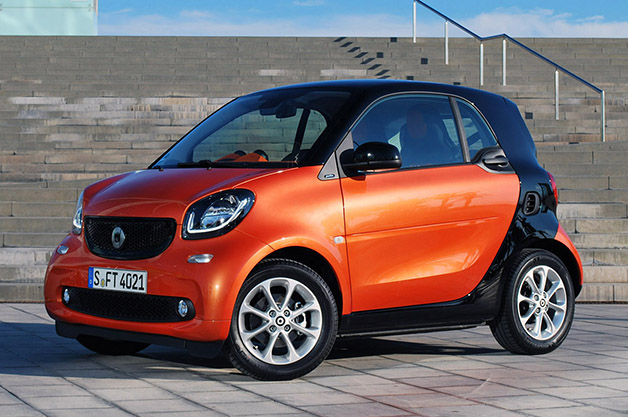
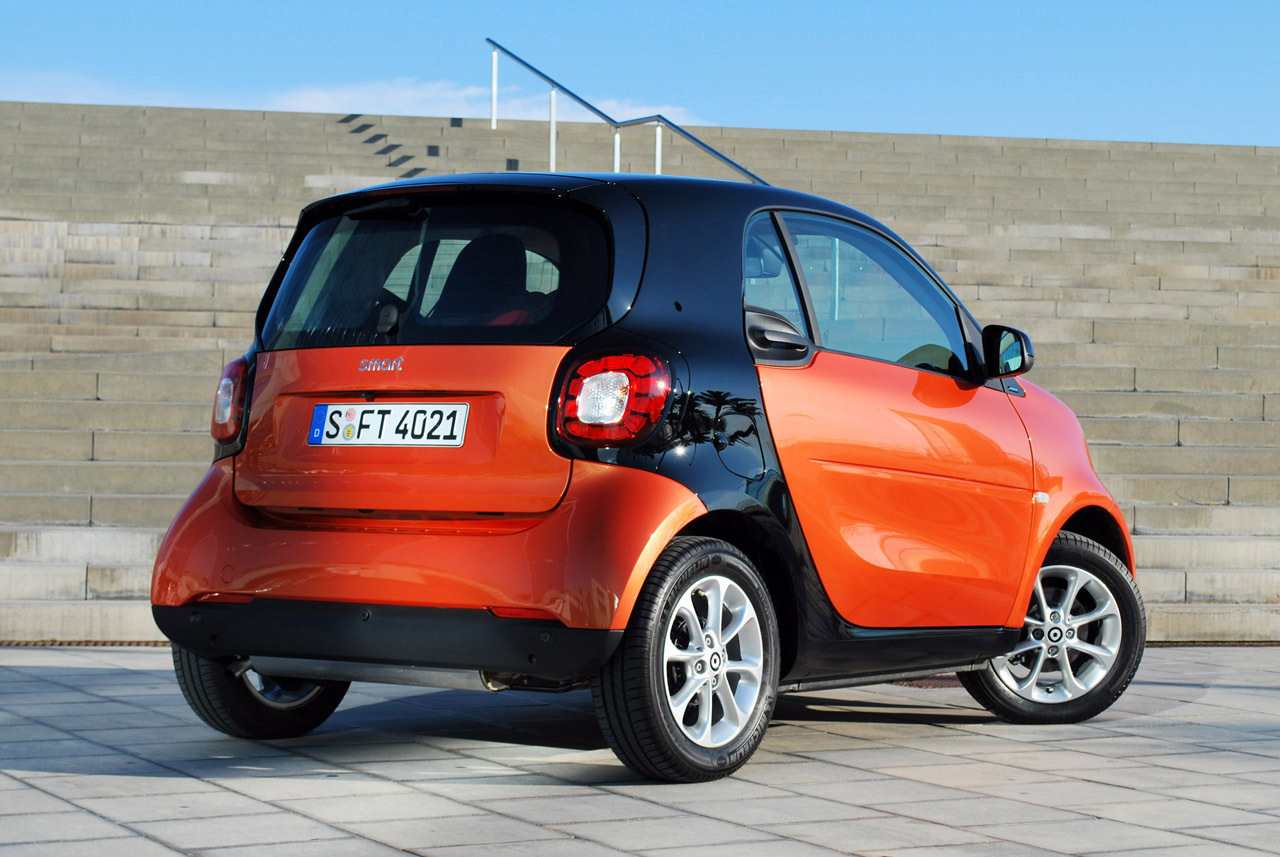
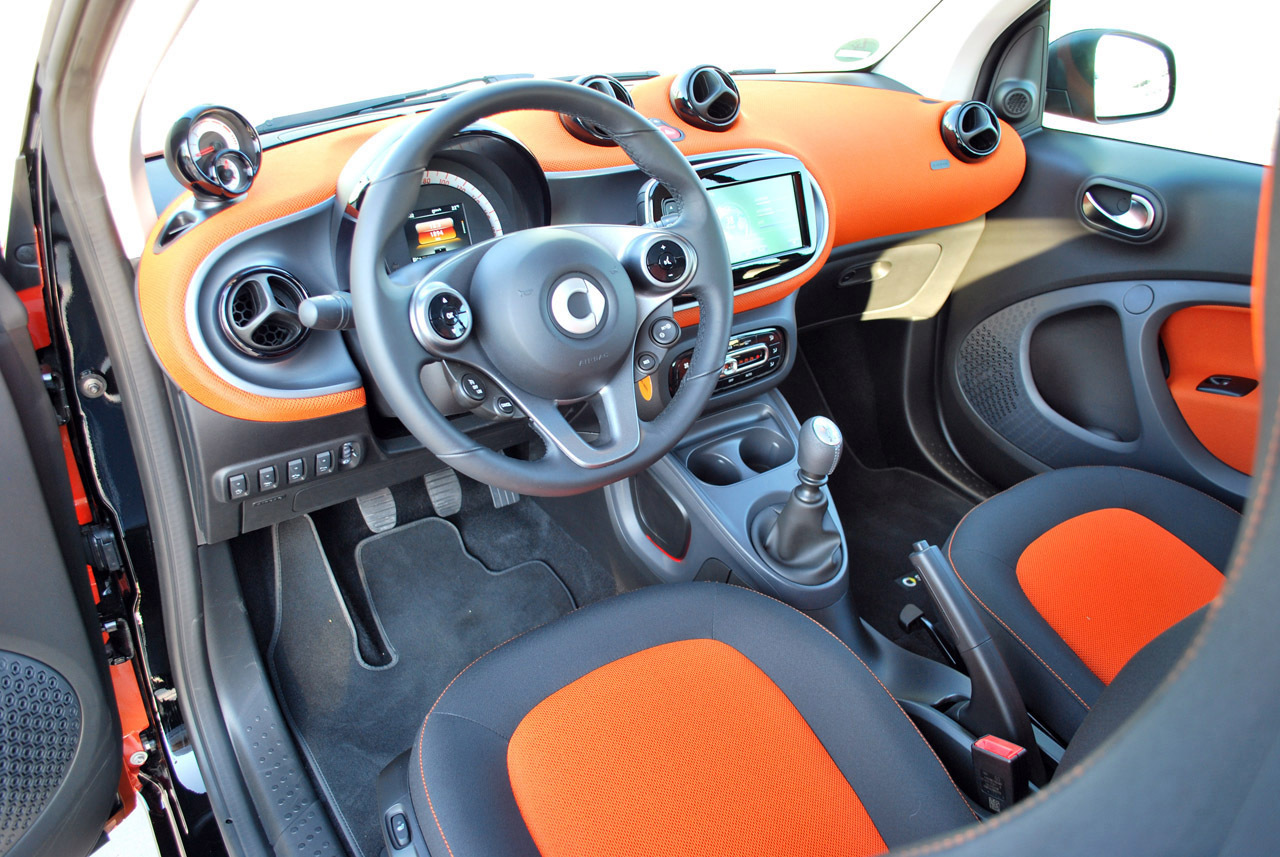
In the sixteen years since Daimler first introduced the Smart car, the micro city car market has grown significantly to the extent that the urban-oriented brand doesn't just have more competition to contend with these days than it did in the late 90s; for the first time it has real competition on its hands altogether. In other words, while the Smart Fortwo once had the micro city car market almost entirely to itself, new rivals have emerged to challenge its dominance. It may be a long time, if ever, before slightly larger contenders like the Scion iQ and Volkswagen Up! catch up to the 1.6-million units Smart has moved since it first hit the market back in 1998, somehow never managing to turn a profit along the way. But the bottom line is that Smart's position in the market is far from assured, especially relying, as it has, on the same architecture for over a decade and a half. So after strongly hinting at the way forward with a series of show cars, Daimler revealed the all-new Smart Fortwo and its bigger brother, the Forfour, in July ahead of its debut at last month's Paris Motor Show. With both the brand's future and its supremacy in the urban mobility market hanging in the balance, we boarded a flight to Barcelona to see what Daimler had up its short sleeve. What we found was a two-seat city car that's not just a substantial improvement over the model it replaces, but an altogether different beast– one which doesn't aspire to be everything to everyone, but just might be what drivers in the world's densest urban cores will need... and little more. Without a doubt, the biggest question when it comes to replacing small cars is whether they should grow in size from one generation to the next. And when it comes to the new Smart Fortwo, the answer is both yes and no. Daimler has clearly paid careful attention to not make its new city car any longer than the tiny niche which the original carved out for itself. With the rubber already pushed out to the extremities, the Smart's wheelbase has hardly grown any, either. And with an already upright orientation, neither has its height. Where the new Fortwo has grown is in width. At 65 inches, the new model is roughly four inches wider than the one it replaces, which might make it a little trickier to slot perpendicularly between full-sized parked cars, but it delivers more stable cornering and a roomier interior. Small as it is, the new Fortwo also looks more substantial than the Smart we've known until now. Part of that comes down to the relative dimensions that also make the new Fortwo four inches wider than it is tall, reducing the visual impression (justified or not) given by the outgoing model that it could topple over in hard cornering. The more planted look is completed by more substantial styling, with meatier lights, grille openings and contrasting Tridion safety cell. Whatever Daimler's styling department could visually beef it up, it seems, it did. So if the outgoing Smart looked to you like a folding chair on wheels, the new one may strike you more like a stable armchair, even though it's only actually grown in one dimension. The latest-generation Smart has also clearly been designed to appeal to non-traditional buyers. With its safety cell, mirror caps, grille and wheels contrasting with the principal body color, the new Fortwo offers customers an array of 40 exterior color combinations to choose from – and that's before interior options are even taken into account. Plastic body panels that reduce the prospect of dents and scratches also ought to make the Fortwo more appealing to urban dwellers who might otherwise scoff at the notion of owning a car. Once squeezed into a tiny parking spot, though, the retention of the outgoing model's split tailgate ensures it's still easy to get at whatever you've got inside. There's even a storage compartment inside the lower portion of the tailgate itself for small items – one of many steps Smart has taken towards making the best of an inherently small cabin. The optional panoramic glass roof fitted to our tester (a cabrio version is set to follow later) lent an airy feel to what could otherwise be a claustrophobic cabin, especially with the large rear pillars and oversized rearview mirror unfortunately obstructing outward visibility. Our tester was also fitted with a seven-inch touchscreen (instead of the standard smartphone dock) that worked well along our route, as well as an optional adjustable tachometer/clock pod mounted atop the dashboard to the left of the standard TFT instrument display. We appreciated the supportive and adjustable seats, the sporty mesh dashboard trim, the spherical air vents and the simple climate controls that cleverly bridge the gap between cheap dials and costlier digital buttons with a magnifying glass sliding along a horizontal rule to set the desired temperature. Cargo capacity has increased incrementally as well, but a car as small as the Fortwo will still never be a top choice for hauling large items. However, Daimler claims a higher ratio of interior volume to exterior footprint than anything else in its diminutive class: measured from footwell to tailgate, the interior accounts for an impressive 75 percent of the car's length. |