


|
News Source: topspeed.com
|
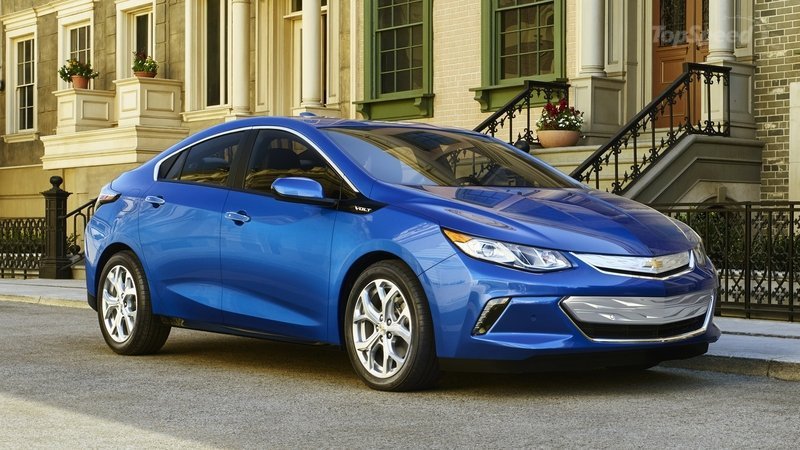
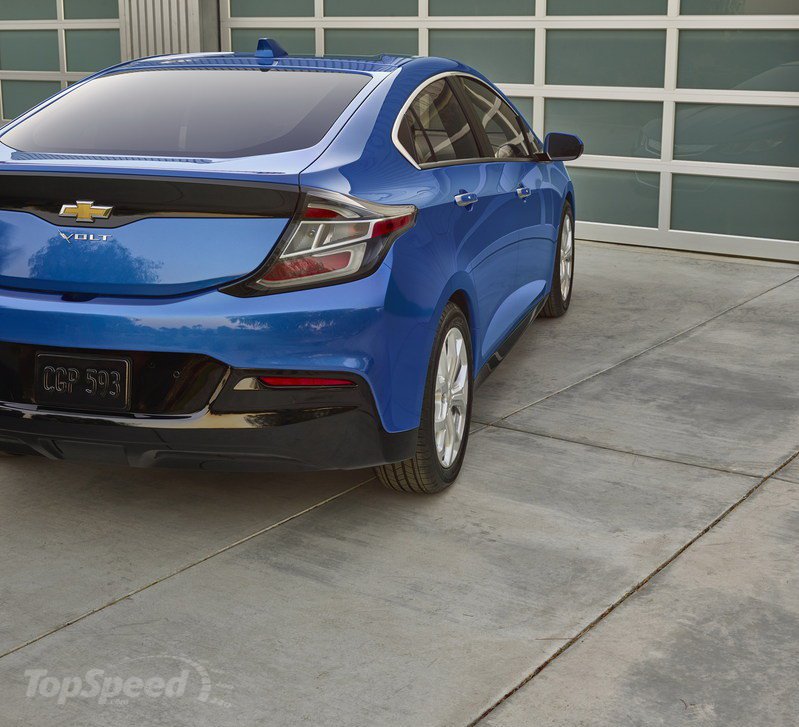
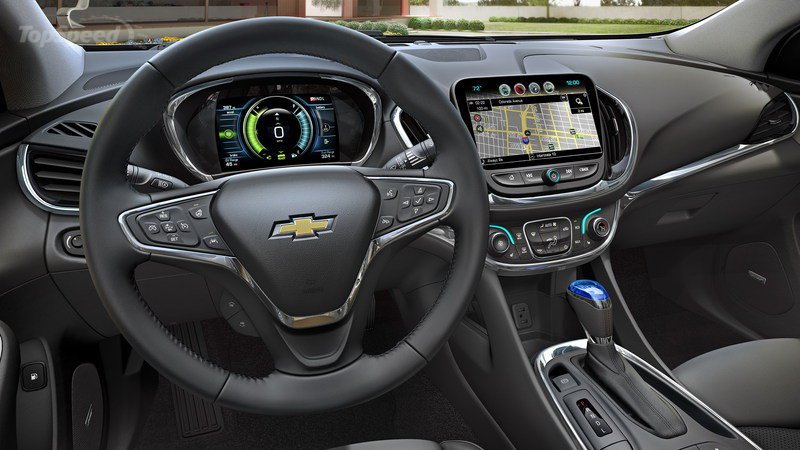
Launched for the 2011 model year, the Chevrolet Volt is GM’s first volume plug-in hybrid vehicle. Also sold as the Holden Volt, Vauxhall Ampera and Opel Ampera around the world, the five-door compact has already won numerous awards, including the 2011 North American Car of the Year. The most advanced version of the Volt used a 17-kWh battery that enabled it to return a range of 38 miles in all-electric mode. For 2016, the current Volt is being replaced by a redesigned, second-generation vehicle that delivers enhanced fuel economy from its revised gasoline generator, better performance and a greater electric-only range. The new Volt has been revamped inside and out, with emphasis on a sportier exterior design and a brand-new drivetrain that’s significantly lighter than its predecessor. The five-door compact is also slightly bigger in its second generation, allowing Chevy to not only increase legroom front and rear, but enable the Volt — previously a four-seater — to offer seating for five. Read on for the full run-down. Updated 01/12/2015: The new generation Chevrolet Volt made its world debut at the 2015 Detroit Auto Show. Click past the jump for the full details and specs on the 2016 Volt. Chevrolet redesigned the Volt’s outer shell into a flowing, more dynamic shape. While it still remains recognizable as a Volt, the second-gen car is more muscular front to rear, with nicely carved body sides and a sculpted hood. The headlamps are larger, while the main grille is slimmer, giving the Volt a sportier appearance. At the same time, the reshaped front bumper incorporates a massive apron grille and vertical LED units in opposition to the previous models’ horizontal ones. For the very first time, the Volt receive active grille shutters for improved aerodynamics and efficiency. Around back, the Volt carries the same liftback hatch design, but the styling is less boxy thanks to its revamped taillights, bumper and tailgate. Gone are the flat, horizontal taillamps, now replaced by stylish units that embrace the trunk lid, while the black insert running the length of the tailgate has been extended downward to include the Chevrolet bowtie. Below, a larger black apron incorporates the license plate and mimics a rear diffuser The enhanced sportiness of the new Volt is visible from the sides as well, mainly due to its slightly longer overhangs, sloping roofline and sculpted character line that begins from the front wheel arches and runs the length of the car until it meets the taillights. The new wheel designs contributes to this as well. As far as proportions go, the new Volt is longer, wider and sports a longer wheelbase, while sitting slightly lower when compared to the first-gen car. The interior of the 2016 Volt is as fresh as it gets, but although it has been significantly redesigned, it’s more of an evolution than a revolution. Still, the overall styling feels modern and more upscale with better-placed controls and a simplified center-stack configuration. The eight-inch reconfigurable instrument cluster carries over from the previous model, but the graphics are all-new and now display more data. An additional eight-inch touchscreen placed above the center stack provides access to the Chevrolet MyLink system. Design-wise, everything from the dashboard, the door panels, the center console, and the seats have been revised. While the latter can be wrapped in leather, most of the surfaces remain plastic. However, these elements are more refined than before, complemented by metallic trim on the center console and the dashboard. The steering wheel is also new, from the redesigned three-spoke layout to the reconfigured controls. There’s even bigger news in the rear, where the Volt can sit up to three people for the first time, making the range-extended EV a five-seater. The rear compartment also comes with a slight increase in legroom — from 34.1 to 34.7 inches. On the other hand, both rear headroom and shoulder room have decreased by 0.2 and 0.7 inches, respectively. In terms of technology, customers will benefit from a GPS location-based charging feature, standard rear-vision camera and a heap of safety features, including lane keep assist with lane departure warning, side blind zone alert with lane change alert, rear cross traffic alert, front automatic braking, and advanced park assist with front and rear park assist. The second-generation Volt receives an all-new drivetrain that includes revised battery pack, drive unit, range-extending engine and power electrics. Devel oped using data collected from first-gen Volt owners, the new system offers greater EV range and fuel economy compared to its predecessor. For instance, the new two-motor drive unit is up to 12-percent more efficient and weighs 100 pounds less than the previous unit. The battery pack is also smaller, consisting of 192 cells compared to the 288 found in the first-gen system, and weighs over 20 pounds less. As far as power goes, the battery-fueled motors crank out 149 horsepower and 294 pound-feet of torque. When the battery is depleted, the 1.5-liter engine chimes in to generate electricity for the electric motor. This 1.5-liter engine puts out 101 horsepower. As a result, the new Volt benefits from 19-percent stronger 0-to-30 mph acceleration at 2.6 seconds and a 0-to-60 mph sprint of 8.4 seconds, seven-percent quicker than its predecessor. Top speed is rated at 98 mph. Also, the redesigned 1.5-liter, four-cylinder engine used as a range extender is estimated to offer a combined fuel efficiency of 41 mpg. That’s four mpg more than the previous unit. The all-electric range sits at 50 miles, while the overall range, including fully charged batteries and a full tank of fuel, is estimated at 420 miles. Featuring a direct-injection fuel system, high-compression ratio of 12.5-to-1, cooled exhaust gas recirculation, and a variable-displacement oil pump, the new four-banger runs on regular unleaded fuel. The Regen on Demand feature, borrowed from the Cadillac ELR, is also new for the 2016 Volt and enables the driver to control energy regeneration via a paddle located on the back of the steering wheel. Chevrolet has yet to announce pricing for the new Volt, but based on GM’s claims over the past two years, the sticker should see a significant drop from the first-gen’s $34,345, not including up to $7,500 in federal tax credits. More details will become available closer to the car’s on-sale date, scheduled in the fall of 2015. |

|

| Copyright © 2026 • www.showcar.com.au • Showcar Pty. Ltd. • Contact info@showcar.com.au | sydney web design & development by Webski |