09:39PM - 29.01.'15
|
News Source: autoblog.com
|
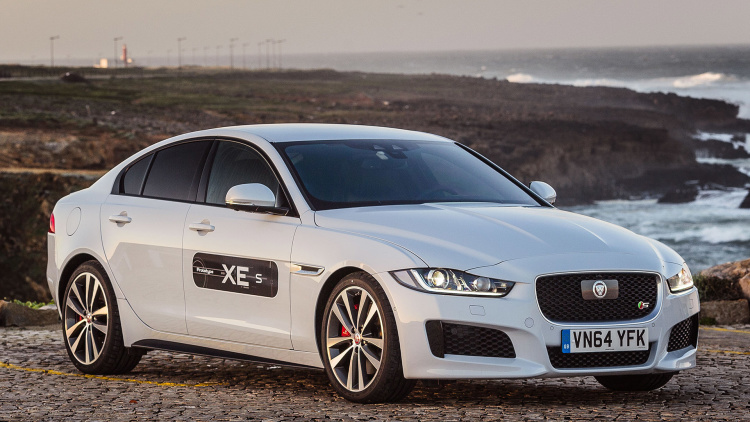
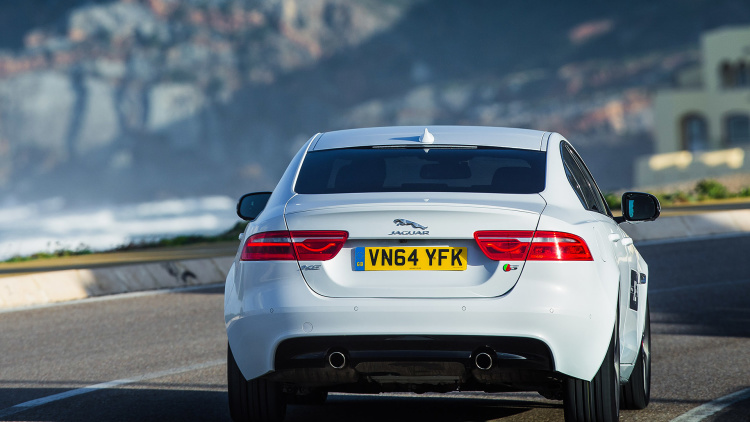
For the first time in decades, the prize for the best-driving compact luxury sport sedan is very much up for grabs. BMW's 3 Series, the segment's longstanding archetype, has grown a bit soft, distant and pricy. Its Japanese rival from Infiniti, the Q50, lost the plot thanks to its video game steering and dated powerplant. The Audi A4 is due for replacement and the fantastic Mercedes-Benz C-Class skews luxury over sport. The Cadillac ATS? With an excellent chassis hobbled by middling powertrains and the devil's own infotainment system, it isn't selling. Unlikely as it sounds, the Lexus IS is probably the segment's best driver, but you've got to learn to love those turn-to-stone looks. So, where's a segment malcontent to look? Provided he or she is patient enough to wait for this car's spring 2016 arrival, allow us to recommend the 2017 Jaguar XE. Let's be honest. Jaguar really needed to come out with guns blazing. The last time the British brand battled in the compact premium sport sedan segment, its much-maligned X-Type slinked into the underbrush, tail between its legs after just a single generation. While the X was in some ways a better car than history will begrudge it, there's no getting around that Jaguar brought a front-wheel-drive-based knife to a rear-wheel-drive gun fight. This new XE will need to be a very different kitty, and it is. Internally known as X760, Jag's latest rides atop an all-new aluminum-intensive modular architecture wearing a handsome mosaic of aluminum and steel body panels. While the XE's design has struck us as very familiar since it first bowed in September, it's an attractive shape. Its longish, 111.6-inch wheelbase and wheels-at-the-corner stance gives the design a planted look emphasized by its wide rectangular grille and prominent lower air intakes. Jaguar claims a super-slick .26 coefficient of drag, but that's the skinny-tired overseas base model that we'll never see – ours will likely ring up a few hundredths higher. The aluminum body-in-white is itself an impressive piece of work, weighing just over 550 pounds. Vehicle engineering manager Jonathan Darlington says it's 20-percent stiffer torsionally than the XF, and "the lightest in the sector by far." What's more, the chassis incorporates liberal amounts of recycled aluminum (a claimed world first) and increased use of structural adhesives. We'll leave further details for How It's Made, but suffice it to say, an afternoon knifing a prototype XE through the wooded hills around Lisbon, Portugal, suggests Jaguar's engineers have done not only their homework, but perhaps that of their colleagues, as well. At this point, we'd normally move on to discuss the XE's engine lineup, or its interior, but we're going to grab the wheel and talk about the steering, because it's one of this sedan's most impressive accomplishments. We've grown incredibly tired of hearing automakers extolling the virtues of their new electrically assisted power steering systems. We know they save fuel and they allow for more adjustability through ones and zeroes, but in anything with any sporting pretenses, the vast majority of the time, we'd just prefer a decent hydraulic setup and bin the few percentage points of fuel savings in favor of actual road feel and progressive assistance. Yet in 3.0-liter V6 S trim riding on 19-inch Dunlop SP Sport Maxx RT summer tires, this Jaguar's electric steering has the goods. It may be a shade light at parking-lot speeds, but when you're on the move, it's got positive on-center feel, with linear effort build and excellent accuracy. Most impressively, it's actually possible to tell what's going on with the front tires. The system even accounts for ambient temperatures, which can have an effect on tire pliancy and pressure, not to mention the dampers' kinematic properties. It's one of the best EPAS systems we've ever encountered, in any segment. (A caveat: before declaring this the best steering in the class, we'll reserve final judgment until we drive a North American production-spec model on in-market tires. On our drive day, we also drove a 2.0-liter diesel XE on Pirelli Cinturato P7s, and not only was road feel not present as on the V6 S, there was also a lot more road noise.) The double-wishbone front suspension and rear integral link arrangement on S models is augmented by standard Adaptive Dynamics, Jaguar-speak for electronically controlled dampers. The system makes the most of the rigid chassis and willing steering, allowing for both excellent wheel control and proper levels of road isolation when called for. Jaguar tells us the goal in using an aluminum-intensive chassis wasn't just low overall weight, it was a strategy that allowed engineers to spend weight in the places that mattered – including a beefed-up suspension with tremendous lateral stiffness that helps create the sharp turn-in we spoke of. That seems to be a tacit admission that despite its chassis, the XE isn't as feathery as one might hope. In fact, the base weight of the rear-drive XE S we tested is 3,670 pounds in German trim, suggesting it could be around 3,800 lbs or more by the time it's certified for NA roads – America's BMW 335i tips the scales at under 3,600 lbs. No matter. The Jag may not be the segment lightweight, but you won't notice from behind the wheel. The XE's excellent transient response is surprisingly unaided by a mechanical limited-slip differential. Apparently Jaguar is keeping one on the shelf for the inevitable higher-performance variants, but it isn't really required – torque-vectoring by braking technology and that properly sorted suspension helps get the job done instead. |