09:15PM - 19.02.'15
|
News Source: autoblog.com
|
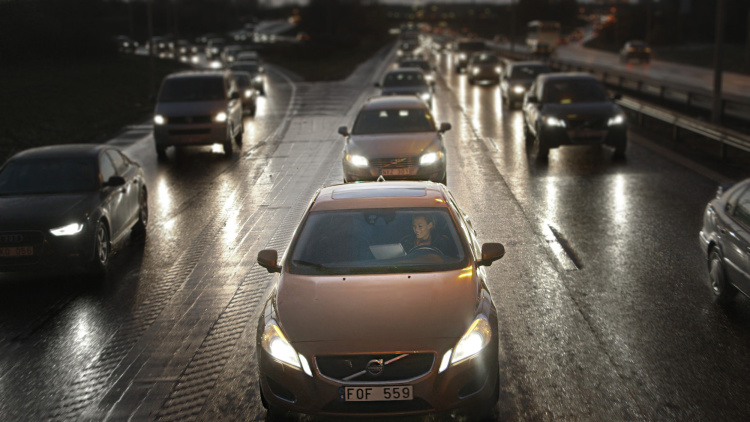
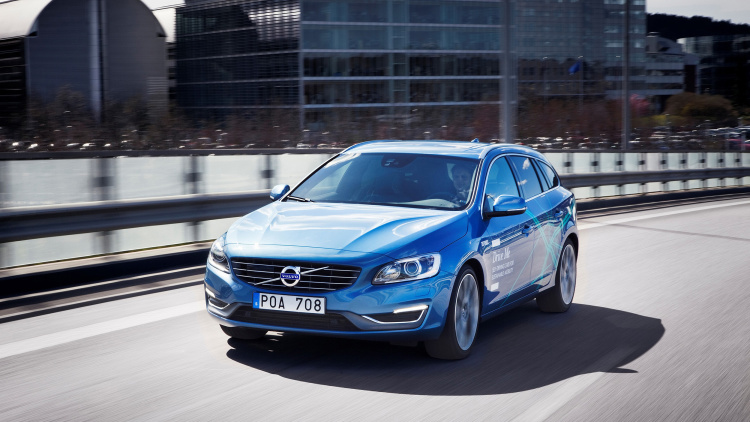
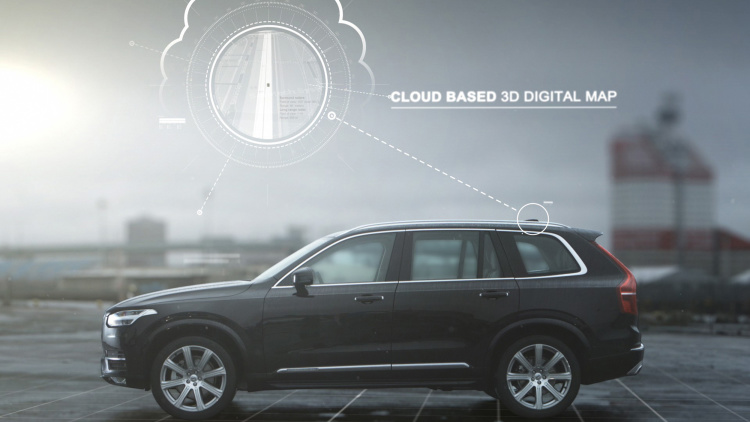
Autonomous driving technology has been progressing at a staggering pace, however we're still some ways off from cars that can not only drive themselves around a controlled environment, but through traffic with other vehicles still being operated by actual human beings. As we reported, Volvo is taking that development a step further, though, with its latest Autopilot technologies, and aims to have them on the road in a pilot project in about two years' time. The Swedish automaker aims to launch the Drive Me pilot program by 2017, placing 100 advanced vehicles capable of driving themselves in the hands of actual customers in its hometown of Gothenburg, Sweden. It took unprecedented coordination between legislators, transport authorities, the municipal government and the manufacturer itself, but Volvo is working to iron out the wrinkles. "We are entering uncharted territory in the field of autonomous driving," said Volvo's R&D chief, Dr. Peter Mertens. "Taking the exciting step to a public pilot, with the ambition to enable ordinary people to sit behind the wheel in normal traffic on public roads, has never been done before." The Swedish automaker's Autopilot suite of self-driving systems utilize a staggering array of sensors to generate a 360-degree, three-dimensional digital picture of the vehicle's surroundings and everything in them. Radar and cameras placed in the windscreen read traffic signs, road conditions and other objects or vehicles on the road. There are additional radar transmitters at each corner of the vehicle, two more cameras in the side mirrors along with one in the grille, and one in the rear bumper to detect proximity and lane markets. A multi-beam laser scanner under the air dam detects objects nearly 500 feet in front of the vehicle. A trifocal camera behind the windscreen is employed for artificial depth perception and suddenly appearing hazards. Low-range radar mounted in the rear bumper detects objects from behind, particularly when changing lanes. Ultrasonic sensors identify objects in the vehicle's immediate vicinity. A high-definition 3D digital map provides the system with information on the road, traffic signs, guard rails, highway exits and more, accurate down to the centimeter. The latest state-of-the-art GPS interfaces with accelerometers and gyroscopes to navigate. And the entire system is connected via the cloud to traffic control for up-to-date information. That's a whole lot of technology to coordinate, but Volvo is evidently hard at work to make it happen. As the company's own technical specialist Dr. Erik Coelingh points out, "Making this complex system 99 per cent reliable is not good enough. You need to get much closer to 100 per cent before you can let self-driving cars mix with other road users in real-life traffic." That's why the Swedish automaker is designing its autonomous prototypes with redundant systems, just as they would in the aerospace industry where a systems failure wouldn't result in a vehicle simply being stranded by the side of the road, but would lead to catastrophe for everyone on board. |