03:24AM - 17.11.'15
|
News Source: autoblog.com |
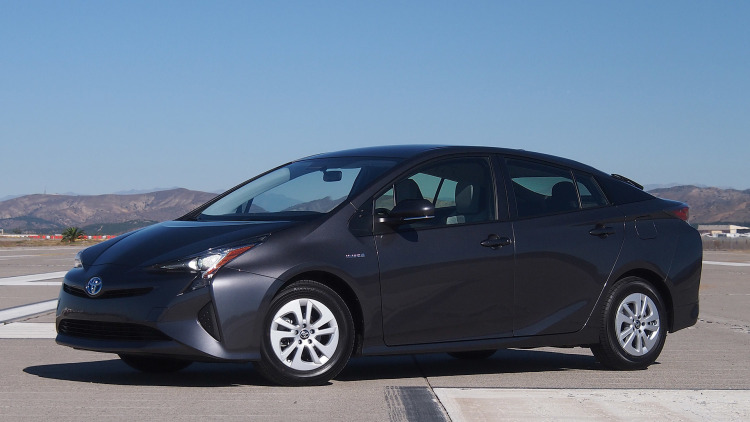
The Toyota Prius has long been a polarizing vehicle. Enthusiasts don't like it because it defined the car as an appliance, a way to get from A to B without any driving engagement. Of course, millions of people didn't care about that in the slightest (Toyota's sold 3.5 million Priuses), and simply appreciated the Prius because it let them get 45 or 50 miles to the gallon without a thought while encouraging a relaxed rate of progress – maddening to any driver stuck behind a slow-moving Prius on the road. After all these years, the Prius is as much a Rorschach test as it is a form or transportation. The new Prius is going to present the world with a conundrum: The fouth-generation hybrid is Toyota's attempt to redefine what it means to be a Prius. If you've seen the new Prius, then you likely have an opinion about what it looks like. Initial response to the leaked spy photos was overwhelmingly negative. After spending some time with the new Prius in Japan and California recently, the look has grown on us. The back end is still the most difficult angle to appreciate, but walking up to a parking lot of these is not the dispiriting experience some of our readers might expect. And that's before we tell you about how this thing drives. The main reason Toyota was able to introduce actual driving dynamics into the new Prius lies in the Toyota New Generation Architecture (TNGA). The car is wider now, which helps, and has a lower center of gravity. The MacPherson strut suspension up front remains the same as before, but in the back, Toyota has gone to a double wishbone setup. TNGA increases the stiffness by 60 percent compared to the third generation, which helps with overall rigidity. It's no longer the case that the car "drives like a Prius", but true driving aficionados won't fall in love with the way the new hybrid handles. There's an energy to cornering that simply didn't exist before. You've still got electronically controlled steering and a CVT, but the entire package now promises that, if you want to – and this remains a big if – you can be sprightly while still getting well over 50 miles per gallon. For that sort of fuel economy, the new Prius is honestly more fun than it should be. You can learn more about the promise of TNGA here. It says something about the new Prius that we're a number of paragraphs into the story before we get to the car's fuel economy. And here's where the Prius reverts back to its old habits. We drove the Prius Two trim model, which is the new car's entry point. It gets the same estimated fuel economy figures as most of the rest of the trim levels – 55 city, 50 highway, and 52 combined – but the new Prius Two Eco, which uses a li-ion battery instead of the NiMH, gets an estimated 58/53/56. It does this mostly by being 65 pounds lighter, losing weight in the different battery, and because it comes without a spare tire. Over a gentle drive of 22.5 mostly highway miles, we got a dashboard display of 67.3 mpg. But when you add in a similar stretch of more stop and go driving and some winding roads, our total for 48.8 miles was 57.3 mpg. That's a great number, even if the overall average amount of fuel you'll save over the course of a year with the fourth-gen Prius instead of a third-gen model is negligible. Given 50 mpg combined in the third-gen and an estimated 52 in the new Prius, you'll save around 12 gallons if you drive 15,000 miles a year. The different trim levels offer quite a disparity of functions and available technology. The coolest of these, Toyota's new TSS (Toyota Safety Sense) Package is standard on touring models and available on Prius Three and Prius Four with the Advanced Technology Package. It's not available on the Prius Two. TSSP doesn't turn the new Prius into a self-driving vehicle, but it does set the stage for that sort of thing. The package includes a pre-collision warning and braking system that can identify vehicles and pedestrians (it's not failsafe, though, as we learned on the track in Japan, where our driver had to manually hit the brakes or else he would have hit the pedestrian dummy) as well as a lane departure alert with steering assist and other conveniences. If you opt for the Prius Two Eco trim, you might have a problem in tremendously cold temperatures. A Toyota representative said that if the li-ion battery pack gets to below -29 degrees Fahrenheit, it doesn't work right, and the car itself might not be able to function because the battery is an integral part of the powertrain. It should be noted that an outside temperature of -29 won't be a problem in and of itself, since the battery is protected from the cold to some degree. Still, sitting for a week in some Point Barrow parking lot in the dead of winter might not be ideal. Then again, northern Alaska is a tough challenge for most vehicles. |