


|
News Source: topspeed.com
|
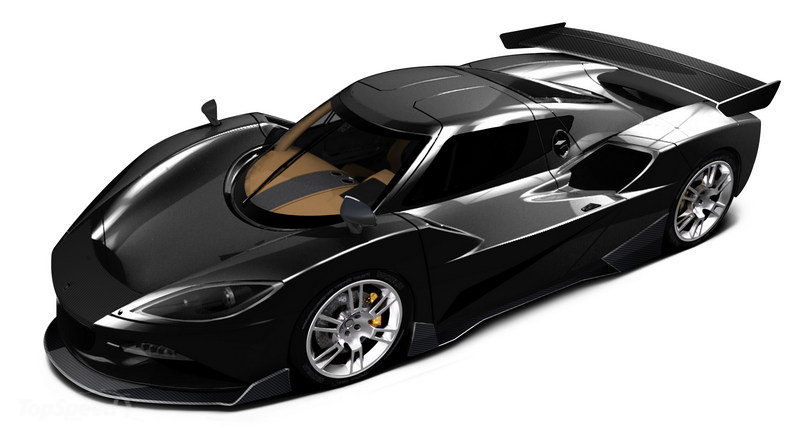
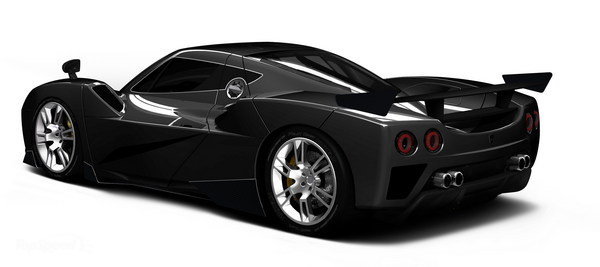
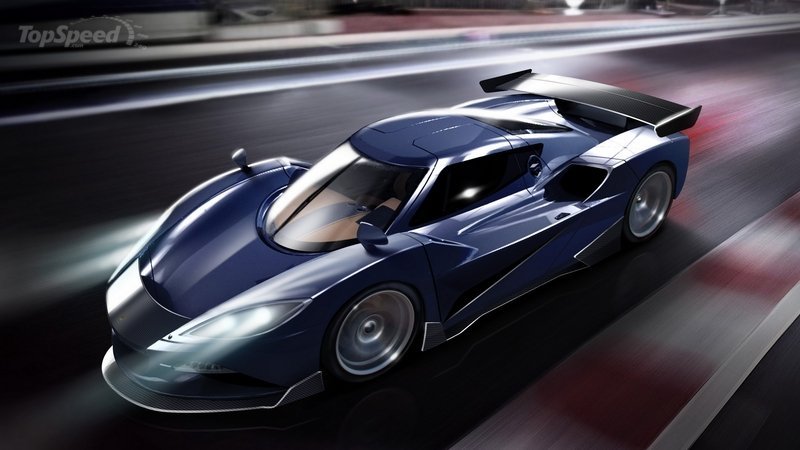
The Arash AF10 was the first model produced after Farboud Limited changed its name to Arash Motor Company LTD. It made its public debut at the MPH Motor Show alongside other models from the likes of Koenigsegg, Lamborghini, McLaren, and Maserati, to name a few. That AF10 was powered by a 7.0-liter V-8 that was sourced from a sixth-generation Chevrolet Corvette Z06 and had a Graziano GT-ME1, six-speed manual transmission. The car put out 550 horsepower, 475 pound-feet of torque, and was capable of hitting 205 MPH. All told, the British supercar builder did well with this beast, but for the Geneva Auto Show this year, Arash has stepped its game up big time. This year, Geneva marks the debut of a new Arash AF10. As far as the body goes, there are some changes, but the overall design is still recognizable as an AF10. See, the big change for the 2016 model comes in the form of available power. It still comes from the Corvette, but now it’s the updated 6.2-liter supercharged V-8 from the C7 Corvette Z06. Arash didn’t leave it alone, juicing the V-8 to 900 horsepower. Arash then added what it called the "Warp Drive." I’ll go into specifics about that later, but this hybrid powertrain that makes the old AF10 seem slow by comparison. Now that the cat is out of the bag, I’m sure you’re as excited to read about the new AF10 as I was when I first heard the news. So, let’s take a gander and talk about the new AF10 that will debut in just a couple weeks in Geneva. On the outside, the actual design of the AF10 resembles more of a facelift than a redesign when compared to the original. Up front, the car still looks like it is smiling at you with the large center grille. To the sides, Arash reshaped the corner vents so that they are more rectangular than the triangular vents on the original. Those LED foglights are still mounted in the vents, but they are now integrated into a horizontal louver that extends the width of each vent. Even the headlights share a similar shape. There is a large carbon fiber spoiler on the front fascia, and another one positioned between the headlights. To the sides, Arash reshaped the corner vents so that they are more rectangular than the triangular vents on the original. As we move farther back toward the teardrop cabin, the AF10 still has those boxy, front wheel arches that lend a flat mounting surface for the side view mirrors. Just behind each side view mirror is an open vent that is integrated into the doors, clearly to provide airflow from the front wheels. We see more carbon fiber down at the side skirts. Huge air intakes for the engine are positioned in front of the boxy, rear wheel arches. At the rear, we can get the full gist of the teardrop styled cabin as it comes to a point toward the rear spoiler. The new AF10 now has a stationary, but function carbon fiber spoiler attached to the horizontal flat that runs between the two fender extensions on the rear fascia. The taillights are of the dual, round lens design – similar to that of the C5 Corvette. There is a huge vent on each corner of the rear fascia, and twin, dual exhaust pipes protrude just above a rather mild rear diffuser. The car rides on 20-inch wheels in the rear and 19-inch wheels in the front. The body itself is made from carbon reinforced plastic with aluminum honeycomb sandwich construction. Behind the body, sits a carbon reinforced tub composed of just 13 pieces in T1000 carbon fiber and Aramids. The front and rear subframes are made from machined aluminum and have a torsional rigidity of more than 60,000 Nm per degree of twist force. The chassis is supported by a double wishbone suspension system in the front and rear that also has a hydraulic lift system. The suspension lifts 15 cm as needed for speed bumps or road conditions and lowers by 15 cm for high-speed runs. Not a bad setup, but what until you hear all the juicy details in the drivetrain section. Arash has kept quiet about the interior of the AF10, probably to save a little something special for its debut in Geneva. From what we can see in the images released, I expect to see a two-tone interior with tan leather making up a majority of the coverings, and what may be grayish-black Alcantara, which is seen as an interior racing stripe on the dashboard. If my assumptions are correct, well see the same grayish-black coloration used for the seat inserts as well. I expect to see a large infotainment screen in the center of the dash, that will also provide information for the charging system and battery state on the hybrid model. The new AF10 is offered in three different flavors – the base AF10, the AF10 Hybrid, and the AF10 Hybrid Racer. The base AF10 presumably comes with the same 6.2-liter as the AF10 hybrid, but it has been toned down to a mere 550 horsepower. Arash hasn’t elaborated at all on the base-model, so considering that is the same figure we saw on the old AF10, it could be powered by the same Chevy-sourced 7.0-liter. More to the point, that supercharged 6.2-liter V-8 makes 650 horsepower in its native Corvette Z06, furthering my suspicion of the older powerplant’s use. A total of four electric motors, producing a total of 1,180 horsepower and 803 pound-feet of torque brings total output to 2,080 horsepower and 1,681 pound-feet of torque. Arash did, however, elaborate on the AF10 Hybrid, which also has the same powertrain as the Hybrid Racer. The hybrid has that 6.2-liter V-8 that has a supercharger mounted between the heads with built in charge cooling. It manages to pump out 900 horsepower and 885 pound-feet of torque. In addition, a total of four electric motors, producing a total of 1,180 horsepower and 803 pound-feet of torque brings total output to 2,080 horsepower and 1,681 pound-feet of torque. The engine is mounted to a six-speed manual transmission or optional paddleshift gearbox, and each motor has its own gearbox providing two different speeds. Maximum motor speed is limited to 13,000 rpm. The electrical motors are powered by a 32 kWh Lithium-Ion battery that has a maximum output of 880 kW. There is a 22 kW charging device built into the vehicle and charging can also be accomplished in “race” mode when the electric motors act as generators. |

|

| Copyright © 2026 • www.showcar.com.au • Showcar Pty. Ltd. • Contact info@showcar.com.au | sydney web design & development by Webski |