


|
News Source: topspeed.com
|
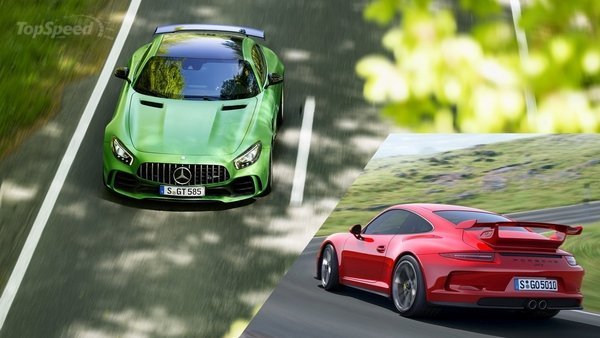
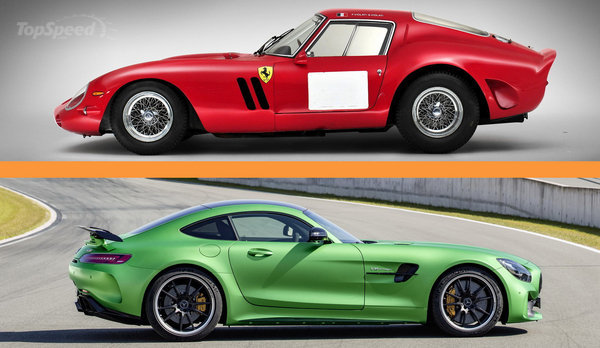
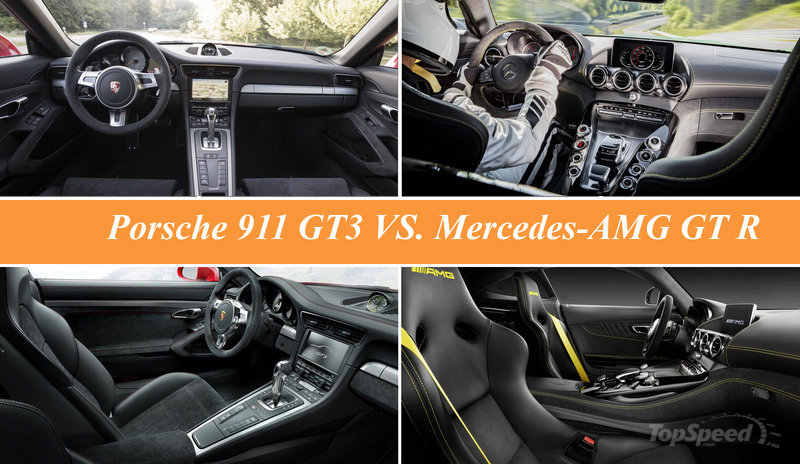
When Porsche introduced the 911 GT3 in 1999, it established a new niche of road-legal sports cars designed for the race track. Although the concept behind the GT3 wasn’t exactly new — it’s part of a line of high-performance models that goes back to the 1973 911 Carrera RS — the amount of race-bred components poured into the car was unprecedented. The fact that the track-oriented 911 was named after the FIA’s Group GT3 class also helped cement Porsche’s position at the top of the industry. The 911 GT3 has evolved dramatically since then and spawned even quicker and more powerful versions throughout its career. But, other automakers began to follow the same route and have launched strong competitors for Porsche’s range-topping, naturally aspirated coupe. The latest to join these ranks is Mercedes-Benz, which unleashed the AMG GT R for the 2018 model year. As the name suggests, it is a beefed-up version of the Mercedes-AMG GT, a sports coupe specifically developed to compete against the Porsche 911 Turbo. However, the GT R is not only quicker and more powerful than the standard GT, it’s also equipped with a massive amount of race-bred components, complemented by a body kit that’s nearly identical to the Mercedes-AMG GT3 race car. As you might have already guessed, the GT R was conceived to give the mighty 911 GT3 a run for its money. But, does it have what it takes to compete against one of the most exciting sports cars ever built? I think so, and I put together five reasons why the GT R will make the 911 GT3 look over its shoulder in years to come. Have you noticed how most sports cars and supercars come with a mid-ship engine layout nowadays? Well, this wasn’t the case a few decades ago. Before the Lamborghini Miura made the mid-engined concept popular in the mid-1960s, all sports car had their powerplants mounted between the driver and the front axle. Sure, you could argue that that modern sports cars such as the Alfa Romeo 4C, Jaguar F-Type, and Chevrolet Corvette also have their engines in the front, but these are also different than the classic configuration, which involved a long hood and a really short deck lid. To get a better idea of what I’m talking about just take a look at the iconic Ferrari 250 GTO. While it may sound ludicrous nowadays, it was cars like the 250 GTO that dominated the race tracks and gathered the most attention at auto shows back in the day. Long front hoods with big engines underneath were the norm, and although it’s fair to point out that the mid-engine layout was a big step forward as far as performance goes, the front-engine design is by no means dated. And, with so many manufacturers dropping the powerplant behind the seats nowadays, the AMG GT R is a welcomed addition that somewhat adds a bit of diversity to the modern sports car market. The AMG GT R is a welcomed addition that somewhat adds a bit of diversity to the modern sports car market. More so since there aren’t any full-fledged, track-prepped sports cars using this configuration out there. Granted, there are plenty of front-engined, high-performance models to choose from, but none bring together the grand tourer body style and the race-inspired performance better than the AMG GT R. If you want horsepower, you can always go with the Aston Martin V12 Vantage. Need better handling? Check out the Jaguar F-Type SVR. Need both in a car that’s as sleek as a proper GT and delivers the thrills you can only get in a race car? Well, that’s a mission for the AMG GT R. To be fair, there’s also the Ferrari F12berlinetta, but the $300,000+ sticker takes it out of the average Joe’s reach. Needless to say, the long-hooded, GT configuration doesn’t make the AMG GT R quicker or more agile than the 911 GT3, but it makes it unique and turns in into a tribute for the classic sports car layout hardcore enthusiasts have come to appreciate. Speaking of classic sports cars, the Mercedes-AMG GT was, much like the SLS AMG, designed with the 1954 300 SL in mind. Although it is part of the SL-Class series, which has been produced continuously over five generations as of 2016, the 300 SL has remained a unique car since its discontinuation in 1963. The AMG GT bears an uncanny resemblance to the first-generation SL. The long hood, the short deck lid, the GT layout, and the powerful stance are all there. And, this is no coincidence. At some point, the folks over at Mercedes -Benz realized that their modern products have very little in common with the brand’s legendary cars from the 1960s, and designed the SLS AMG and the SLR McLaren accordingly. And, even though the AMG GT doesn’t have the SLS’ "gullwing" doors, it’s a more accurate interpretation of the 300 SL. The historic relationship became a lot more interesting with the AMG GT R, which harkens back to the W194, or the race car from which the road-going 300 SL was derived The historic relationship became a lot more interesting with the AMG GT R, which harkens back to the W194, or the race car from which the road-going 300 SL was derived. Mercedes-Benz was quick to brag about this by saying that the R’s larger grille with vertical slats is based on the 300 SL race car that won the legendary Panamericana road race in Mexico in 1952, but that’s more than just fancy PR talk. The ressemblance is again noteworthy, with the "AMG Panamericana" being just one of the many design features shared between the two. Along with the styling also comes a big chunk of racing heritage, as the 300 SL won not only the Carrera Panamericana, but also the 24 Hours of Le Mans and the Mille Miglia. What’s more, it was driven by high-profile drivers such as Juan Manuel Fangio and Stirling Moss. That’s something you don’t get with the 911 GT3, and even though I’m a big fan of the Porsche and I’m just crazy about the 2.7 RS that started it all in the 1970s, there’s something about the grueling race of the 1950s that make the 300 SL such a turn on for me. |

|

| Copyright © 2026 • www.showcar.com.au • Showcar Pty. Ltd. • Contact info@showcar.com.au | sydney web design & development by Webski |