


|
News Source: topspeed.com
|
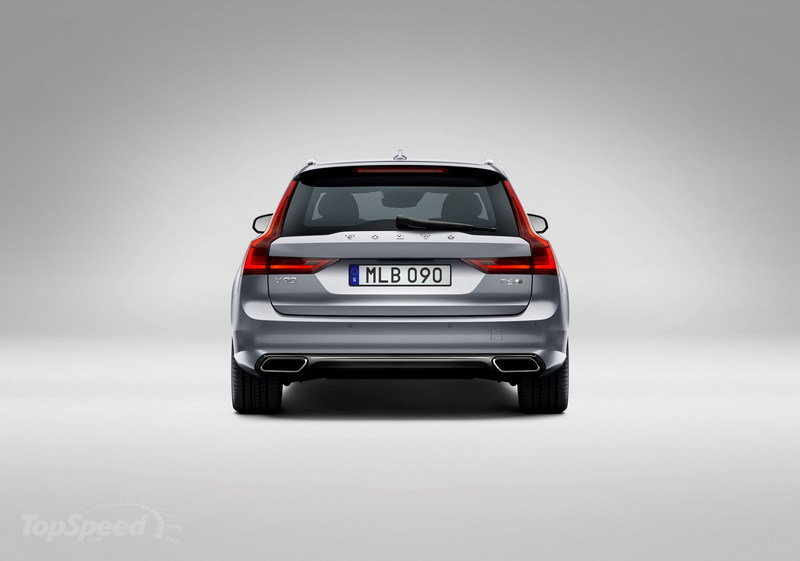
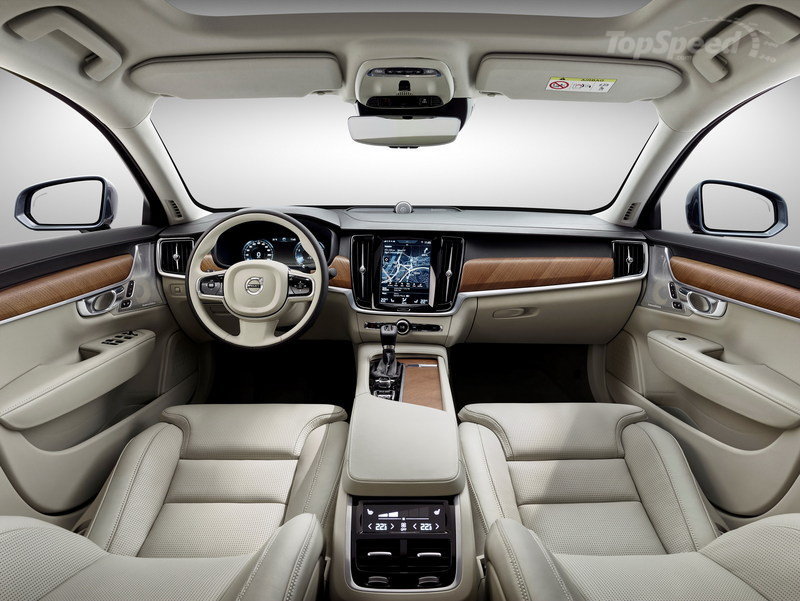
When it comes to choosing a vehicle that’s comfortable, loaded with cutting-edge technology, and capable of moving vast quantities of stuff, the possibilities are practically endless. However, if you want all that in a package that’s not some high-stance SUV or crossover, the list of options narrows significantly. But don’t fret, as both Mercedes and Volvo make wagons that fit the bill. Both offer opulence, the latest gadgets, and tons of space. But the question is – which is better? When it comes to matching luxury with technology, Mercedes has traditionally been the marque of choice. But now, as car tech shifts towards autonomy and the promise of greater safety, Volvo is looking to expand into Merc’s territory. The Swedish challenge comes from Volvo’s new V90, a more practical take on the S90 sedan. Volvo’s been in the wagon game for some time now, and with new underpinnings, a new look, and the latest in safety tech, the V90 makes a very strong case for segment superiority. But Mercedes isn’t taking it lying down. The German automaker just redesigned the E-Class for the 2017 model year, including the five-door, and it too gets a restyle and some very impressive new gear. For this comparison, we’ll take a hard look at what’s offered in terms of technology, as well as the comfort and luxury, style and aesthetics, performance, practicality, and finally, pricing and value. We’ll also toss in a few alternative models if these two don’t tickle your fancy. Mercedes describes the new E-Class five-door as “the most intelligent wagon that [it] has ever built.” The primary justification behind that statement is the Drive Pilot feature, which combines multiple semi-autonomous technologies into a single cohesive system. First and foremost, Drive Pilot offers adaptive cruise control, which will automatically adjust the Merc’s speed to match that of the car in front (up to 130 mph if you just so happen to be on the autobahn). The system will also auto-steer and auto-brake if necessary, although drivers are required to touch a sensor on the steering wheel every so often to indicate they haven’t fallen asleep or crawled into the backseat. The Merc also gets Speed Limit Pilot, which uses an external camera to read posted speed limit signs, adjusting the set road velocity accordingly. Opt for the Driver Assistance Package Plus, and you’ll also get Active Brake Assist, Attention Assist, and Remote Parking Pilot, which uses a smartphone app to move the mid-size in and out of tight spots. Other doodads include the E-Class sedan’s Car-to-X function, which will communicate with cars further ahead on the road to warn of upcoming dangers, such as inclement weather or road closures. Finally, the E-Class wagon gets a hands-free, power-operated rear hatch, and a self-leveling air suspension. For the moment, it looks like the Volvo matches the Merc blow for blow when it comes to tech, with the only real exception being the suspension set-up (the V90 uses more traditional control arms in front and a multilink in back). Everywhere else, you’ll find the same kind of technology as the Merc – there’s Pilot Assist (semi-autonomous mode with automatic throttle, braking, and steering), Park Assist Pilot (measures an available parking spot to see if the car will fit, then auto-steers in), and Cross Traffic Alert. There’s also lane-keep assist, Run-off Road Mitigation, road sign reading, Driver Alert Control, and City Safety, which can see vehicles, pedestrians, cyclists, and large animals, and will automatically brake if an imminent collision is detected. So then, where do the two cars really differ? While full specs on the Volvo have yet to be released, it’s expected that the Swedish brand will offer more standard features than the Merc. We’ll have to wait for a head-to-head, real-life comparison to see if any of these features can be considered superior (for example, which auto-follow system is more comfortable in heavy traffic?), but for now, more stuff for less money means the Volvo takes the win in this category. In this segment, the cabin environment counts for a lot. Mercedes knows that, and to help the E-Class wagon live up to its premium expectations, the automaker took inspiration from one of the best-looking interiors on the market – the S-Class. The dash, controls, and HVAC vents are essentially unchanged compared to the full-size sedan, making for a very pleasant all-around experience. The touchscreen is an 8.4-inch unit, but an upgraded 12.3-inch unit is also available. Smartphone-esque controls are mounted to the steering wheel, and LEDs are used for lighting. There’s also an available Acoustic and Comfort package that reduces interior noise thanks to an acoustic film on the windscreen and side windows. The V90 also pulls from a closely related four-door sibling – the S90. Similarities include the dash, infotainment gear, and materials. Large swaths of wood grain flow in from the door panels, connecting with the center console. The vents are vertically bisected by brushed trim, and the control scheme is simple and elegant. A digital display sits behind the steering wheel, while a large touchscreen handles the remaining inputs. |

|


| Copyright © 2026 • www.showcar.com.au • Showcar Pty. Ltd. • Contact info@showcar.com.au | sydney web design & development by Webski |