06:36AM - 03.07.'13
|
News Source: autoblog.com
|
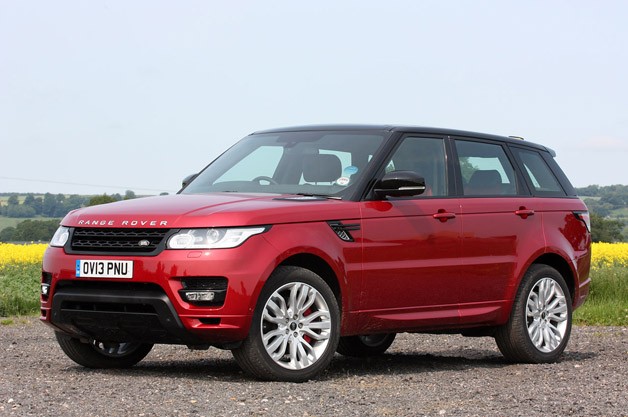
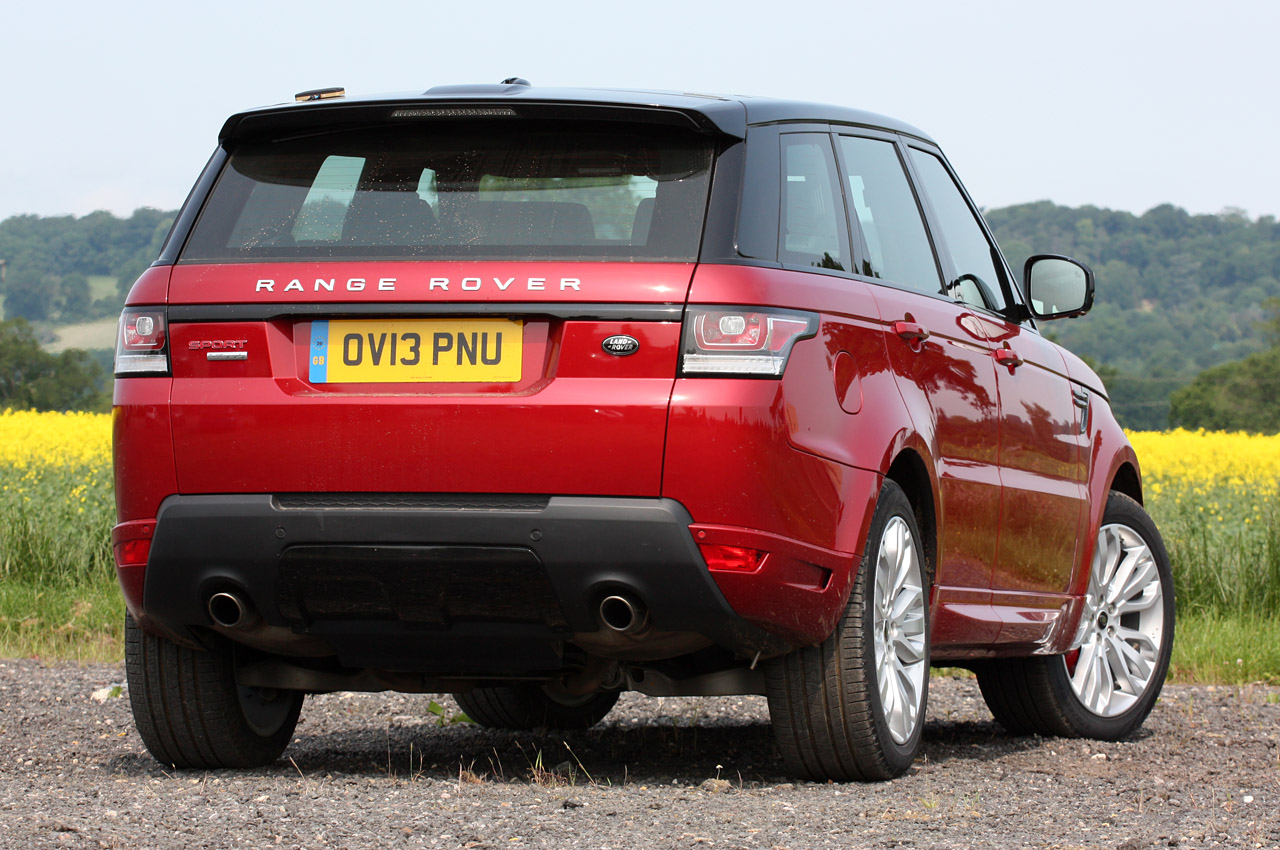
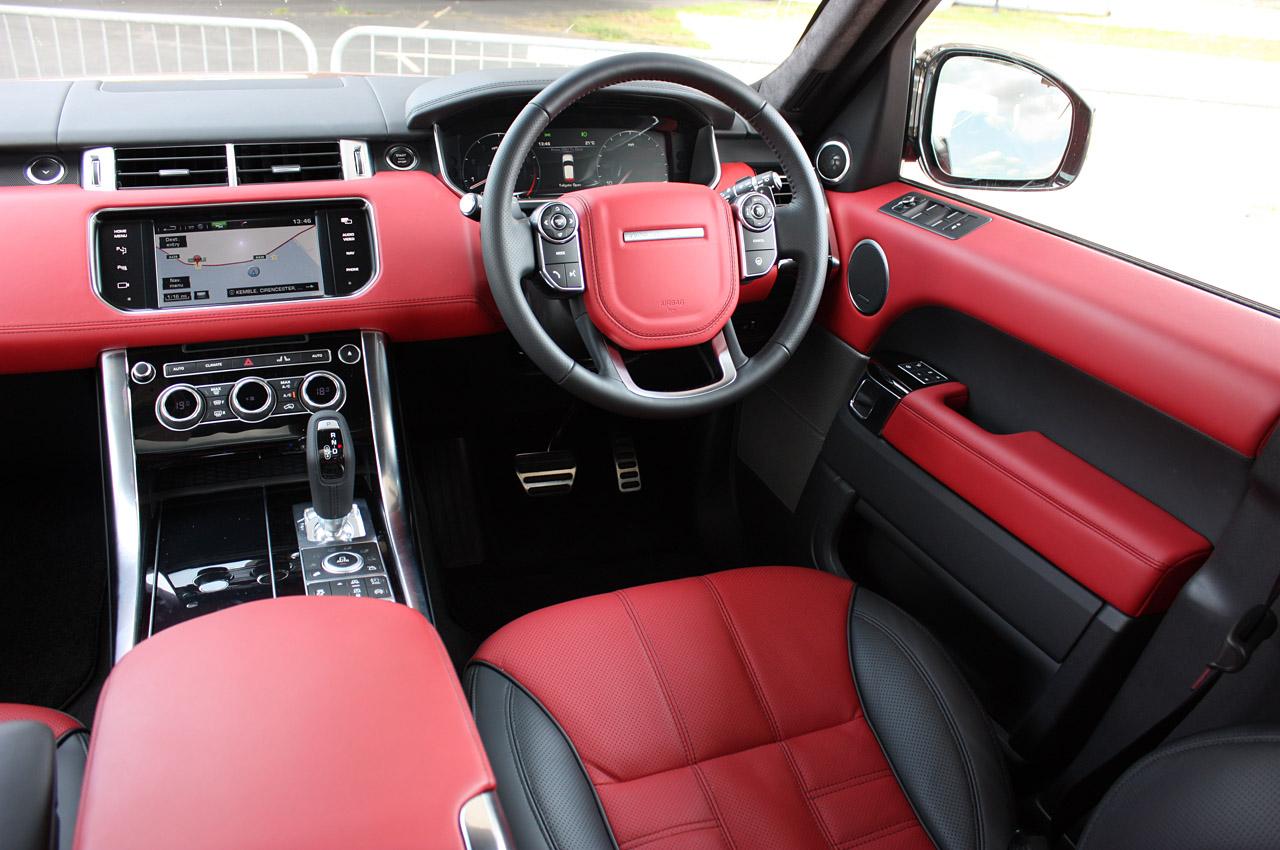
Tough as it no doubt was to engineer the new-for-2013 Land Rover Range Rover, I'm willing to bet that the company's engineers sweated a little harder over the launch of this 2014 Range Rover Sport. After all, the Sport is Land Rover's unlikely volume leader – it accounted for nearly 38 percent of the company's US sales in 2012. But beyond that, the Sport has to embody all of the unstoppable off-road attributes of anything wearing a Range Rover badge while, at the same time, being the brand's on-road dynamics flagship. This thing has to hug curves and rip along the finest tree-lined roads the English countryside has to offer, and then be able to power upstream in a three-foot-deep river after only the touch of a button and the turn of a dial. It should be able to hit its electronically limited top speed of 155 miles per hour on tarmac with total poise and then negotiate a narrow rock crawl at a 40-degree angle with the same sort of confidence. Oh, and it needs to be comfortable and quiet, with room for many adults and their things, wrapped in sheetmetal that looks good when it's clean and even better with a fresh coat of mud. The Range Rover Sport has to do, well, everything. So when it came time to put its new all-star to the test, Land Rover invited me across The Pond where I drove the 2014 Range Rover Sport over pavement and rocks and through mud and water. To say it handled everything off-road with aplomb would be an understatement. And to say that it's a dynamic joy on-road wouldn't give enough credit where credit is due. But to say that the new Range Rover Sport is the best Land Rover – and maybe the best luxury SUV – that money can buy... well, now we're onto something. With the Big Daddy non-Sport Range Rover, Land Rover engineers had a simple task: Make it better, but don't screw it up. In other words, keep it a Range Rover, but add a bit of comfort, improve the fuel economy, and, what the hell, throw a curvy line or two into its design. The end result, we found, stays true to all of the core Range Rover values while being, you know, better. Thus, mission accomplished. That's good news for the Sport, too. Unlike the previous generation, which was based on the chassis that underpins the LR4 SUV, the new Sport is the Eve to the Range Rover's Adam, benefitting from its stronger, lighter aluminum bones. In fact, while the new Range Rover is some 700 pounds lighter than the model it replaces, the Sport is bereft of over 800 pounds versus the old version, while riding on a wheelbase a full seven inches longer than before. Elsewhere, the 2014 Sport is dimensionally similar to the 2013 model – width has actually decreased slightly and the vehicle's overall height has been reduced by one-tenth of an inch – but the in-person proportions certainly do make the Sport look more well-rounded and robust than before. Basically, it no longer looks like a Range Rover that's been left in the dryer for too long. And while it's no secret that much of the Range Rover Sport's design DNA has been inspired by the smaller Evoque, this new SUV is a handsome, rugged thing, with front and rear fascias that won't be mistaken for anything but a Land Rover. LED running lamps are found up front in the same design as the Range Rover, and out back, small, squared-off taillamps flank a very clean, short rump. From the profile, Evoque inspiration is the most apparent, with a raked roofline that can be had in either matching body color or contrasting colors like gray or the black of this test car. Combine it with the privacy glass that US-spec Range Rover Sport models will come standard with, and the black-on-whatever color scheme will no doubt be a favorite. A number of wheel options are available, starting with 19-inch rollers on the low end and moving up to gigantic 22-inch alloys. My top-trim Autobiography was fitted with the attractive, 21-inch five-spoke wheels you see here, wrapped in 275/45-series Pierlli Scorpion Verde all-terrain tires. Behind them reside beefy Brembo brakes with vented rotors at all four corners – 15-inchers up front, 14s out back. Those stoppers are important, given the fact that the Autobiography model also comes with the most potent Range Rover engine available: a 5.0-liter supercharged V8 that pumps out 510 horsepower and 461 pound-feet of torque. I spent some time with this engine in the Jaguar XFR sedan last year and pretty much fell in love. Here, with an additional 700 pounds to lug around versus that shapely four-door, the engine still provides more than enough power with all the punch and pizzazz you'd expect. Seriously, this supercharged V8 is a bombshell of an engine, able to move the nearly 5,100-pound, all-wheel-drive Range Rover Sport to 60 mph in five seconds flat. That's a decrease of nearly one full second versus the heavier 2013 model, which uses this same engine in its Supercharged trim. Leaner is indeed meaner – and more efficient, too. According to Land Rover, the supercharged V8's fuel economy has improved, though our friends at AutoblogGreen will still balk at its 14 mpg city, 19 mpg highway, 16 mpg combined rating. At least that's better than the 14 mpg combined number from last year. Gone is the naturally aspirated 5.0-liter V8 from the Range Rover lineup, replaced instead by a supercharged 3.0-liter V6 that also finds a home under the hood of the Jaguar XF, XJ and F-Type, good for 19 mpg combined here. I never managed to get the keys to a V6-powered Range Rover during my time in the UK, but other folks who drove it described it as being perfectly pleasant, though not nearly as engaging as the larger V8. Makes sense to me, and while the six-cylinder engine may end up being the volume choice when the Range Rover Sport goes on sale in the US later this summer, there's a whole lot of sweetness to be had with that supercharged V8. |