04:33AM - 27.08.'13
|
News Source: autoblog.com
|
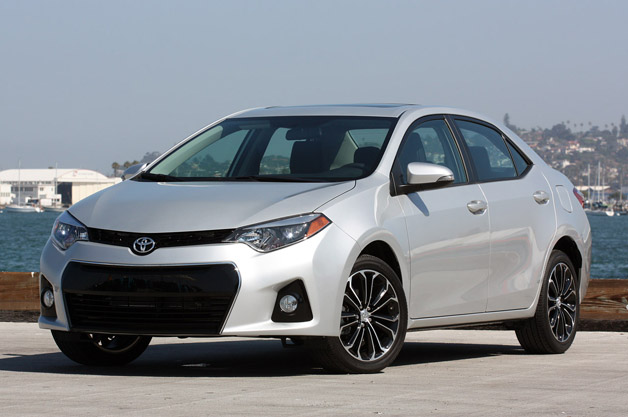
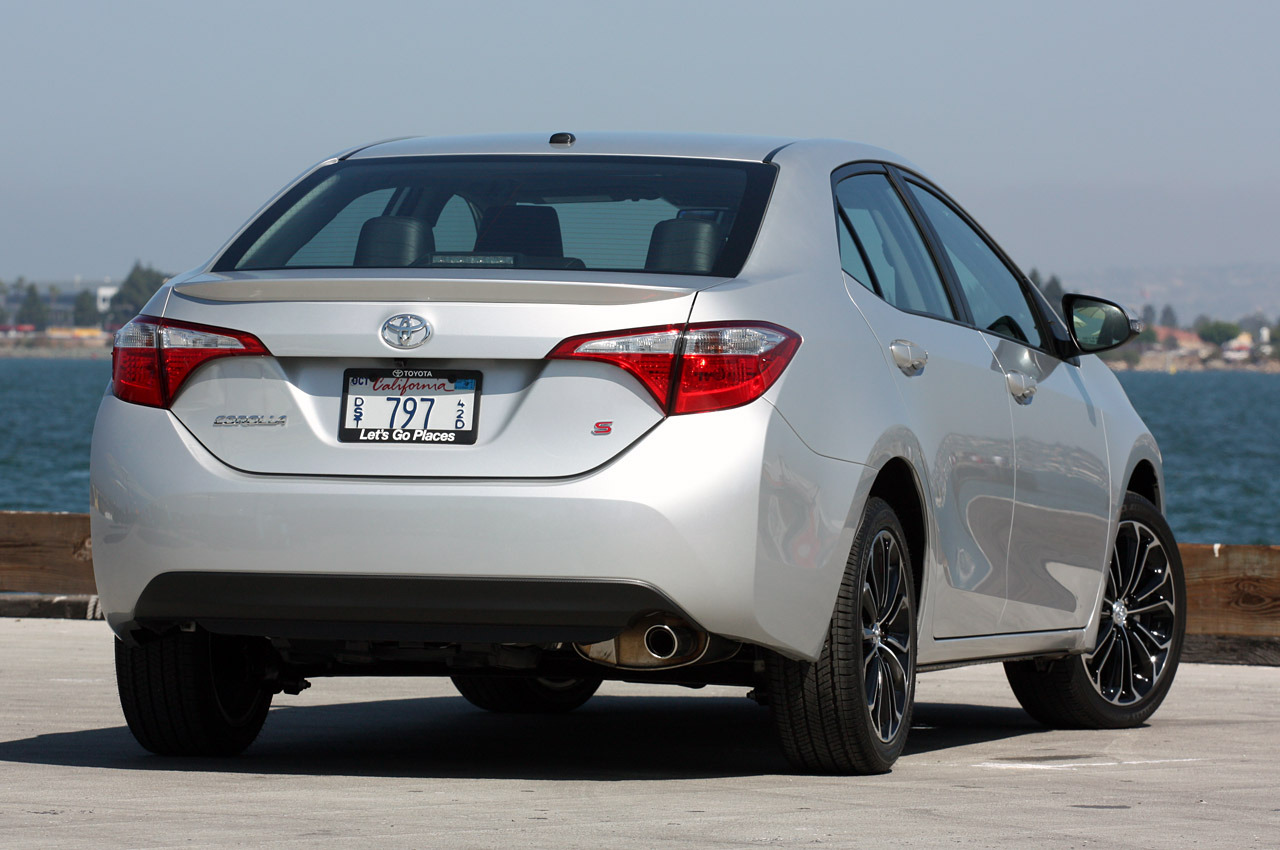
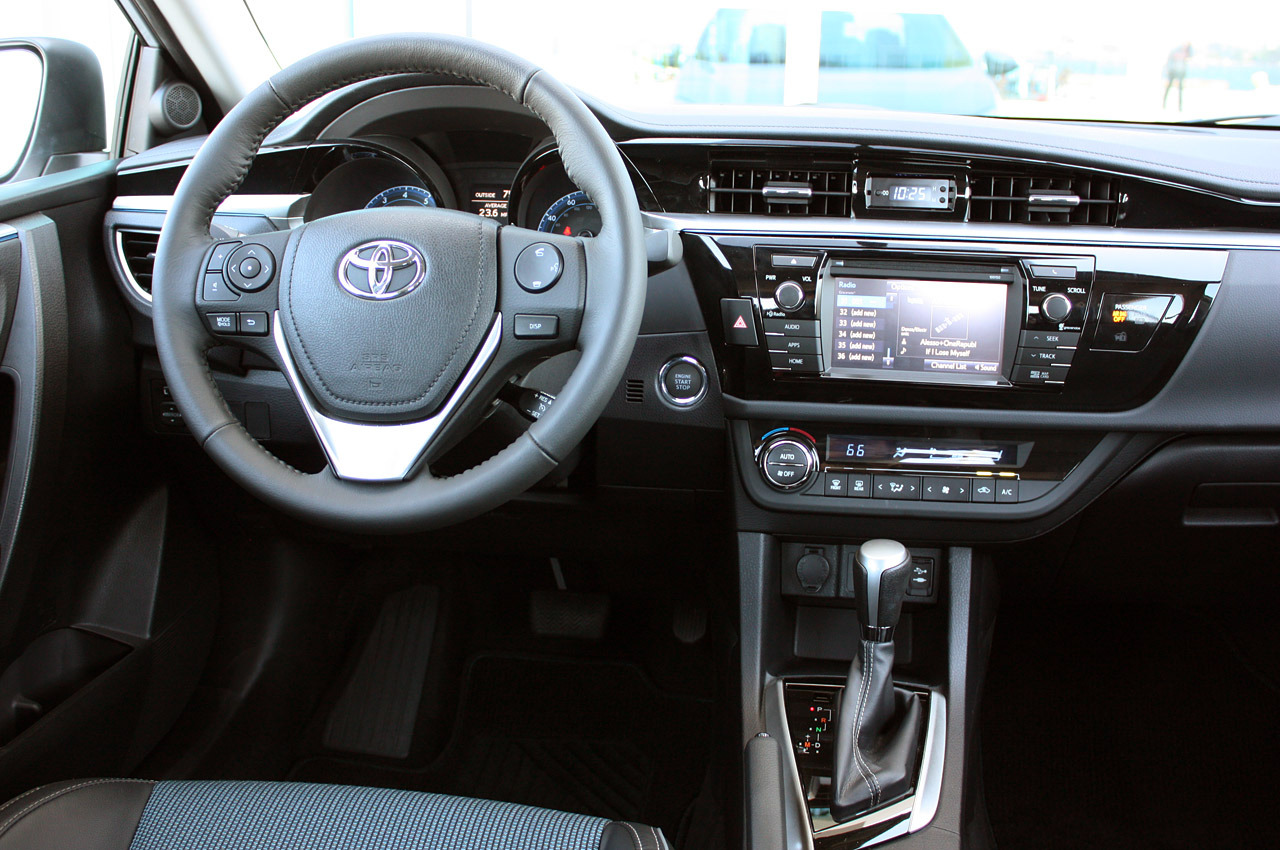
My toaster broke the other week. Halfway through the process of cooking my gourmet Pop-Tart breakfast, the thing crapped out with a small bang, leaving my delicious morning treats trapped inside. To rectify the situation, I ventured out to a big box store, located the toaster aisle, and ran a couple of questions through my mind. Do I need two slots or four? Do I need to spend more than 20 bucks on this thing? Should I just buy a toaster oven to give me a wider range of bachelor-pad cooking functionality? After no more than two minutes of contemplation, I grabbed the cheapest one on the shelf, paid and left the store. The new toaster works just fine. This sort of unemotional shopping experience is how I suspect people decide to purchase the Toyota Corolla. It's a perfectly fine appliance, and to a good number of people in the world, the bond between a car and a driver is no more important than the connection I feel to my toaster. Does it seat four people relatively comfortably? Does it get decent fuel economy? Is it easy to drive? Reliable? Safe? The Corolla checks all of these boxes, and because of that, Toyota managed to move just under 300,000 examples of the tenth-generation car in 2012 (though that number does include sales of the Corolla-based, now-deceased Matrix) – a vehicle that, at the time, was already six years old. From a business perspective, that means the Corolla is a massive winner, and so to no one's surprise, Toyota hasn't rocked the boat too much in the creation of its eleventh-generation 2014 Corolla. It seats four people comfortably. It gets decent fuel economy. It's easy to drive. It's (predictably) reliable. It's safe. And hey, it sort of looks good now. The new Corolla is actually a whole lot nicer than its predecessor. But it still doesn't, shall we say, toast my bagel. The most noticeable shakeup with the new Corolla is how it looks – it's rather handsome, even in base trim. Customers told Toyota that the current model "lacked the excitement" they desired, and the new "Iconic Dynamism" design language (first seen on the company's Furia concept) certainly fixes that. All S models like the car pictured here feature piano black accents on the front fascia and rear lip spoiler, and the optional 17-inch alloy wheels wrapped in P215/45R17 Firestone FR740 tires – available only on S Plus and Premium trims – definitely give off the impression that the new Corolla has a sporting bone or two in its body. Sticking with the S trim for a moment, this is where Toyota's design work has probably formed the most cohesive overall package. In previous generations, S cars were always set apart by what often looked like bolt-on bodywork – the final package never quite looked as all-of-a-piece and uniform as it should have. This time around, that all changes. The Corolla looks like it was first and foremost designed as an S, and that bits were simply stripped away to create the lower LE, Eco, and L trim levels. The 2014 Corolla is longer, wider and lower than before. The wheelbase has been stretched by almost four inches, overall length has been increased by 3.3 inches, width is up by half an inch, and height has been reduced by four-tenths of an inch. It's not a very heavy car, either, with a curb weight ranging between 2,800 and 2,865 pounds, depending on trim. When the Corolla goes on sale in early September, four versions will be offered, with the L grade starting at a super-low $16,800, not including $810 for destination. A six-speed manual transmission is standard, but a four-speed automatic (yes, four-speed) is optional, bringing the price up to $17,400. Why the ancient transmission? Simply put, it keeps cost down for the base model, and Toyota is only expecting the L grade to account for something like 10 percent of overall Corolla sales. Interestingly, Toyota is offering standard LED lowbeam head- and daytime running lights on all models (the highbeams remain halogen) – a premium touch on a very non-premium car. All 2014 Corollas are powered by a naturally aspirated, 1.8-liter inline four-cylinder engine, mated to either the aforementioned four-speed slushbox, six-speed manual (L and S Plus trims) or new continuously variable transmission that Toyota calls CVTi-S. This CVT has seven programmed "shift points" that the driver can work through via steering wheel-mounted paddle shifters on S models. The really surprising part? I gave this paddled setup a concerted whirl and, honestly, it's not bad. Frankly, it's hardly noticeable under everyday driving conditions. I dare you to give it a try. The L, LE, and S trims use a version of the 1.8-liter engine that's tuned to produce 132 horsepower at 6,000 rpm and 128 pound-feet of torque at 4,400 rpm. The Eco model, however, produces 140 hp at 6,100 rpm and 126 lb-ft of twist at 4,000 rpm. If it strikes you as backwards for Toyota not to put the most powerful version of the Corolla's engine in the "I'm sporty, I swear!" S trim, you aren't alone. But there's good reasoning. Eco models are equipped with Toyota's new Valvematic system that optimizes valve lift and timing to maximize fuel economy, and this technology results in a small increase in horsepower, as well. Toyota says that initial production of the Valvematic engine is limited, and because of this, it's earmarked for use exclusively on the LE Eco, which is expected to account for just 10 percent of Corolla sales. |