07:14AM - 23.10.'13
|
News Source: motortrend.com
|
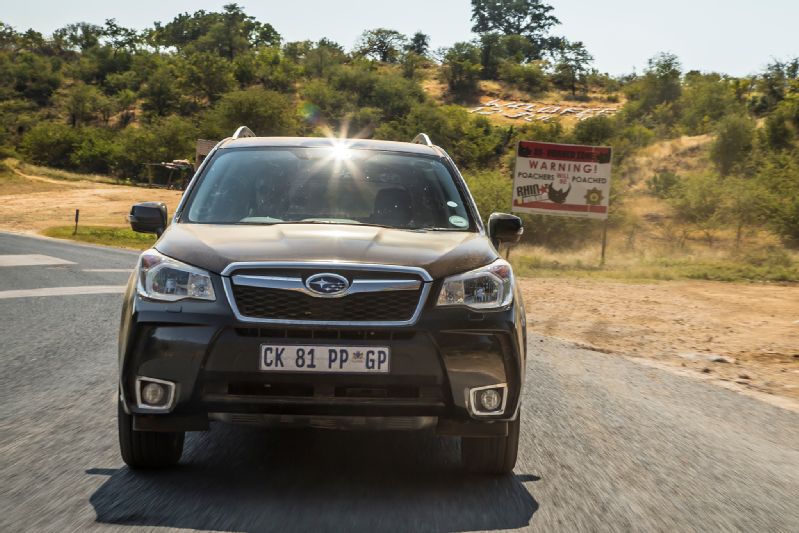
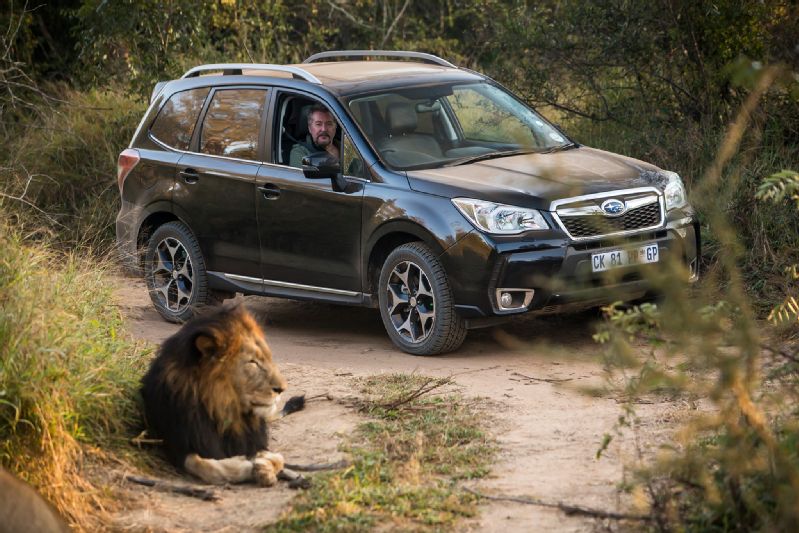
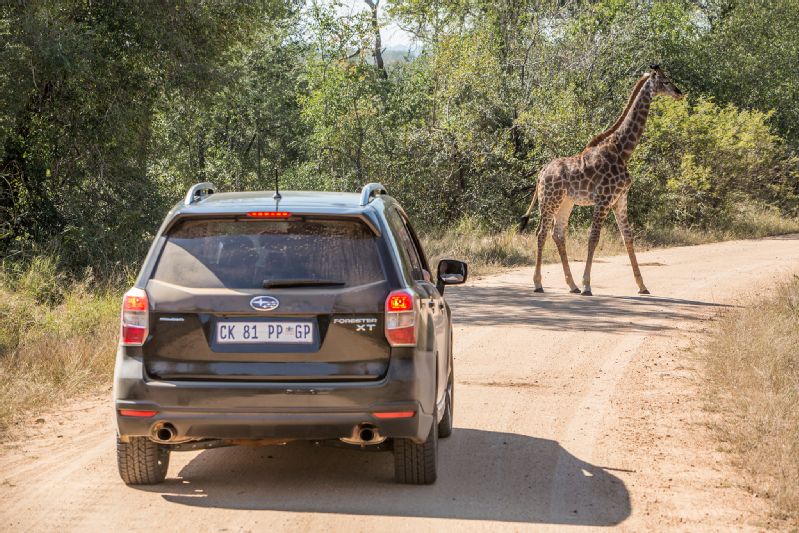
Slowly, carefully, the man to my right raises his rifle. It's loaded not with bullets, but with a tranquilizer dart containing M99 -- an analgesic 3000 times more powerful than morphine. For just a moment, the rhino turns her back to us, sniffing the air again, searching. My guide, African game veterinarian Dr. Pierre Bester, sees his chance. He takes aim, gently exhales, and squeezes the trigger. Think "perfect rig for an African safari," and the usual suspects readily spring to mind: Land Rover Defender, Land Cruiser, Toyota HiLux "bakkie." All are tough, truck-based, body-on-frame designs built to wade through African rivers, climb treacherous inclines, and roll right under the flaring nostrils of a Cape buffalo without so much as a quiver. But what about a carlike unibody crossover? Would anyone actually dare to drive an "SUV lite" into Africa's untamed, predators-filled wilds? Wouldn't it quickly be swallowed up by quicksand? Wouldn't a passing elephant squash it like a grape? Wouldn't Tarzan and Cheetah take one look and burst into giggles? The folks at Subaru defiantly thought "no." And so, in the interest of science and great video, I and my team from Motor Trend's online show "Epic Drives" agreed to make like bait and pilot Subaru's all-new, fourth-gen 2014 Forester 2.0XT straight into the maw of South Africa's most hostile game preserves. The promise: up-close encounters with Africa's Big Five game animals (rhino, lion, elephant, leopard, Cape buffalo). The goal: chase down a white rhino, dart it, and fit it with a tracking device -- ideally, without getting ourselves skewered. We start out big. The oldest and most famous of South Africa's many game preserves is Kruger National Park, established in 1926 and, at more than 7500 square miles, nearly as large as New Jersey. With our video and photo team following in another Forester and a third Subie, an Outback, trailing with a paramedic (just in case), I pick up a park guide at Kruger's main gate and steer our convoy into the bush -- where you never know what awaits around each corner. Sure enough, within minutes we come upon a cluster of grazing impalas and zebras. "They like to hang together," says my guide. "For protection. When any one of them senses danger, they all run." Evidently, Japanese four-wheel-drive crossovers fit into the "uh oh" category, because the instant the animals catch sight of us, they're gone in a blur of stripes and hooves and dust. Not to worry. Just a few hundred yards down the road awaits a Kruger resident not the least bit intimidated by our sheetmetal selves: a fully grown bull elephant. Probably twelve feet tall, weighing around 12,000 pounds, bearing gleaming white tusks as fearsome as a brace of .50-caliber machine guns, he doesn't even bother to turn our way. Instead, he continues ripping leaves off a tall tree with his trunk and shoving them into his mouth (elephants this big eat up to 300 pounds of food a day). Because he's standing right in the middle of the road, there's no going anywhere until big boy decides to move. And for now, almost as if he's letting us know just who's boss around here, he doesn't appear to be going anywhere. Shred shred, munch munch. "I may stay right here all day," he seems to be saying. Not that we can do a thing about it, either: African elephants -- particularly bulls -- often attack without warning, and can run down their prey at up to 25 mph (see also T-Rex: "Jurassic Park"). The 2014 Forester may be the first small SUV to ace every crash test by the Insurance Institute for Highway Safety, but one round with Jumbo and we'd be wadded up like a chewing-gum wrapper. Eventually, though, the elephant polishes off his appetizer and shuffles a few feet into the brush for more tree. We drive past. Like mice. |