07:22AM - 29.10.'13
|
News Source: autoblog.com
|
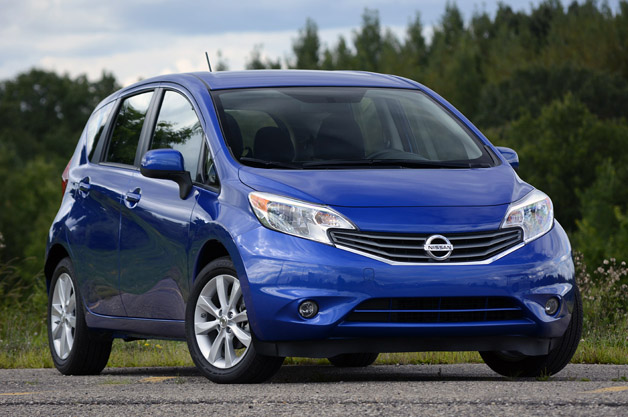
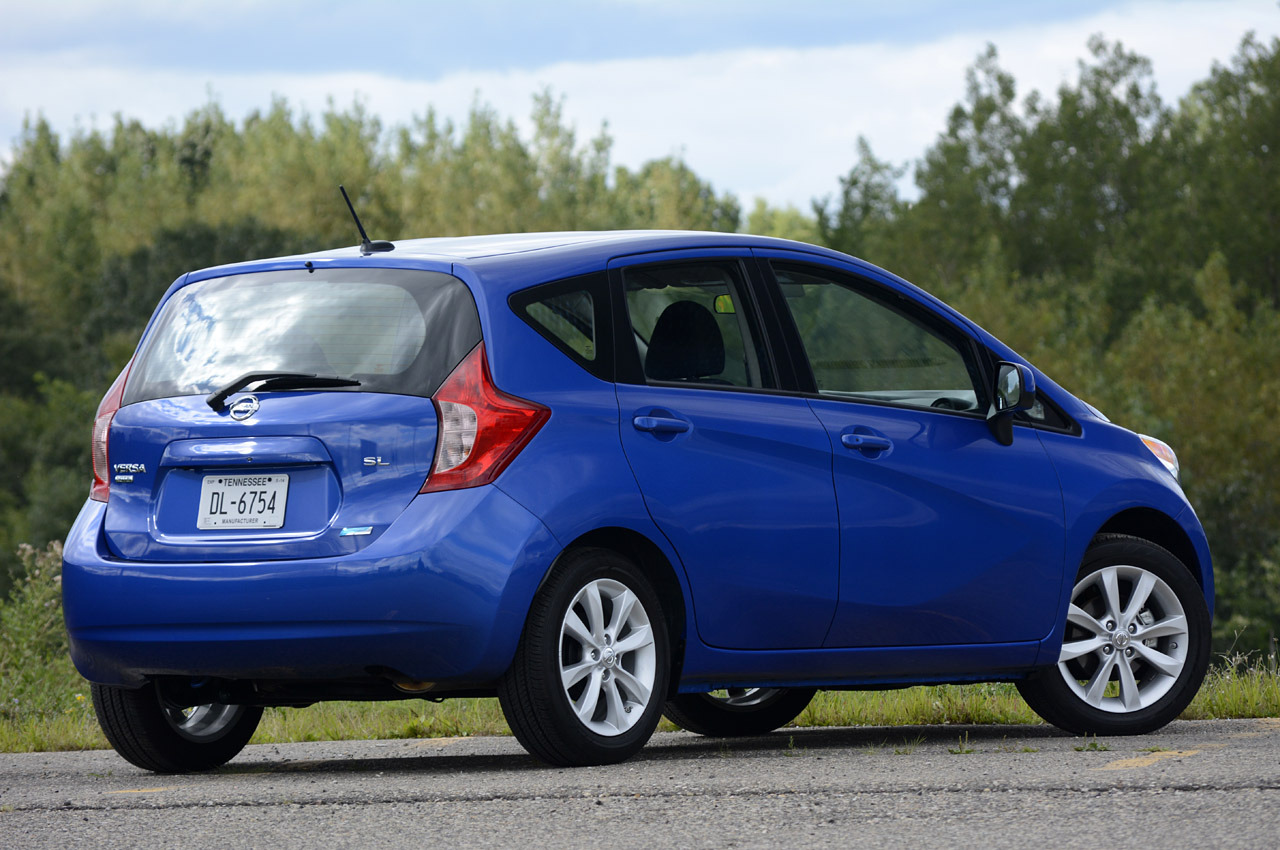
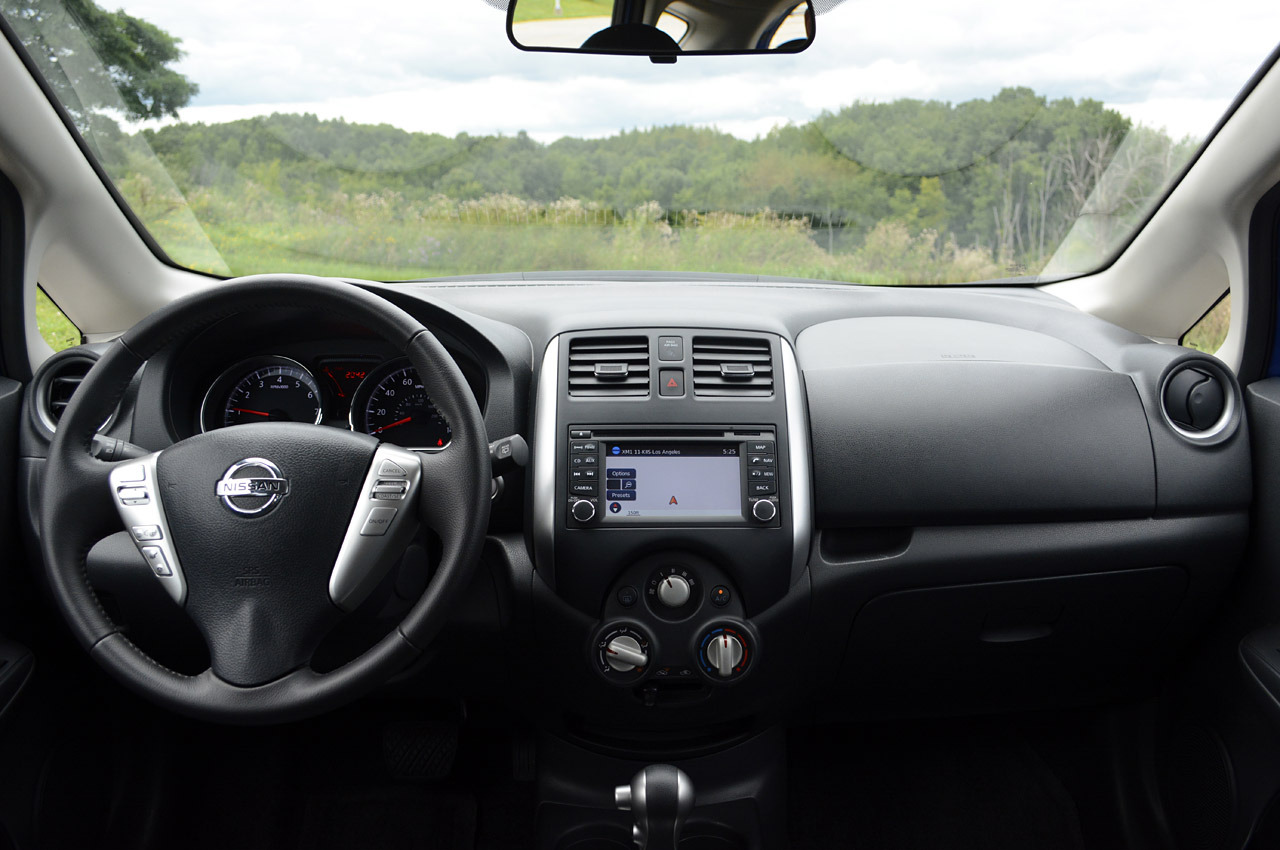
The original Austin Mini was not designed as a fun-to-drive, sporty small car. Its go-kart-like handling and general chuckability were an unintended byproduct of essential aspects of its design. Its four wheels were pushed to the absolute corners of the car to maximize interior space, and its front-wheel-drive layout and transversely mounted engine were in contrast to the rear-wheel-drive, longitudinal layouts of the day. The result was a highly economical car with space for four and some luggage that just happened to be an absolute hoot to drive. Nissan has followed a similar path in the design of its Versa Note, which strives to provide the maximum amount of space and efficiency in a minimal footprint. On this front, it's successful. First, we must salute Nissan for departing from the styling of the malformed kidney bean it calls the Versa Sedan. The Versa Note is a fashionably conservative design that neither offends nor excites. The front fascia is arguably its most conservative point, with high-mounted headlights and a sharper, cleaner version of Nissan's familial grille. The tail, with its funky I-don't-know-what-shape-I-am taillights contributes most of the car's flair. The large, spacious greenhouse, particularly up front, keeps passengers from feeling hemmed-in while letting in plenty of light. Where the Versa Note distinguishes itself from the sedan with its exterior styling, the two are far too closely related in the cabin. Nissan tries to maintain the conservative-but-different styling of the exterior with its cabin design, but the results are less successful. It feels generic, and the materials simply aren't up to scratch in 2013. Hard plastics dominate, with a half-hearted attempt at soft-touch plastic on the dash. The doors feature a modicum of padding on the armrest, but the entire door card assembly flexed when we pushed them. In fact, the poor interior is easily one of the biggest knocks against the Versa Note. The reality of the subcompact market is that cabins are getting better (look no further than the Ford Fiesta Titanium), and Nissan is not competing. We'd rather have a shortage of room and a clean, modern cabin than 100 cubic feet of black plastic. There are others, though, who likely would disagree, as the Versa has traditionally sold well based on the value of its class-leading interior volume rather than its choice of materials. We aren't exaggerating, the backseat of the Versa Note is enormous, with just over two inches more legroom than the midsize, rear-wheel-drive Infiniti M luxury sedan. It's comfortable back there, too, with a nicely cushioned bench that avoids the penalty-box feel of some competitors. In fact, the Versa Note is actually classified by the EPA as a compact, despite its footprint and price being more in line with subcompacts. The EPA's notoriously wonky classification system categorizes a car based on interior volume, which is why the Versa Note is in the same EPA class as a Bentley Continental GT. Trunk space is ample too, with a very generous 18.8 cubic feet available when the rear seats are up and 38.8 cubic feet with when the split-fold seats are down. From behind the wheel, visibility in the Note is quite good. The tall, open greenhouse combined with the upright seating position offer great sightlines from behind the wheel. Being behind said wheel, though, isn't all that great of an experience. The Versa Note's seats are overly narrow, which gives it a rather sporting feel at first, only to have it grow tiresome as time with the car wears on. The padding on the seats is overly soft as well, meaning that while it's tight, there isn't a lot of support. It should be noted, though, that unlike the 2012 Versa Sedan we reviewed, our tester did include a center armrest for the driver. The urethane steering wheel is swiped from the Sentra, and much like that car, is merely okay to operate. It does feel rather cheap – Nissan might do well to swallow the extra expense and wrap the wheel in leather, as it'd really class up the car's cabin. The Versa Note's big selling point, besides its interior volume, is the tech and infotainment feature-set that it offers customers. A backup camera isn't an unusual feature nowadays, but Nissan's Around View monitor, which takes the feeds from four different cameras and projects a "360-degree" overhead image onto the infotainment screen, is positively aristocratic in the world of subcompacts. On top of that, NissanConnect, the Japanese giant's infotainment service, packs in Google and Google Send-to-Car map service along with weather and traffic information, hands-free text messaging and, of course, Pandora and Bluetooth integration. Add to that other class-above features like heated seats, push-button start, navigation and a right-sized (for the class) 5.8-inch touchscreen, and the Versa Note presents itself as an absolute steal for our car's $19,280 as-tested price. Nissan has really gone all out with infotainment and what would normally be thought of as high-dollar features in the Versa Note's cabin. They aren't supported, however, by an overly sophisticated powertrain or mechanicals. A 1.6-liter four-cylinder engine squeaks out 109 horsepower at a lofty 6,000 rpm (just 500 revs south of redline) and 107 pound-feet of torque at 4,400 rpm. Fortunately, it's tasked with hauling around just 2,482 pounds in our top-spec Versa Note SV trim, which makes the low power less of a drawback than you might think. |