05:36AM - 25.11.'13
|
News Source: autoblog.com
|
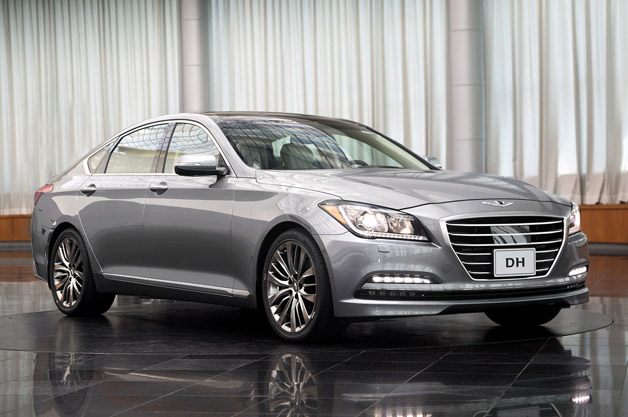
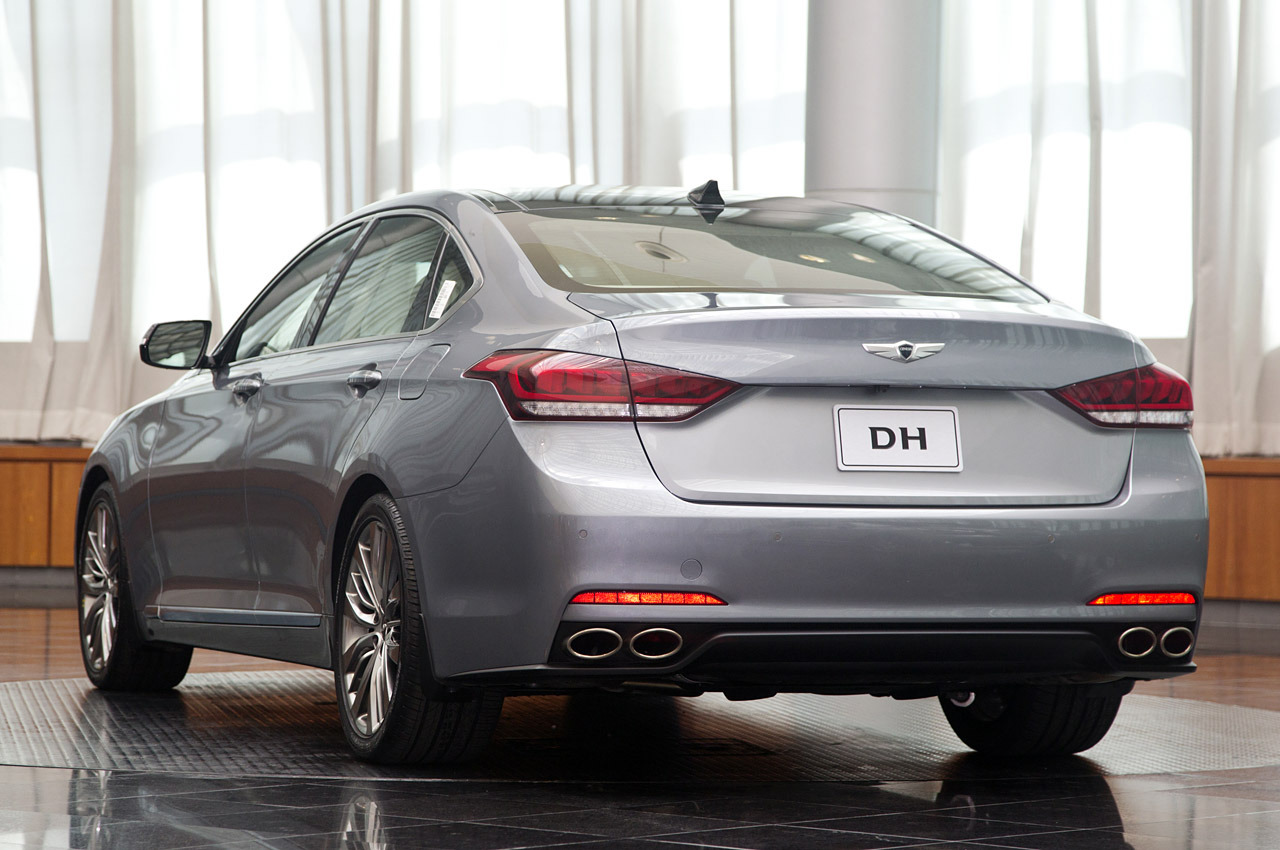
It's not easy to drive a prototype-level version of the upcoming, second-generation Hyundai Genesis sedan. Three hours in airports; fourteen hours in a plane; two hours riding in a car from a Iuncheon to my hotel in the now-famous Gangnam district of downtown Seoul; another two hours-plus on a bus from Seoul out to the Hyundai nerve center in Namyang. And that's just the travel. Finally settled into a massive presentation room deep in the heart of the Namyang R&D center, freshly denuded of all of my camera gear and fortified with abundant coffee and green tea cookies, I still faced hours of product presentation; question and answer sessions with a large team of engineers, designers and executives; an official unveiling under the soaring dome of the Design Hall; a strolling lunch and more coffee. And then, finally, a shuttle ride to the proving grounds around which the whole facility hums with enterprise for an all-too-brief stint behind the wheel of a car that, by this point, I'm basically slavering to get my hands on. Say this for the South Koreans: they know how to build suspense. In its first generation (referred to as "BH" internally) the rear-wheel-drive-only Genesis sedan came in for plenty of praise for its powertrain and surprisingly ballsy driving character. In V8 trim – both the original 4.6 liter and the later, heroic 5.0 liter – the sedan was smooth and fast and just a little numb, and playfully able to wag its tail when one mixed throttle application and steering lock. The very last BH Genesis that I'd driven before winging out to the Korean peninsula was the 5.0 R-Spec, a bruiser of an executive sled whose lovely engine and eight-speed transmission combo was only let down but its overly squishy handling. As far as I was concerned while slotting myself behind the wheel of a camouflage-clad test version of the new-generation, "DH" Genesis, the engineers could have increased lateral stiffness a bit and otherwise left everything else the hell alone. Sadly, my visitor's badge read "Top US Media" (ego-boosting shot, that) and not "Ride and Handling Decision Maker," so the choice to do a lot more than stand pat was Hyundai's to make, not mine. And, as you'd expect, the company has in fact wrought some significant changes to the way the car goes down the road, even while keeping its powertrain more or less unaltered for the 2015 car. The headlining change for the Genesis is the addition of an all-wheel-drive system, dubbed HTRAC in Hyundai parlance, and developed with global supplier Magna Powertrain. The AWD setup uses an electric transfer case and a multi-plate clutch, and works in concert with the Genesis' two-mode suspension damping (Sport and Normal) to distribute front/rear torque based on load and slip. As a default, the all-wheel Genesis sends 60 percent of engine torque to the rear wheels; that can be increased to 90 percent in an aggressive handling situation, or reversed to send 90 percent of torque to the front wheels in a very low traction "escape" environment. Further, Hyundai tells us that a fuel economy mode can be triggered, presumably at a steady state cruise, with 100 percent of the power going to the rear wheels. My first driving sample was at the helm of a Genesis 5.0 AWD for a stint on Hyundai's rather tight, technical road course, and I found the results to be pretty promising. I started with the Intelligent Drive Mode Select at the Normal setting – meaning the aforementioned selective damping was less aggressive, along with settings for the transmission, throttle and stability control. In this standard setup the big sedan was pretty competent at rounding the handling circuit with pace and confidence, albeit with understeer more pronounced than I'd recalled from the last-gen rear-drive car. In Sport mode, however, the AWD car loosened up quite nicely. Deactivating the normally aggressive ESC made the car feel far more fluid through consecutive turns, with excellent balance and nice, rear-biased reactions. Still, the added grip from the AWD system was definitely present, reducing that play in the rear section I'd remembered from the BH sedan, and cleaning up my rounding of corners at speed rather neatly. I'd love to tell you that I finished up with the V8 AWD Genesis and then took another few laps of the track in a rear-drive car, or one equipped with the 3.8-liter V6, but that didn't happen. The sad truth is that we Top Media had about 10 minutes worth of seat time on the handling track, and in just the one flavor of car. Suffice it to say that I'll need more time to make up my mind as to just how much better the second-gen Genesis handles than the first. Still, I feel confident in reporting that it's a step forward, and movement in the direction of the class leaders in terms of driving dynamics. |