07:40AM - 06.01.'14
|
News Source: autoblog.com
|
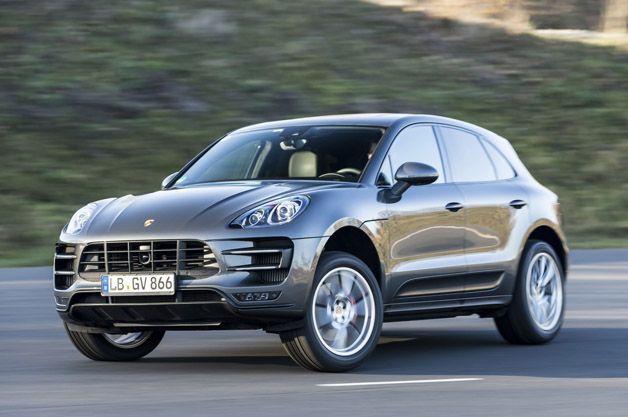
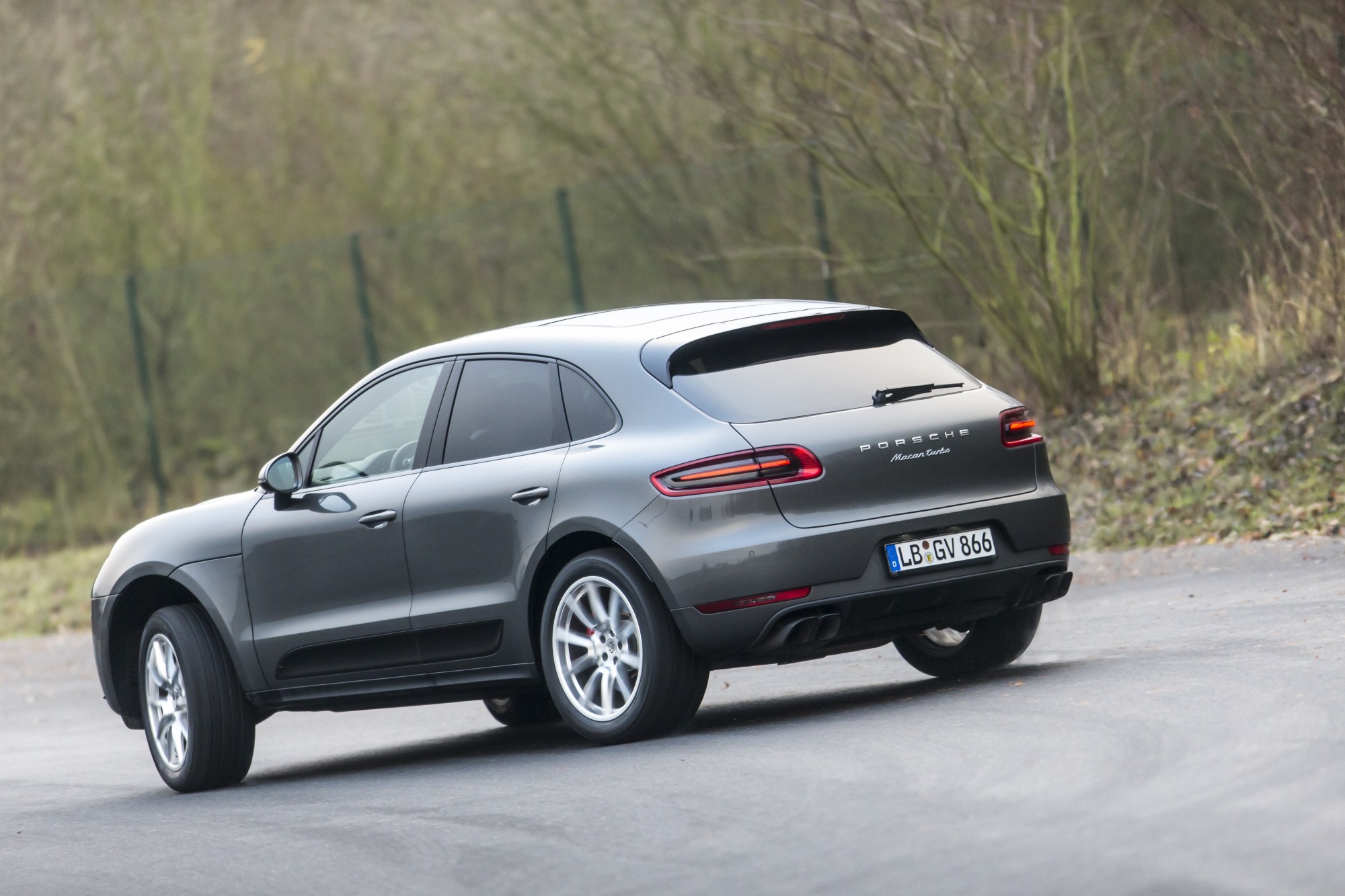
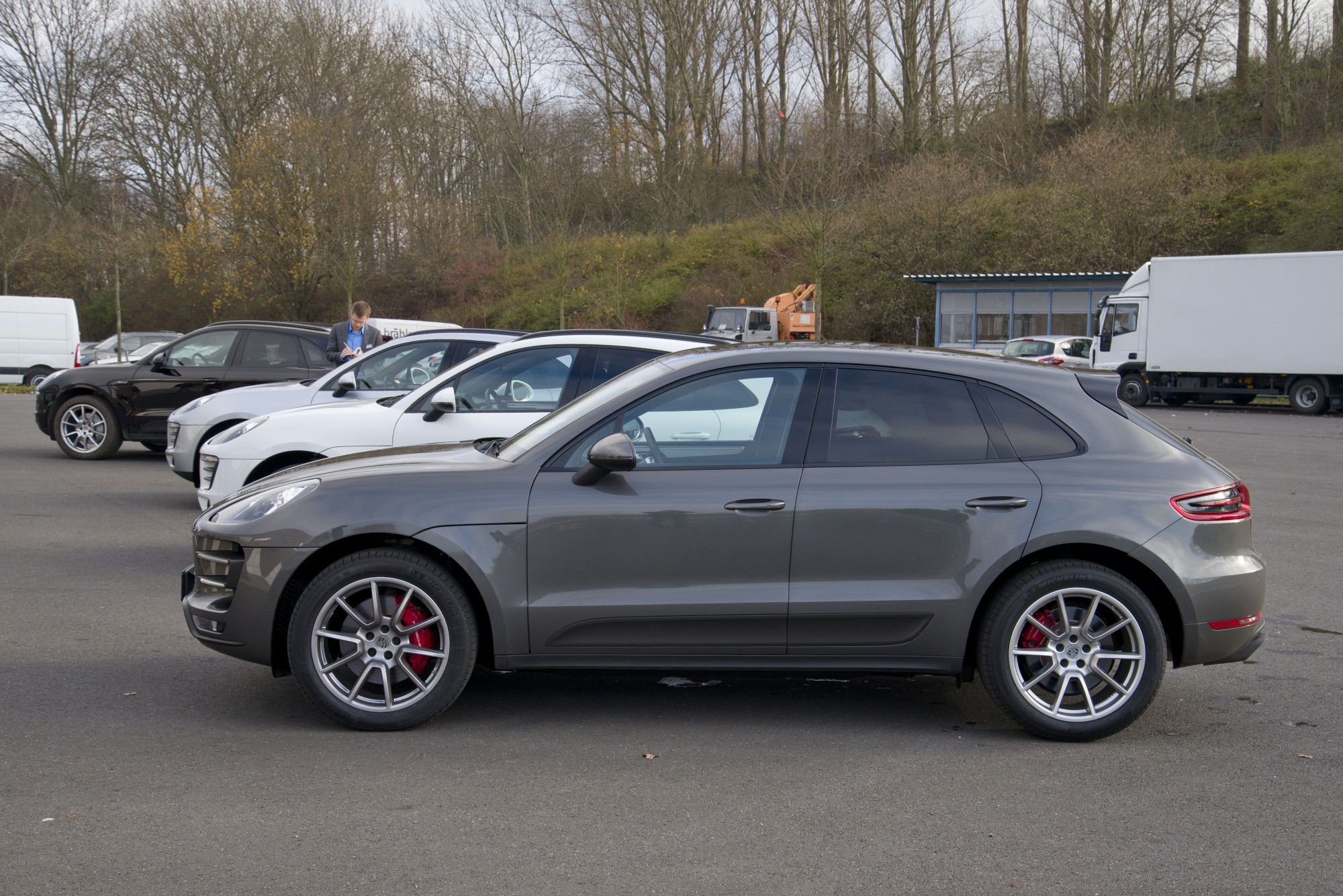
The misinformation first started back in May of 2007 – more than six years ago – when word came that Porsche was developing a compact utility vehicle to fill out its product line. Rumors swirled that the German automaker's future "Roxster" would be based on the then-upcoming Audi Q5. By September of 2010, the name had changed to "Cajun," but the vehicle was still expected to be "based heavily on the Audi Q5," said reports in the months that followed. One year later, the first test mules were spotted, the mechanics hidden beneath barely disguised Audi sheetmetal, which did nothing to give the upcoming model its own identity. And even after Porsche announced "Macan" as the vehicle's production name in early 2012, articles stated that it would "arrive on the same chassis as the Audi Q5, though with suspension, brake and engine tweaks suitable to the Porsche range." It's no wonder that most still consider the all-new Porsche Macan nothing more than a heavily massaged Q5. To help lift some of the mystery surrounding its latest release, Porsche hosted us in Germany for an in-depth look at its new crossover (while Europeans call it a "sport utility," its car platform allows us to call it a proper CUV). The technology workshop offered us insight to the design and mechanical execution, and it concluded with a short test ride. The trip was both enlightening and educational – and it left us with a whole new perspective on the Macan. The Porsche Macan is built on the Modular Longitudinal Platform (MLP) proliferating throughout the Volkswagen Group. It's an architecture currently shared with the Audi A5, A6, A7, A8 and Q5. Its performance-oriented architecture allows a longitudinally mounted engine with a differential in front of the clutch for better weight distribution. While Volkswagen offers its scalable MLP in many lengths, the Macan rides on a 110.5-inch wheelbase, which is identical to the Audi Q5. Physically speaking, the Macan is nearly two inches shorter in height (63.9 vs. 65.2) but nearly two inches longer in length (184.3 vs. 182.6) than the Audi. Side-by-side, the Porsche has broader shoulders to cover its nearly two-inch-wider track (65.2 vs. 63.7) and in terms of overall mass, the Macan S is about 300 pounds lighter than the SQ5 (4,112 vs. 4,409). As expected from platform-sharing cousins, the pan (floor stamping) and firewall are common. The basic suspension architecture, power steering unit and rear brakes are also shared, but each has been modified by Porsche for its new role. Aside from those major components, and the standard hidden-from-view electrical and mechanical subsystems shared with other vehicles in the VW Group, nearly everything else on the Macan is unique. The exterior paints a clear picture of Porsche's crossover design language – it looks like a mini Cayenne from most angles. The shape is relatively sleek (0.36 coefficient of drag), with side mirrors mounted on the door panels and an integrated rear lip spoiler at the top of the liftgate. Unique side accents – available in carbon fiber or painted – are found low on each door and visually shorten the Macan's overall height. The most fascinating part of the model's styling is its unique front clamshell hood. Its aluminum skin is actually comprised of two panels, sandwiched together, with air passages between them to comprise an integrated duct system that feeds air into the intakes on each side of the engine. The approach is innovative and effective, plus it provides an extra cushion of safety for pedestrians, should they ever meet the Macan head-on. We'd toss a few more points to the Porsche engineers for designing the world's easiest and cleanest one-hand hood release, too. Despite unconfirmed rumors of a VW-sourced diesel on the horizon, Porsche will initially offer the Macan with two of its own engines, both fitted with turbochargers. The Macan S arrives with a twin-turbocharged, 90-degree, 3.0-liter V6 rated at 340 horsepower and 339 pound-feet of torque (not to be confused with the supercharged, 60-degree, 3.0-liter V6 in the Audi SQ5). The Macan Turbo gets a twin-turbocharged, 90-degree, 3.6-liter V6 rated at 400 horsepower and 406 pound-feet of torque. The direct-injected, all-aluminum engines (467 and 470 pounds, respectively) have integrated dry oil sumps, – a lubrication method that normally appears on high-end sports cars – to provide better oiling during spirited driving. As an added benefit, they allow the engines to be mounted lower in the chassis to improve their center of gravity. While most in this segment are using eight-speed automatic transmissions, Porsche has chosen to raise the Macan's performance envelope by using its lightning-quick, seven-speed PDK dual-clutch automated gearbox – a first in a utility vehicle. The electronically controlled transmission provides buttery smooth – or rapid-fire – shifting based on its selected drive mode (Sport, Sport Plus and Off-Road). Models with the optional Sport Chrono package will offer launch control. |