06:02AM - 21.01.'14
|
News Source: motortrend.com
|
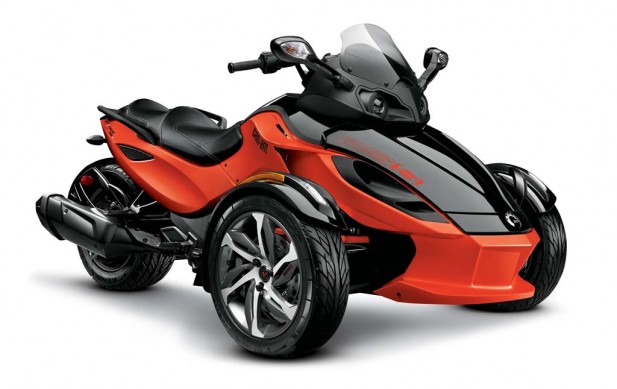
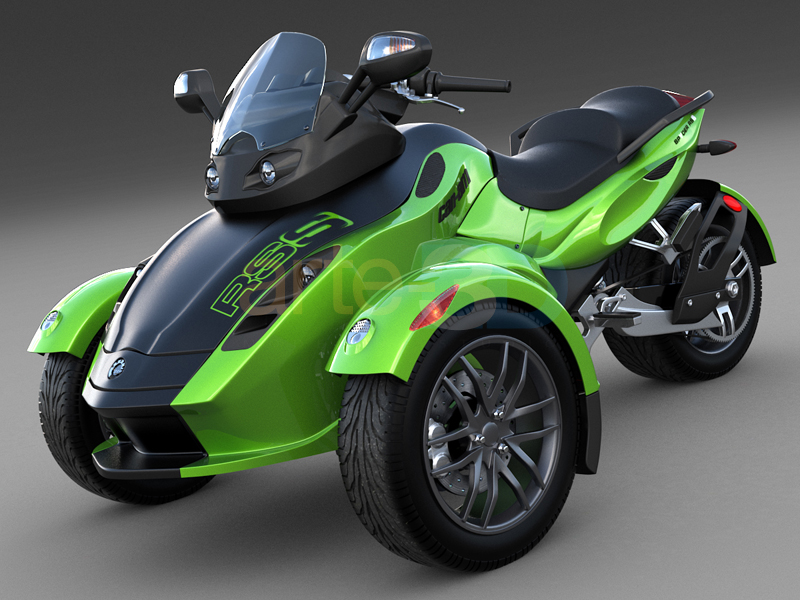
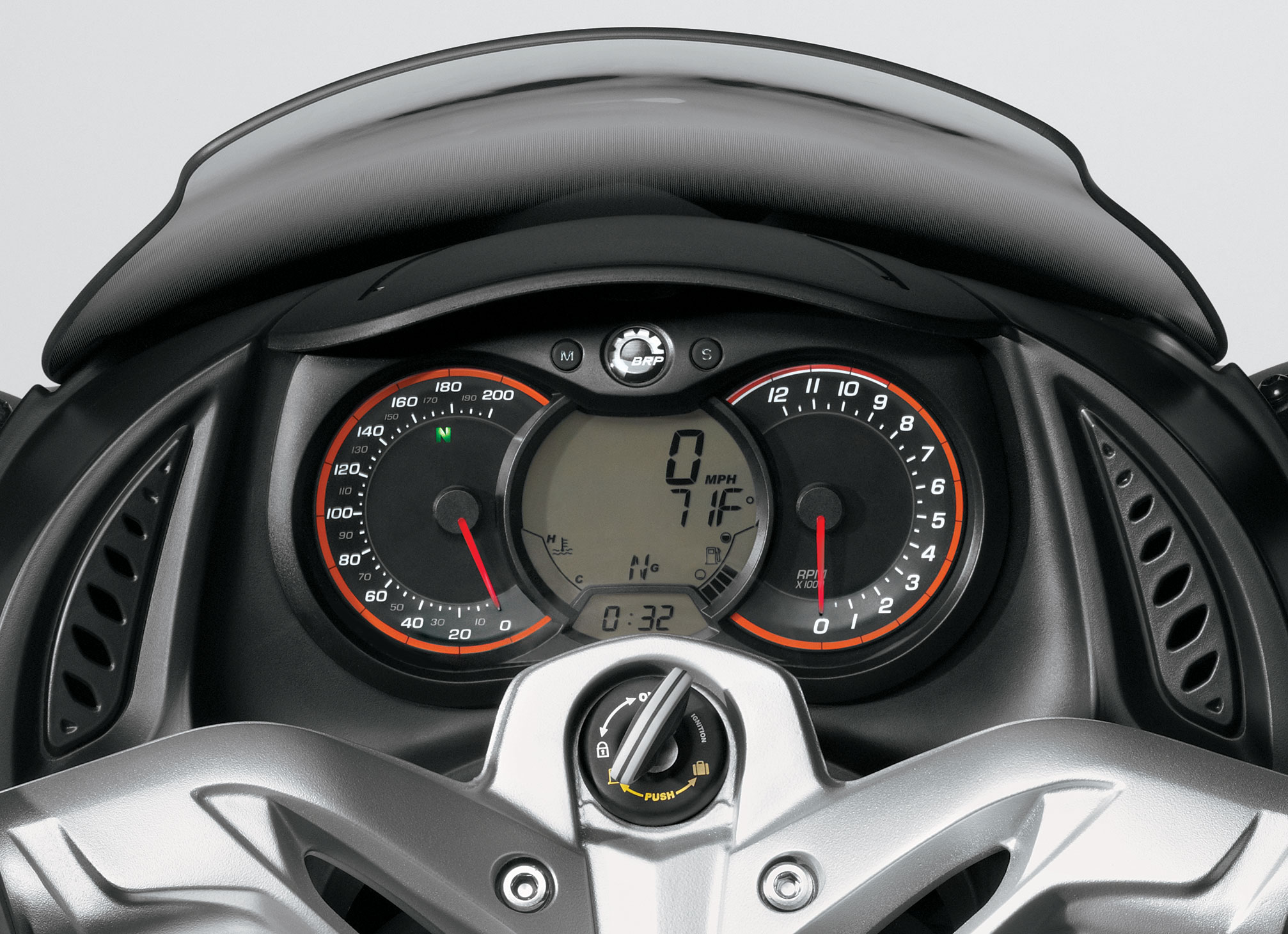
It's tempting to call the Can-Am Spyder a three-wheeled motorcycle and leave it at that, but it doesn't do the vehicle justice. As a motorcycle rider, I can tell you it really isn't just a bike that doesn't tip over. On the other hand, as a driver, I can tell you it's not a car with one rear wheel, either. In fact, the best way to describe the Can-Am Spyder is like a really fast ATV for the street. I haven't ridden a snowmobile yet, but I assume it's like that, too. It's also somewhat like a jet ski. No surprise, really, considering manufacturer BRP makes both snowmobiles and jet skis, some of which look a lot like this three-wheeler. What I mean by all that is while the Spyder looks kind of like a motorcycle, it doesn't ride like one. Yes, you sit on top of it and control it with handlebars, but that's pretty much where the similarities end. Unlike a motorcycle (and similar to an ATV, jet ski or snowmobile), you don't lean and counter-steer to make the vehicle turn. Instead, you simply turn the handlebars the way you want to go. I recommend doing this slowly, as the Spyder is equipped with power steering and a very quick ratio, so small adjustments at the handlebars have big effects at the wheels. It's kind of like a motorcycle in that regard. You don't yank the handlebars around like an ATV, you gently push/pull them the way you want to go. While the steering is very sensitive to small adjustments just off-center, the weight builds up quickly the more you turn, so it's difficult to accidently turn too hard. In fact, sharper corners at higher speeds can be a little bit of a workout as you muscle the handlebars over. Also very un-motorcycle-like is the braking. The Spyder uses a simple foot pedal brake on the right side of the vehicle to stop all three wheels. A computer determines the braking force sent front and rear and ABS prevents lock-ups. Anyone who's ever ridden a motorcycle will spend the first hour or two on the Spyder reaching with their right hand for a brake lever that isn't there and not pressing hard enough on the brake pedal for fear of locking the rear tire. A little practice before heading into traffic the first time is advisable. There's not much feel in the brake pedal, so you have to get used to the ratio between brake pedal travel and brake application. More motorcycle-like is the transmission. Sporty RS and sport touring ST models offer a five-speed manual transmission while the easy riding RT has six cogs to swap. Shifting is done as on a motorcycle or ATV, with the clutch a hand lever on the left handlebar and the gear selector a foot pedal on the left side. All three models are also offered with a semi-automatic transmission with five gears for the RS and ST and six for the RT. Essentially an automated-clutch manual, shifting is done via two buttons on the left hand grip while a computer handles the clutch. All transmissions include a reverse gear. The manual transmission operates as easily as any motorcycle I've ridden. Starting from a stop takes a little more throttle than you think if you're used to driving cars, but about the same if you're a motorcycle rider. The electric throttle also takes a little getting used to, as the return spring is rather light and you end up revving it a lot higher than you think. This is actually more of an issue with the automatic transmission, as it can lead to some bucking if you do the rookie thing and grab too much throttle, then back out to quickly when the vehicle jumps forward. Otherwise, the automatic drives very nicely with the clutch engaging smoothly and shifts happening fairly quickly without much lash. Handling, as with any vehicle you ride on top of, tends to depend more on the operator's intestinal fortitude than the vehicle's abilities. The Spyder's tire contact patches are enormous for the vehicle's size and weight and it comes standard with undefeatable traction and stability control (it will let you do a burn out, but as soon as you turn the handlebars, say to do a big power slide, it cuts power). How hard you corner, then, depends on how confident you are riding the Spyder. Unlike a motorcycle, the vehicle doesn't lean into turns. Like an ATV, you've got to hold yourself to it as inertia tries to pull you away. I found it best to grip the Spyder firmly with my knees and tighten my core before cornering hard, then lean into the turn. Once you're comfortable with it, you can get fairly aggressive with the turns, but do keep in mind you have much less space in the lane to play with than with a motorcycle. This thing is wide. Power from the Rotax V-Twin engine is ample for the vehicle and is pleasantly linear. Really crank the throttle back and it's quick enough to get most people's blood pumping, even those used to going fast. The street bike guys aren't going to be blown away, but anyone coming from a cruiser or your average family sedan is going to find it more than fast enough. The accompanying exhaust note has the cadence of a Harley but isn't nearly as deep or loud, nor does the engine make the entire vehicle shake like a paint mixer. |