06:25AM - 22.01.'14
|
News Source: autoblog.com
|
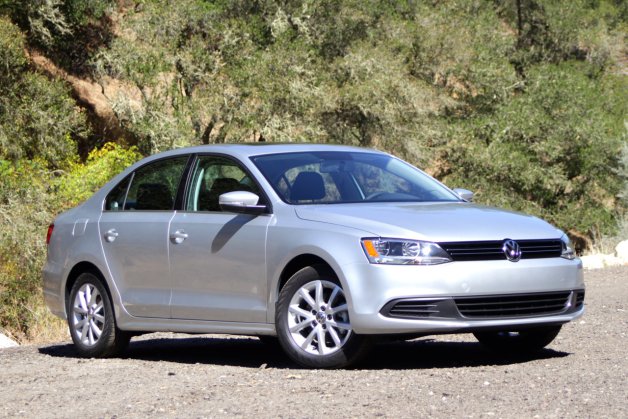
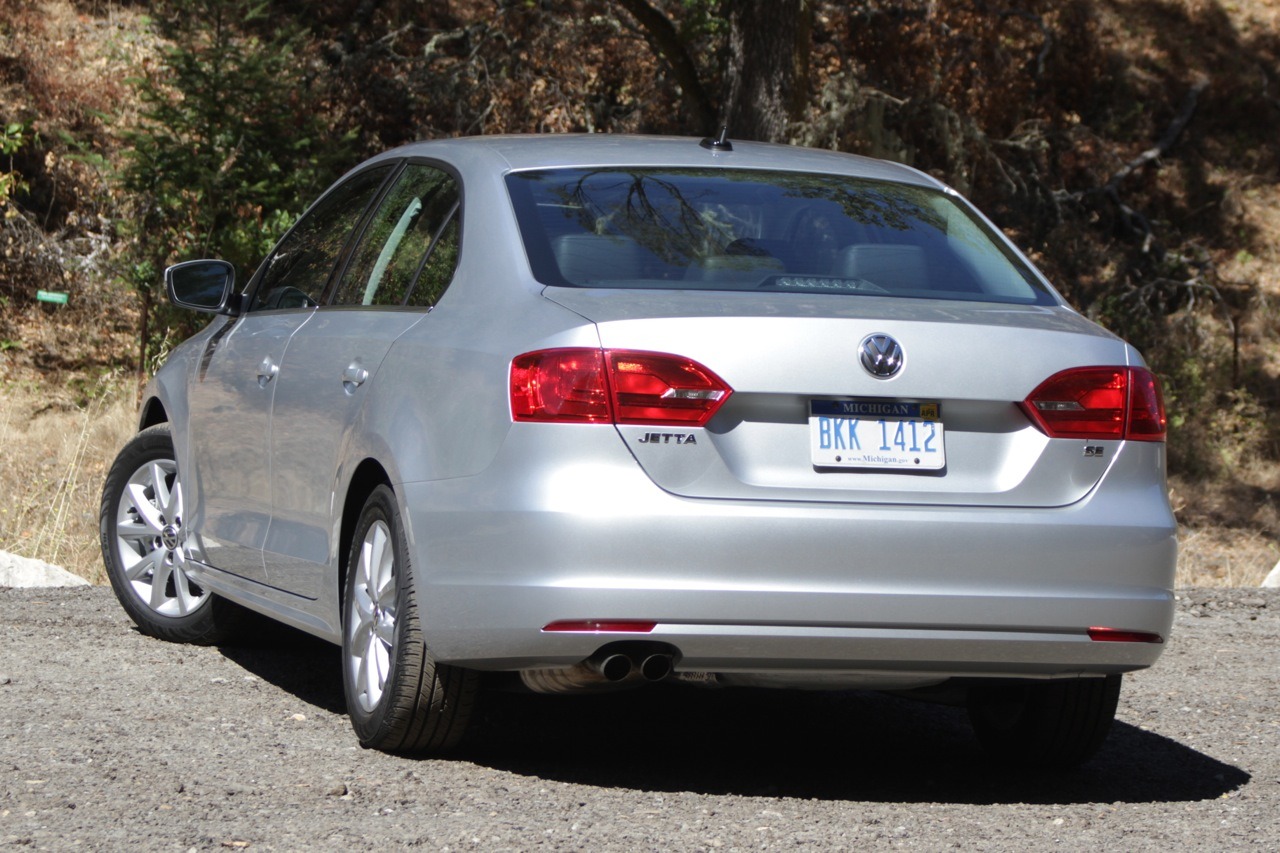
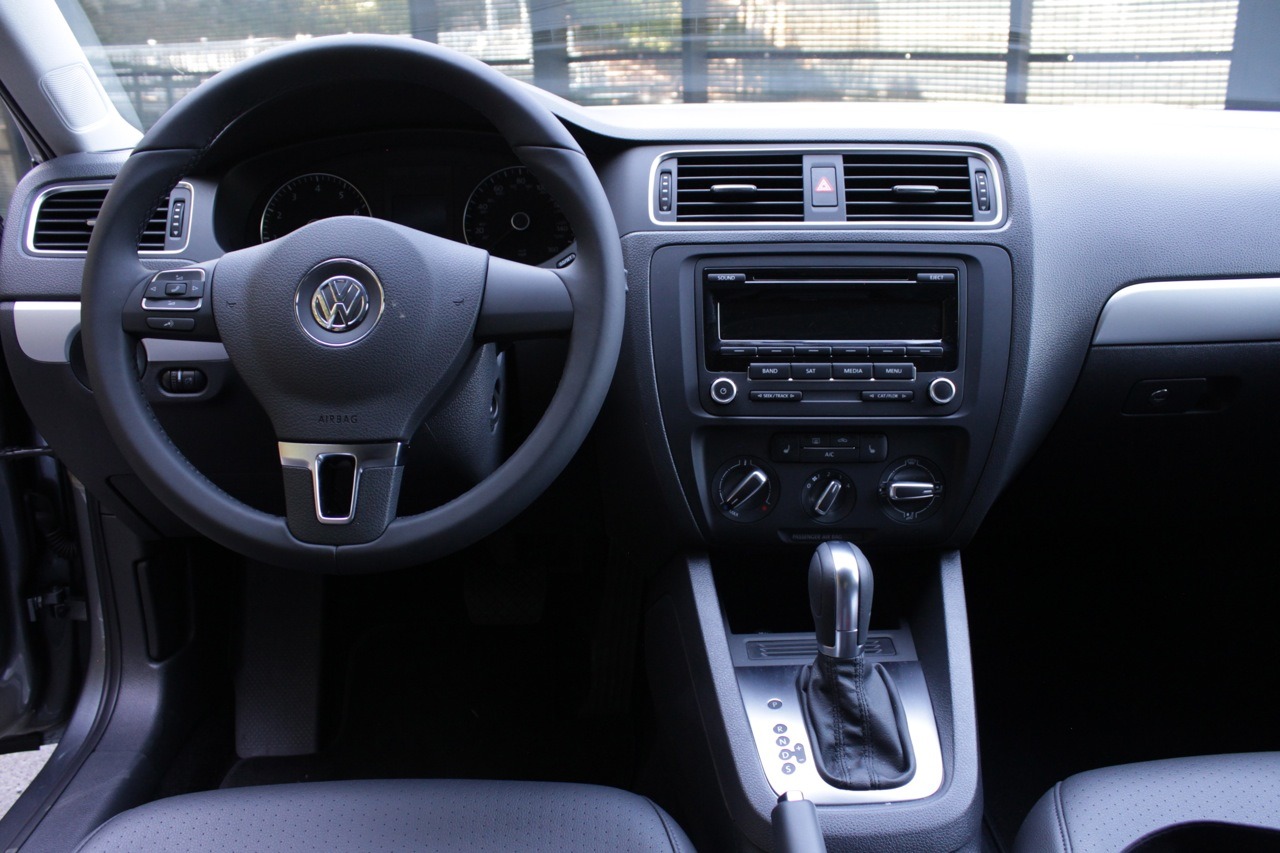
In spite of a recent hiccup in sales that's led to the departure of Volkswagen of America CEO Jonathan Browning, the brand behind Das Auto says its metrics have improved everywhere else. According to the charts we were shown during a recent drive of the brand's lineup, its US sales have doubled in four years, the dealer network is growing, VW was ranked the highest non-premium passenger-car brand in JD Power's APEAL Study, it's raising its score in JD Power's Initial Quality Survey, warranty claims have declined by 47 percent since 2010, it has reversed its previously negative conquest/defection ratio and brand loyalty is on the ascent. Its attention focused on buttressing those gains, VW has eased off large product changes in 2014. That explains the changes to the Jetta, namely its new 1.8-liter engine, which are about making it a better performer in general and a better performer in its segment in particular. The be-trunked Golf remains VW's best selling model here, the 1.8-liter turbocharged four-cylinder engine improving in every way on the 2.5-liter five-cylinder engine it replaces. It's so good, in fact, that it made Ward's 10 Best Engines List, the magazine's executive editor calling it "the new benchmark," saying when judged "on refinement, power, affordability and fuel economy... it becomes clear this engine is second to none." Experienced during a day of driving Napa Valley, not only is the engine sweet, the whole package is a potent, lively rebuttal to the competition. The Jetta's sheetmetal rolls into 2014 unchanged, the only mutations wrought upon the inside being the transfer of the Media Device Interface (MDI) cable from the glovebox to the center console and the incorporation of VW's Car-Net suite of apps. The action is under the hood and between the rear wheels. There are five powertrains available in the range, starting with a 2.0-liter four-cylinder in the base S trim that's good for 115 horsepower and 125 pound-feet of torque. Lined up behind that are the SE and SEL trims, carrying the new EA888 Gen 3 turbocharged and direct-injected 1.8-liter engine we mentioned above with 170 horsepower and 184 pound-feet of torque. It has the same horsepower as the 2.5-liter, but now it peaks at 4,800 rpm instead of 5,700 rpm, and seven more pound-feet torque that comes on at 1,500 rpm instead of 4,250 rpm. When the lab-coat brigade was finished with the engine, they had made it lighter than the 2.5-liter and engineered developments like having exhaust gas ducting and exhaust gas cooling integrated into the cylinder head. On start-up, the exhaust gases being run through the head help heat the engine, the passenger compartment and emissions equipment more quickly. During running, the serpentine mingling of exhaust and coolant ductwork helps cool the gases to maintain optimum operating temperature. Keeping with the theme of compact integration, the ducting for the turbo is also sunk into the cylinder head. Other features include a crankshaft with four counterweights instead of eight inside a thin-wall crankcase, smaller diameter main bearings and roller bearings for the twin balance shafts. Fuel economy is cited as one of the benefits. The 2.5-liter five-cylinder was good for 24 city miles per gallon and 31 highway mpg when shifting through a six-speed automatic and 23 city mpg/33 highway mpg when using the five-speed manual. The more powerful 1.8-liter returns 25 city and 36 highway mpg if fitted with the auto 'box, 26 city mpg and 36 highway mpg if equipped with the manual. Not only does it beat its predecessor, the new 1.8T actually gets better gas mileage than the much-less powerful 2.0-liter four-cylinder in the 2014 Jetta base trim: that motor can muster just 24 city and 34 highway mpg. From a standstill, the 1.8T also shaves 0.7 seconds off the 0-to-60 mile per hour time, getting it down to 7.3 seconds. It only took a few loops through undulating Napa County terrain to know that it's a good motor. Atoning for the great torsion beam blasphemy of 2011, all Jettas now get a multilink rear suspension and an anti-roll bar, and those who can appreciate it will be rewarded. The only truly weak spot was the electric power-assisted steering, which is standard on all but the base trim – the entry-level model sticks with a hydraulic power-assisted setup. The steering is empty on center, as if it had a linkage that was dipped in soft rubber, and its feedback score is pretty close to zero. It's direct enough, and accurate, though, so at least it doesn't distract from the enjoyment of a B-road when the opportunity comes - but it doesn't add to that enjoyment. A ruck of Napa B-roads allowed were the proof of that. The improved torque response of the 1.8T pulls the 3,021-pound Jetta (3,074 pounds if you get the automatic) gamely up any rolling hill – we never had to wait for power and it didn't flinch even when we added some corner-exit throttle to the incline. Truth be told, we didn't find the previous torsion beam anything to howl about considering the Jetta's audience, but we weren't shocked by the improved performance of the multilink rear end. Napa's got smooth roads but tight turns and numerous camber changes, so a tidy back end allows one to keep the focus up front. When probing the reaches of corner-speed in a compact sedan or in corners of advanced difficulty, it could take a moment for the weight to settle, but we encountered no big understeery moments. Get on the Jetta's last nerve or cross its line, however, and the traction control system will kidnap the power long enough for you to remember it and not want to do it again. |