06:06AM - 18.02.'14
|
News Source: autoblog.com
|
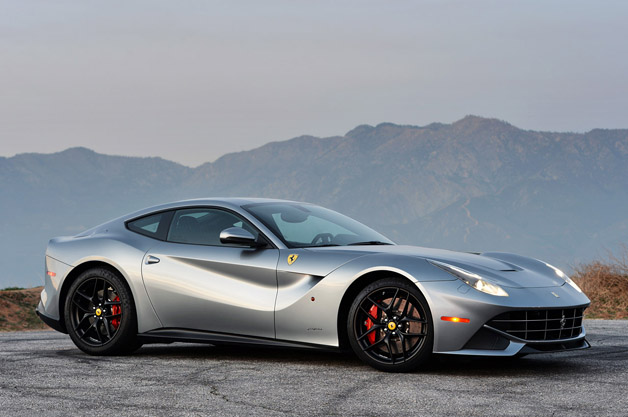
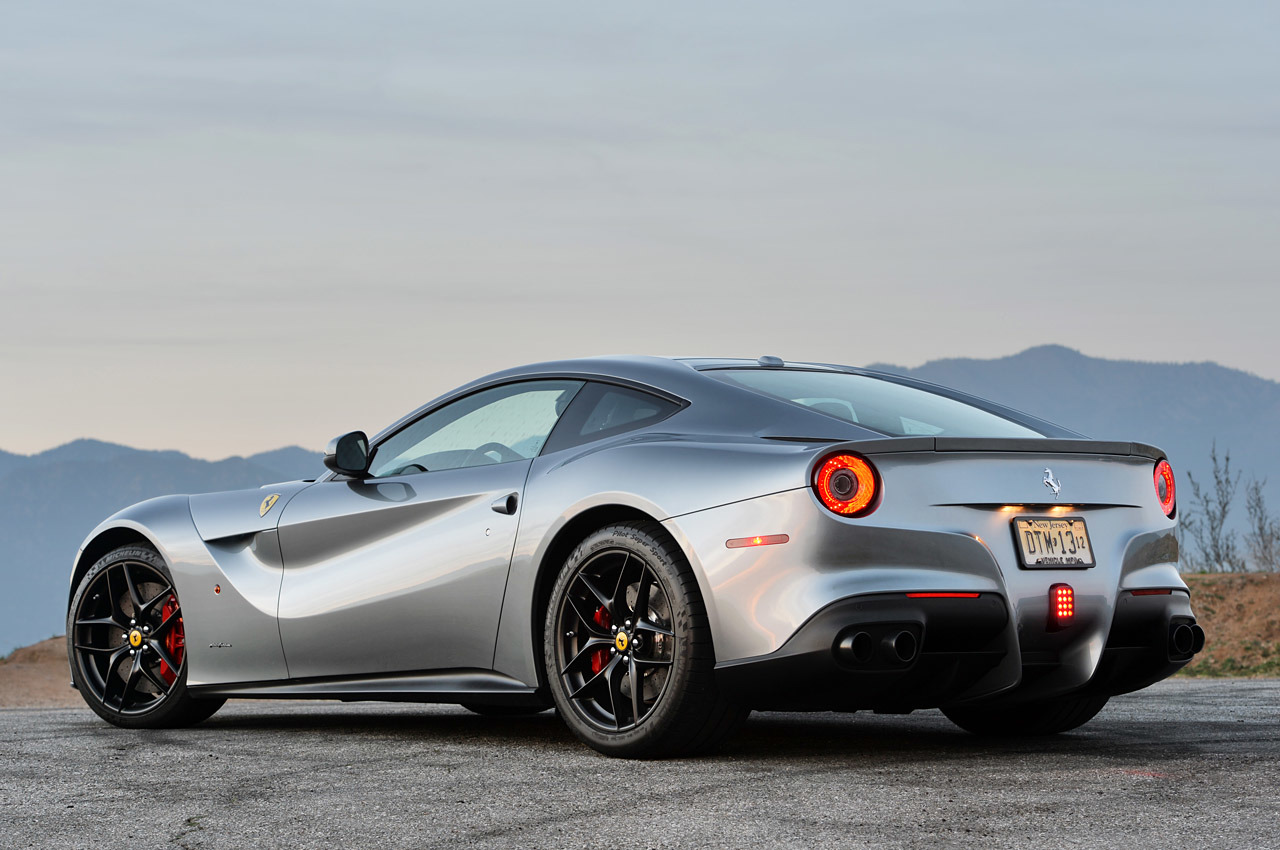
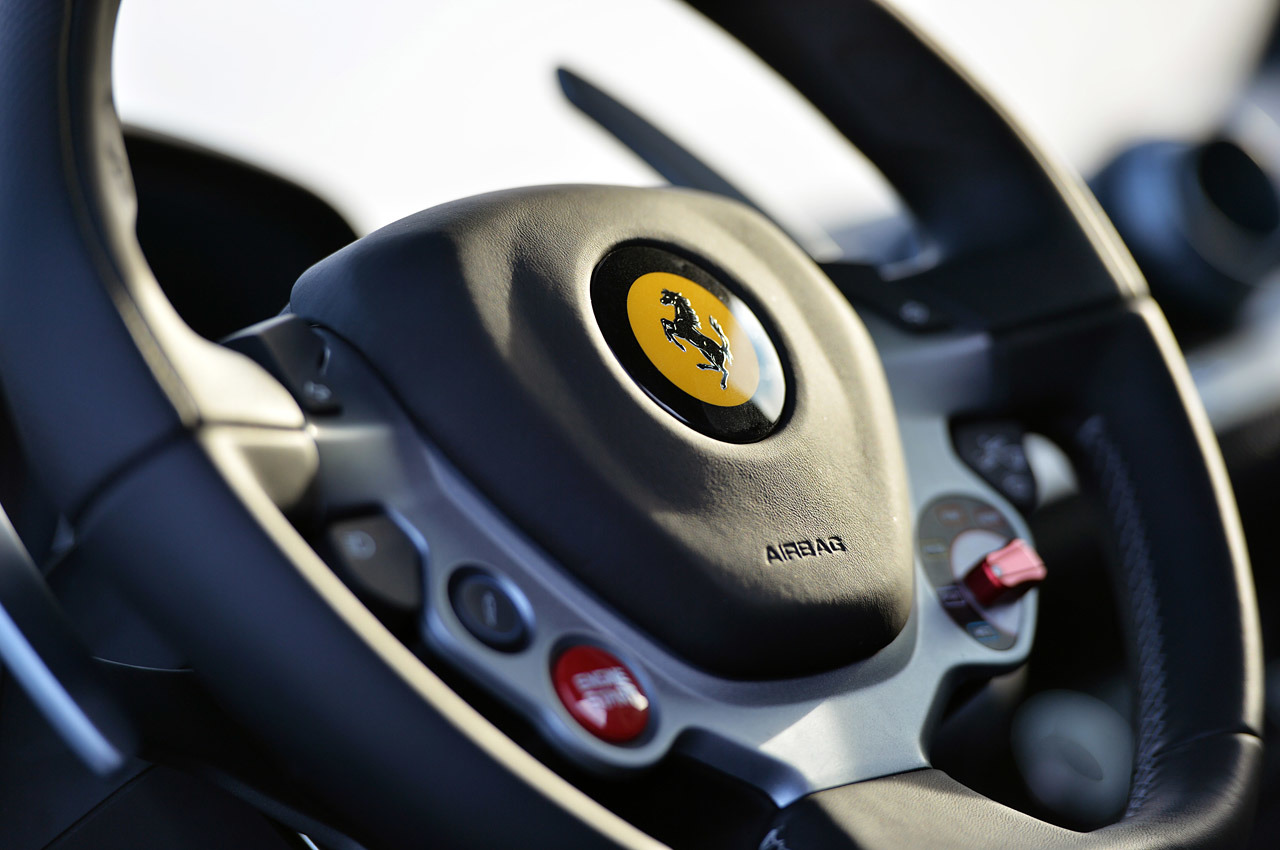
Most cardiologists and physiologists maintain that a human's maximum heart rate is calculated with a mathematical formula: subtract a person's age from 220. But some leading doctors are now questioning the established academics, which trace their origins back to 1970, claiming that a simple formula isn't accurate for people of all ages, in particular those who are older. Rather than endorse the time accepted calculation, this progressive group argues that maximum heart rate equals 208 minus 0.7 times age. While medical science continues its debate, I recently discovered a more elementary approach that disregards age and physical condition, and it requires no math. To reveal a human's true maximum heart rate, I propose strapping test subjects into the driver's seat of a Ferrari F12 Berlinetta and then firing up its ferocious V12. Attendees at the 2012 Geneva Motor Show were first to set eyes on this all-new front-mid-engined Ferrari. In addition to being a slightly smaller package than the 599 GTB Fiorano, its immediate predecessor, the Italian automaker's all-new gran turismo was lighter, more spacious and its performance had been cranked to the far right side of the dial. In a nutshell, the F12 Berlinetta had been engineered to be a flagship without peer. And, as most bystanders at the Swiss show quickly deduced, the automaker appeared to have delivered the goods. Our first stint behind the F12 Berlinetta's F1-inspired steering wheel came a few months after Geneva, when Ferrari invited us to Maranello to enjoy its latest bank-breaker on its home turf. It rained more than we would have liked, but the warm Italian sunshine eventually dried the asphalt long enough for us to sample this curvaceous exotic. Our conclusion was that the automaker had successfully crowned a new halo car, but we parted ways craving more time in its driver's seat. That wish recently came true when Ferrari dropped a brand-new 2014 model, painted in Grigio Silverstone metallic, in our driveway. Face-to-face, the F12 Berlinetta has amazing stage presence. Even finished in this rather subtle gray paint, its sexy skin and massive proportions curiously mesmerize passersby. Most stare unabashedly with Cheshire Cat grins, but a many stop dead in their tracks and begin their interrogation. A few inquire about its unique "aero bridges" at the base of the A-pillars which channel air through the front quarter panels to lower the car's drag coefficient. Others ask about the carbon-ceramic brake rotors that completely fill the void inside the 20-inch wheels. Most, however, just want to see what's under the massive ventilated hood. Nestled deep into the engine bay of the F12 Berlinetta is a naturally aspirated, 48-valve, 6.3-liter V12 rated at 731 horsepower at 8250 rpm and 508 pound-feet of torque at 6000 rpm. The 65-degree powerplant, with its bright-red crackle-finish intake plenums, is the largest capacity roadgoing engine Ferrari has ever offered for public consumption. And although the twelve is shared with the all-wheel-drive FF, the F12 has unique intake manifolds and specialized tuning to deliver an additional 80 horsepower. The V12 is physically enormous, with a beastly output that substantiates its captivating appearance. Tucked aft of the engine and thus buried out of view is a seven-speed dual-clutch close-ratio gearbox that sends all of the available power to the rear wheels. A lightweight aluminum alloy skin almost completely hides all of the F12's other mechanical goodies – a list of specifications that reads like an automotive enthusiast's holiday wish list. The chassis is an alloy space frame, resting on a double-wishbone front and a multi-link rear suspension with active damping from BWI Group's Magneride (magnetorheological) system. The brakes are third-generation carbon-ceramics, with six-piston front and four-piston rear Brembo monobloc aluminum calipers and the standard wheel package wraps 20-inch alloys in sticky Michelin Pilot Super Sport tires (255/35ZR20 front, 315/35ZR20 rear). Steering is assisted by traditional hydraulics for maximum feel. Dropping into the cockpit of the F12 Berlinetta is a remarkable experience. The amazement doesn't come from the intoxicating smell of fine Italian leather, the coldness of the alloy HVAC vents or the near-perfect driving position, but rather from the amount of passenger space inside the two-seat capsule. At six-foot-plus I wasn't the least bit cramped, thanks to a slender center console, a dashboard that doesn't intrude and the lack of a sunroof that preserved headroom. As in most late-model Ferraris, the driver faces a multi-function three-spoke wheel that allows the operator to control turn signals, headlights, suspension dampers, windshield wipers, engine ignition and the five-position dynamic setting Manettino (ESC off, sport, comfort, wet and ice-snow) without removing a hand from its thick rim – the flat-bottom steering wheel with integrated LED shift lights essentially controls everything required to pilot the machine. Of special note, the optional form-fitting carbon-fiber bucket seats of this particular test car were bolstered in leather with seating surfaces covered in a unique woven synthetic material that held like Velcro, yet was smooth when rubbed with the back of one's hand. Most prominent in the primary instrument cluster is a large round tachometer, which is sunk into its own tunnel to separate it from the high-definition color displays that flank it on either side. The left panel is tasked with displaying auxiliary gauges (including tire pressure and tire temperature), Manettino settings and fuel level, while the right panel is used for navigation, audio and phone displays. The HVAC controls are on the center console, directly above the three gearbox control buttons (R, Auto and Launch). Despite its ominous and intimidating appearance to the uninitiated, this Ferrari's race-inspired ergonomics soon become second nature. |