05:24AM - 16.03.'14
|
News Source: motortrend.com
|
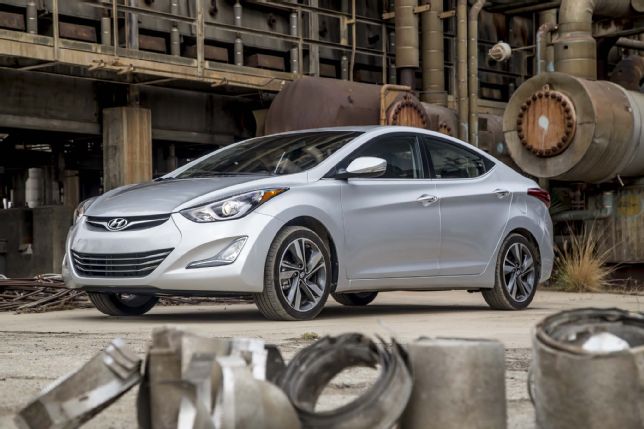
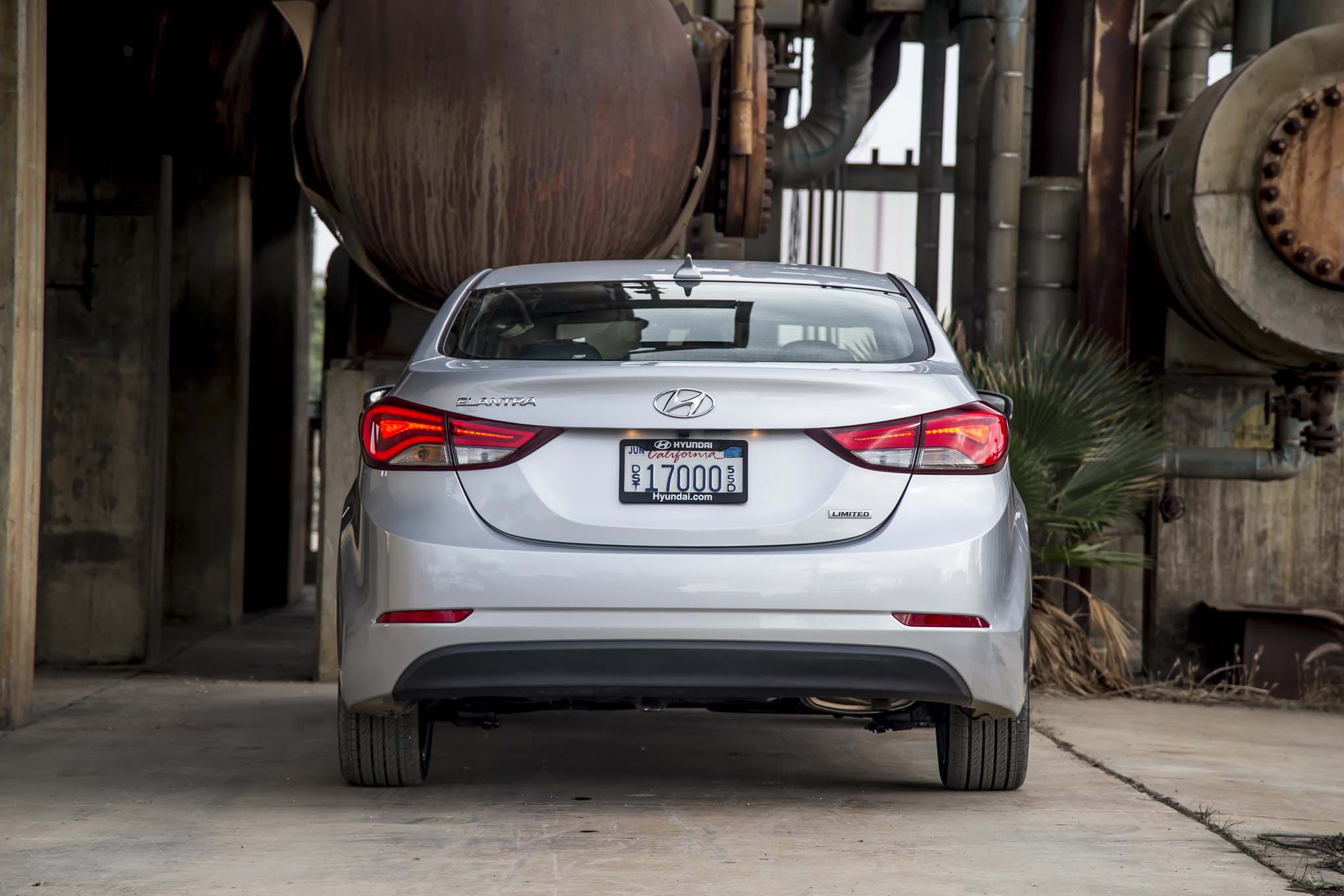
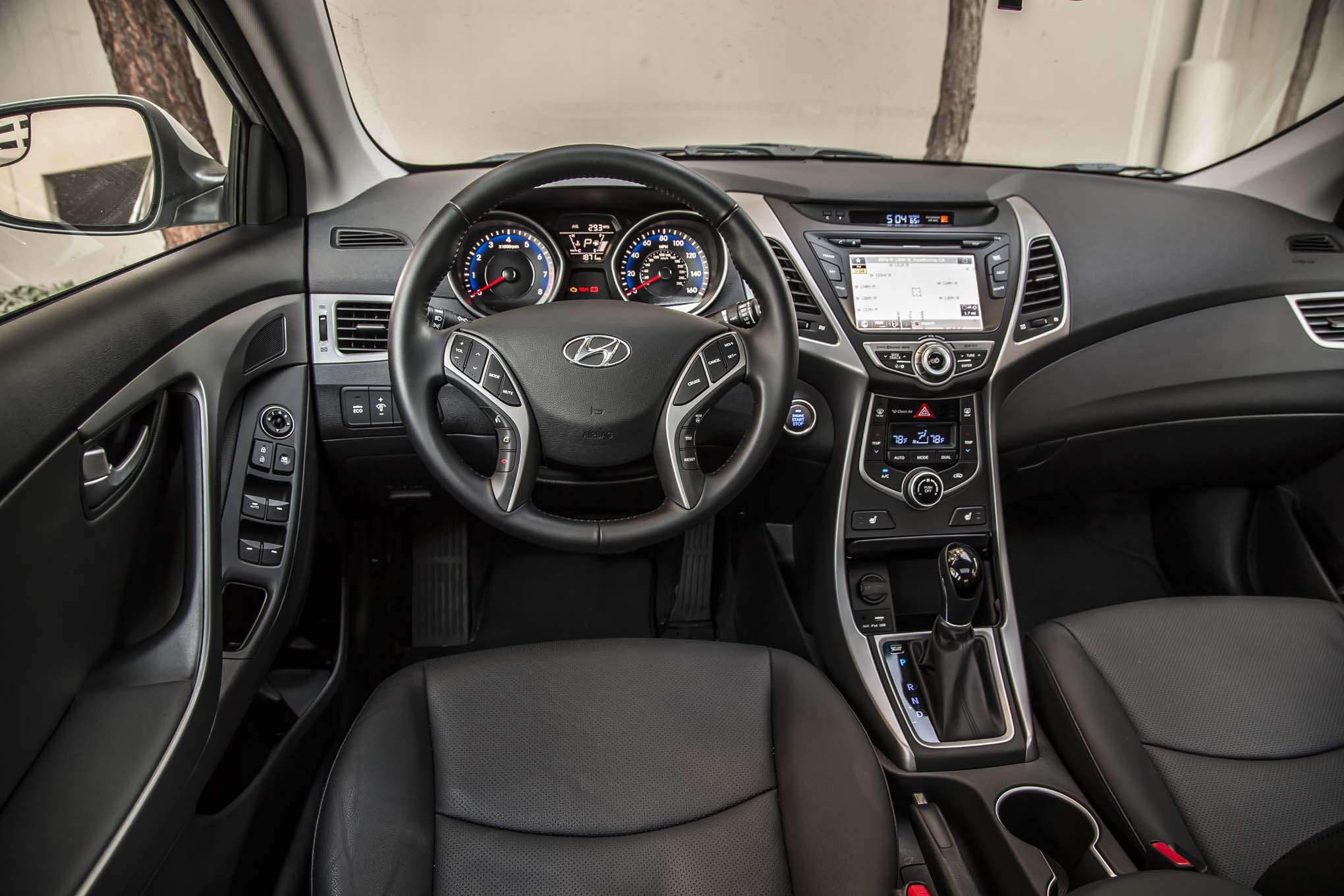
It has been a wild and provocative ride for the current-generation Hyundai Elantra. What will happen in 2014? The Elantra sedan is still the finest interpretation of Hyundai's Fluidic Sculpture motif, flaunting creative yet orderly proportions and a strong presence intended to leave an impression whether observers are or aren't on board with the design. The yanked-back headlights and taillights might not be for everyone. And the way the beltline flares up and away by the back door handles makes the hindquarters look huge from a straight-on side view, though its effect on the greenhouse helps magnificently from the front and rear three-quarter vantage points. Frankly, compact sedan stables rarely nurture a looker as stirring as the Elantra. However, we can never forget the auto industry's continuously evolving cycle of improvement. The Dodge Dart and Mazda3 could challenge the Elantra for tops-in-class inspirational styling, with the conservatively aggressive Ford Focus and gracefully penned Kia Forte also vying for consumer affection. But enough about looks. Because the Dart, Forte, and Mazda3 are fundamentally a lot newer, the Hyundai hasn't landed on Motor Trend's radar screen lately. Recognizing today's model is entering its twilight years after the release of its mid-cycle refresh, we took a 2014 Limited equipped in near-identical fashion to our old long-term '12 Limited. Swathed in fresh front and rear fascias and decked out with a different foglight design, updated interior, and newly standard (on Limited) projector headlights and LED taillights, the Elantra made an appointment with the test track. On a comfortable, 62-degree winter's day, the Elantra laid down performance numbers that would -- there's basically no other way to say it -- humiliate a Mitsubishi Mirage. The oft-alluded 60-mph mark arrives in 9.6 seconds, a whole 2.4 seconds quicker than Mitsu's three-cylinder menace. Any concerns about speed are moot as the Elantra can merge onto and safely pass on the highway, as we did on multiple occasions. There's always going to be someone driving slower. But if you absolutely must know, the acceleration is at the back of the conventional C-segment pack, including the marginally less-powerful Honda Civic and Toyota Corolla, both of which feature CVTs. Speed can be good, but sometimes, flicking on the turn signal and demonstrating patience (and conserving fuel) is the better, civilized approach. Lining up the stats against the '12 long-termer reveals the two cars are, as expected, more or less the same. The differences in quarter-mile times, braking distances from 60 mph, and average lateral g are a wash. The '14 Elantra circles the figure eight 0.3-second shorter, but the '12 Limited was gasping a little harder for air as its test date temperature was 30 degrees warmer. The engine in both is the port-injected, 1.8-liter Nu four-cylinder. It has served the Elantra well in its tenure. It makes all the customary I-4 noises without sounding grating and doesn't shake the cabin as it quivers in the mounts. The 2014's six-speed automatic's final-drive ratio is 4.2 percent taller, whereas the individual gear ratios are untouched and the overall ratio spread holds at 5.68. In simulation modeling, given the same engine output and 17-inch tire size, the car would accelerate more sluggishly. In the real world, the Elantra was running around with what feels like widely spaced gearing already, so you likely won't consciously detect a 4.2 percent disparity in lethargy. The car moves around fine. The decision to gear up the final drive likely comes down to fuel economy -- at 70 mph, the engine will be turning over about 100 rpm less in sixth gear opposed to the 2012's. Unless you're springing for the new Elantra Sport with the 173-hp, direct-injected 2.0-liter I-4, there's not much more newness to report. As we established in the first comparison test this generation Elantra took part in and won ("Mass Appeal"), the '14 continues to hit all the oohs and aahs needed to attract casual car shoppers (feature content including one of the industry's best infotainment/navigation systems; interior room and ergonomics; initial touch, look, and feel). "When it came to ride quality, Elantra marries the lightness of the Japanese sedans with the big-car comfort of Jetta and Cruze," we noted in 2011. No changes there. The steering highlights how refreshingly progressive Hyundai is as an automaker (along with its counterpart down the freeway, Kia). I very much remember our first '11 Elantra test car and its bizarre electric-powered steering effort. The overall steering response was fine and predictable considering the tires and vehicle class, but the weighting coming off-center didn't apply enough resistance. The lightness in the steering made small off-center steering corrections more challenging because of the high sensitivity. It felt like the electric power assist was constantly trying to trick me with a flat effort emulating the front tires pointed dead straight, even when the steering wheel is cranked. Hyundai modified the 2012's steering software, adding firmness to the on-center zone and increasing the effort as the car loaded laterally. But there was something fishy going on -- I could feel detents in the effort not far past center, as if it were telling the driver, "OK, get ready for different steering feel once you're beyond this point." And straightline tracking was busier than desired. |