


|
News Source: carmagazine.co.uk
|
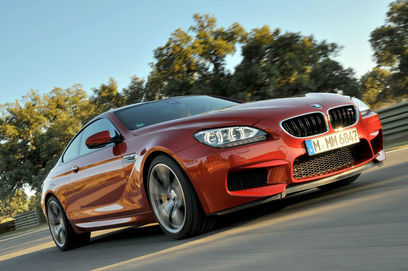
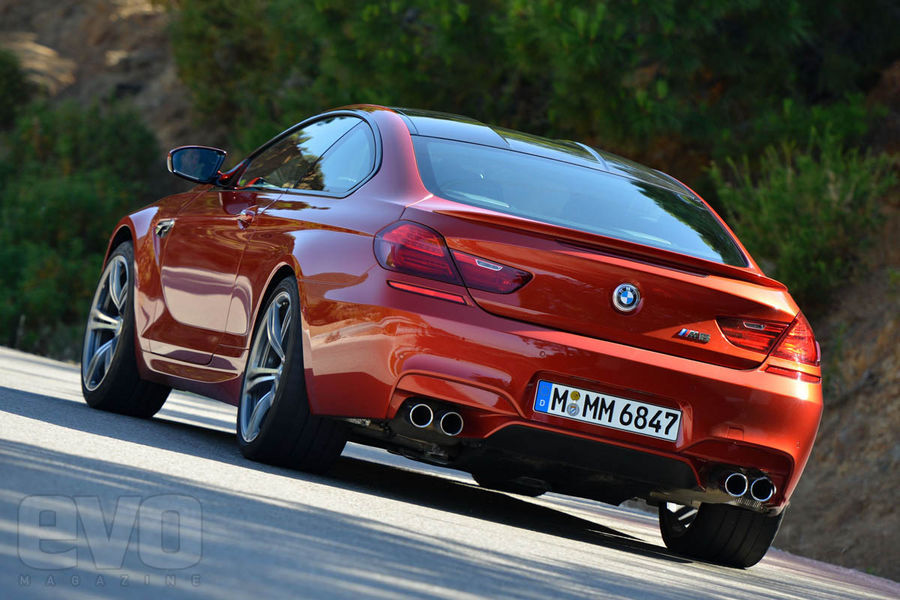
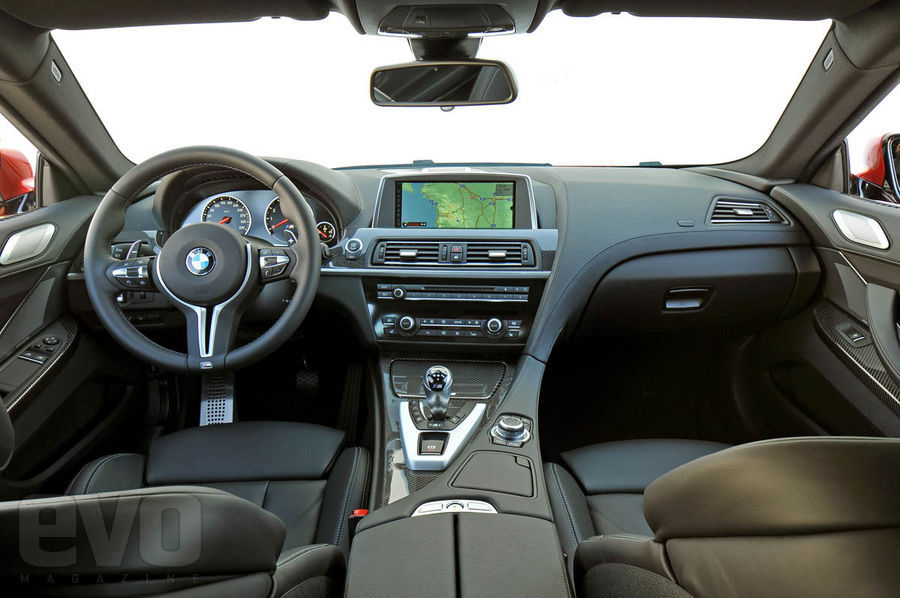
BMW has downsized the new M6 – but the good news is that less means more. As with last year’s M5 super-saloon, the charismatic F1-derived 5.0-litre V10 has been replaced with a more mainstream 4.4-litre twin-turbo V8. In the process, though, fuel economy has been improved by 30 percent, and power increased by 10 percent to 552bhp. The new V8’s torque curve is also absolutely flat all the way from 1500 to 5750rpm, dishing up a muscular 502lb ft in the process – 118lb ft more than before. Is the new BMW M6 as complicated as the old car?Unlike the previous model, you don’t need a button to access full power either – it’s on tap at all times. The new M6 doesn’t even need launch control to dispatch the 0-62mph sprint in 4.2sec, eclipsing its predecessor by 0.4sec. Not bad, considering its 1850kg heft means it’s gained 140kg on the model it replaces. Maximum speed is restricted to 156mph, but extra money buys an M Driver’s Package, with professional tuition, plus an ECU tweak that lifts the top speed to 191mph. Unless you live in the UK, because that’s not an option for British buyers. The downsized V8 engine may be less exotic, less extreme and ultimately less involving than the V10, but the direct-injection and twin-turbo unit comes with all the bits that made BMW powerplants famous, including the Valvetronic lift system and double VANOS cam adjusters. It’s difficult not to like, with a soundtrack that ranges from a Wagnerian idle speed to a full-bodied multi-phonic aural climax inspired by Bruckner and Glass. It’s also almost impossible not be knocked out by the torque – it’s like a Muhammad Ali right hook. Unlike other 6-series models, the M6 eschews the ‘Drive Dynamic Control’ toggle selector in favour of five small buttons grouped around the stubby gear lever, via which the shift speed, throttle/engine/gearbox response, stability control programme, shock absorber setting and steering feedback can be personalised. You can dial-in an individual preference, or group and store two different settings and then activate them via the M buttons on the steering wheel (ie you could have M1 set for comfort, M2 for sporty driving). On top of this, there’s the familiar MDM mode, which gives the stability control system some slack, without turning it off. The range of electronic driving settings has been reduced to three levels: Comfort, Sport and Sport Plus. This approach works okay for the dampers, which can be amazingly supple and compliant, or quite firm and totally planted. But it’s less convincing with regard to the drivetrain, which varies from quite relaxed to rapid-fire quick but lacks a clearly defined middle ground. The least convincing character tweak concerns the variable-rate, variable-assist steering. Here, the adjustment range spans from rather heavy to quite heavy, which is not what we were looking for. Last but not least, there is DSC, which can be deactivated completely. So, how does the 2012 M6 handle?Sampling the spectrum of the five adjustable dynamic characteristics is a trial-and-error exercise that calls for patience and practice. On the track, finding the sportiest mixture is not exactly rocket science. On undulating, patchwork country roads, however, it can make more sense to combine the softest damper position with the fastest shift speed and the lightest steering effort. The downside of this is that the high-speed stability suffers over dips, grooves and seams in the road, although on the positive side the more compact chassis is more chuckable. It turns in with the determination of an Olympic fencer on the attack and waltzes around any corner with the grace of a professional dancer, travelling between the bends with the light-footedness of a high-wire artist. Although hot Iberian tarmac after two months without rain offers about as much grip as black ice in a Bavarian winter, the BMW remained tractable and predictable in its responses. On twisty mountain roads, the M6 invites you to explore the full spectrum of handling – from determined understeer to even more drastic oversteer. Despite a certain nose-heaviness and that substantial kerbweight, you don’t have to turn in particularly early, you can still brake heart-stoppingly late and those huge reserves of torque are always there to propel you through and out of the bend, stepping the rear end out in the process according to the settings, your mood or your skill level. Is the new M6 more soothing GT or M Division-hooligan?We also tested the M6 on the Ascari racetrack. On fresh Michelins, the 552bhp coupe emerged as a nicely balanced, sharp-handling GT that appreciates subtle inputs and a relatively defensive line. On worn rubber, deactivating DSC and lighting up the rear wheels is just about the only remedy against stubborn, terminal understeer.
VerdictConfidence is what you, as a driver, gain from the M6’s compliance and control. We drove the socks off the raucous red rocket, storming through blind bends and over sickbag crests, often with a rockface on one side and a yawning precipice on the other. But in the M6, you don’t think: ‘Lift off… brake… caution… DSC on… omigod! Instead, you simply concentrate on the road ahead because you know that the tool in your hands is about as good as such tools get. Provided you get the settings right before setting off. |

|

| Copyright © 2026 • www.showcar.com.au • Showcar Pty. Ltd. • Contact info@showcar.com.au | sydney web design & development by Webski |